A string of high-profile tech outages recently disrupted things many of us take for granted: sending email, traveling, investing, transferring money and making purchases. The disruption was loud enough that speculation spread about something more sinister behind it.
There is no indication from government officials or the affected companies that hacking or cyberattacks caused them, and there are no signs the incidents were connected. The more plausible explanation, according to politicians and tech executives, is that company efforts to patch cyber vulnerabilities found by AI may have overwhelmed systems and led to several of the outages.
Whatever the cause, shoppers are reacting. Walmart says it is seeing items like propane and large bottles of water sell at higher rates. Palmer Luckey, the billionaire cofounder of Anduril, told the DealBook conference last week that everyone should have three days of water.
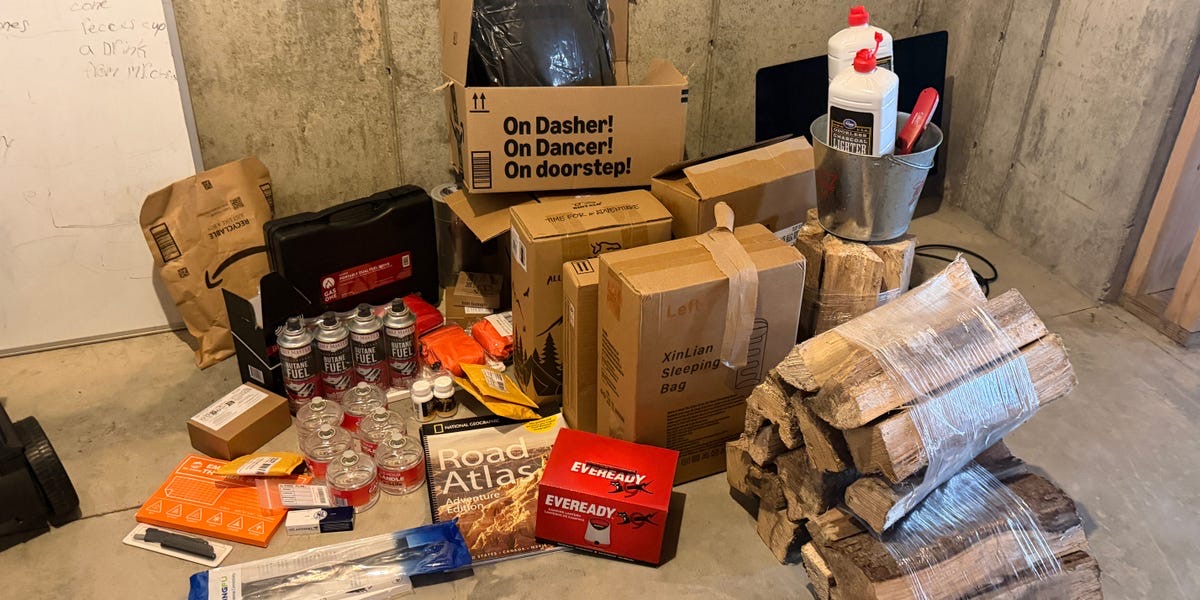
Heather Nianouris, an AI educator and consultant, told Business Insider she recently spent about $1,200 on emergency supplies, ordering 16 boxes from Amazon that included batteries and camping gear. Her friends initially thought she was overreacting. Her reaction did have one practical effect: it got them thinking about preparedness too.
Here's the playbook. Start smaller than you think. You do not need to match a $1,200 splurge to be ready. Focus on the three things that matter most during a disruption: water, power and cash.
First, water. Plan for at least three days per person, which is the figure Luckey cited. Store it somewhere accessible and rotate it periodically.
Second, power. Keep charged batteries and a portable charger for your phone. Note which of your devices rely on connectivity, because that is what fails first when networks go down.
Third, cash. If an outage hits payment apps, banking or card terminals, you need a small reserve of physical currency you can actually spend. This is the item most founders overlook, and it costs almost nothing to address.
Make a written list of the systems your business depends on: payroll, invoicing, customer support, cloud tools. Identify which ones have a manual fallback and which do not. A one-page continuity plan, reviewed quarterly, will do more for your runway than a closet full of camping gear.
The math is simple. A few days of lost payments or missed orders can cost more than a modest emergency kit ever will. Buy what protects revenue and operations first, and expand from there once the basics are covered.


