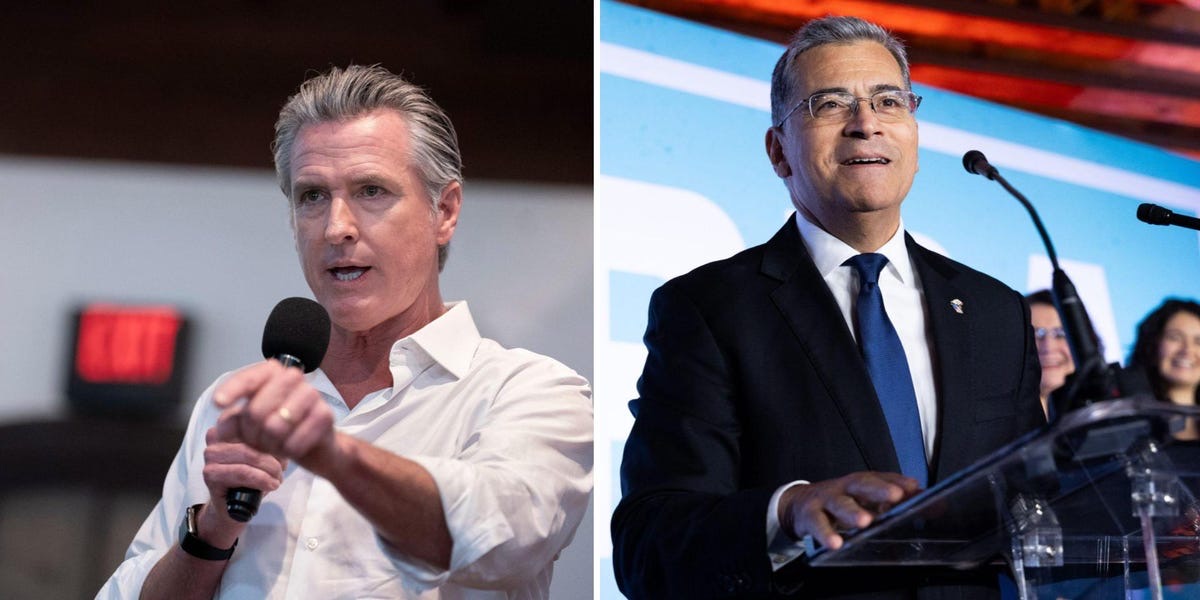
The AI boom, and the physical infrastructure it requires, has become a flashpoint in American politics. Voters were asked whether artificial intelligence and data centers would shape the midterm elections, and according to Business Insider, the answer was yes. Seventeen governors were up for reelection this year, and their opposing candidates have staked out a range of positions.
The cost question is the one free-market readers should watch closely. Alabama governor-elect Tommy Tuberville (R) campaigned for data-center developers to pay their own electricity, infrastructure, and water costs, and he has pushed for local communities to be able to reject projects. That is a simple principle: the company that wants the capacity should carry the expense, not the ratepayer down the street.
Alaska offers a sharper example of the trade-off. Outgoing Gov. Mike Dunleavy (R) has pitched the state as an 'arctic advantage' hub, saying an Alaskan 1-gigawatt campus could save operators up to $150 million annually in cooling costs compared with a warmer state. Dunleavy also argues that data centers could drive construction jobs across the state. His Democratic successor, Jonathan Kreiss-Tomkins, has said he supports a temporary moratorium on new facilities until the legislature sets rules requiring developers to cover energy and infrastructure costs.
Arizona's Katie Hobbs (D) has framed AI mainly as an economic opportunity the state must prepare for rather than turn away from, and she has said she does not support a moratorium on new data-center development. Her administration created the state's first AI steering committee in 2025 and launched an AI government tool in 2026.
Arkansas Gov. Sarah Huckabee Sanders (R) has argued that AI can strengthen government efficiency but requires proper policies. A state AI working group she launched in 2024 found that the technology could help improve Medicaid and SNAP programs and expand other digital services.
Some governors are focused less on infrastructure and more on control. Outgoing California Gov. Gavin Newsom (D) and New York's Kathy Hochul (D) are exploring an AI 'kill switch' to disable advanced systems in an out-of-control situation, and Utah Gov. Spencer Cox (R) has called for federal AI safety rules. Ivey, Alabama's outgoing governor, created a generative AI task force in 2024 and in 2025 banned Chinese-affiliated AI platforms DeepSeek and Manus from state-owned devices and networks.
Business Insider also reports that Goldman Sachs economists expect Democratic gains at the state and local level to lead to 'short-term data center moratoria, potentially affecting about 45% of planned US data center capacity expansion.' For founders, that is the number to watch. A moratorium on that scale would reshape where compute gets built, what it costs, and how quickly new AI products can reach customers.
The editorial reading is straightforward. Governors who make developers pay their own way for power, water and grid upgrades are protecting taxpayers and ratepayers, and they are letting the market price scarce resources honestly. Governors who reach for blanket pauses risk turning a private investment boom into a regulatory queue that favors incumbents with the lawyers to navigate it. Taxpayers should not underwrite the costs of someone else's capacity build-out, and founders should press for clear, predictable rules rather than moratoria that change with each election cycle.


