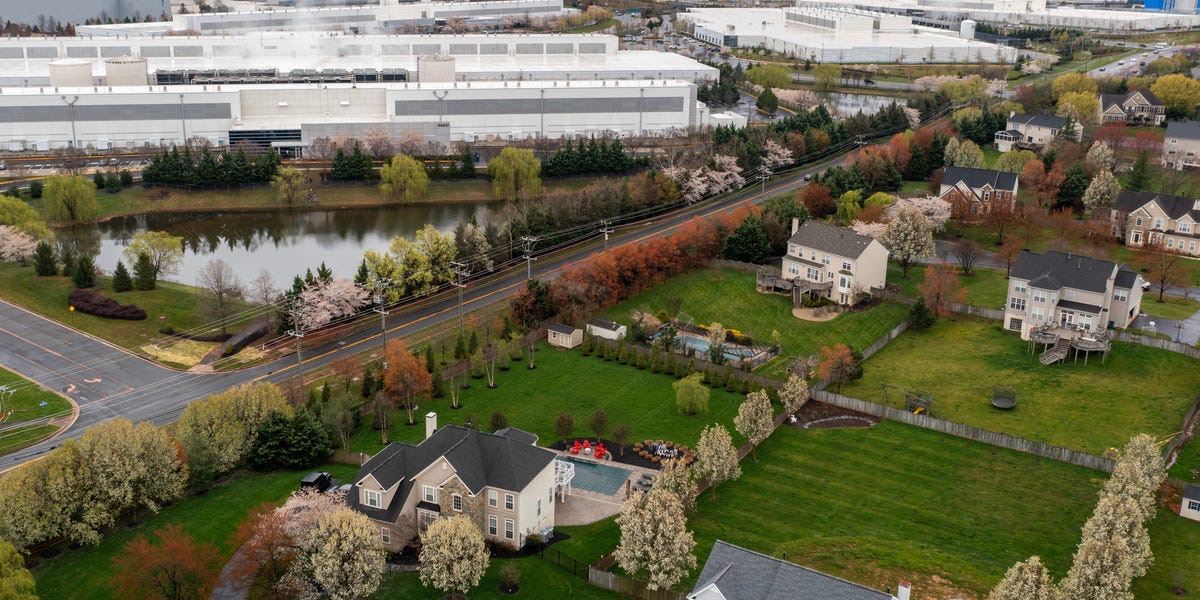
Loudoun County, Virginia, has earned the nickname 'Data Center Alley,' and it has the highest concentration of data centers in the world. Google and many other tech companies operate facilities there. Now the county is hitting the brakes.
At a meeting earlier this week, the Board of Supervisors voted to pause applications for data center and electrical substation projects. The pause will last until the board decides on amendments to Loudoun County's comprehensive plan and zoning ordinance. The board launched its review of data center and electrical substation policies in February 2024.
The county said the reason is to 'allow time for the county to complete the ongoing review of current data center policies and regulations.' Developers can still submit applications, and county staff will keep reviewing them and scheduling hearings with the planning commission. But there will be no public hearings or votes until the review is finished. The decision could affect 33 active applications, according to the county.
The pause is part of a broader pattern. Many US towns and cities have paused or outright banned large data center projects as residents debate their impact. Supporters argue that new developments create jobs and boost local economies. Critics worry about the environment, utility costs and quality of life.
That last point is where the free-market reader should pay attention. When a county with the most data centers on Earth decides to stop approving them, the cost of that decision lands on the people who fund the infrastructure, the utilities that must plan for surging demand, and the businesses that were counting on a predictable permitting process. Every month an application sits in limbo is a month of capital tied up, a month of delayed jobs and a month in which the rules are being rewritten while the projects wait. Founders and investors know that regulatory uncertainty is itself a cost, often a larger one than the rules that finally emerge.
The politics are shifting too. Despite support from the Trump administration and influential tech leaders, data centers proved deeply unpopular during the US midterm elections earlier this month, playing a major role in ushering in a so-called 'blue wave' of Democratic candidates. Local voters are clearly uneasy, and county boards are responding to that unease with pauses rather than permits.
The principle at stake is simple. Private companies that build capital-intensive infrastructure need clear, stable rules to invest. A year-long freeze, even one framed as a review, signals to every developer that the next approval may come with conditions nobody has written down yet. Founders who want to build in this sector should watch Loudoun closely, budget for longer timelines, and treat local politics as a core part of the business plan.


