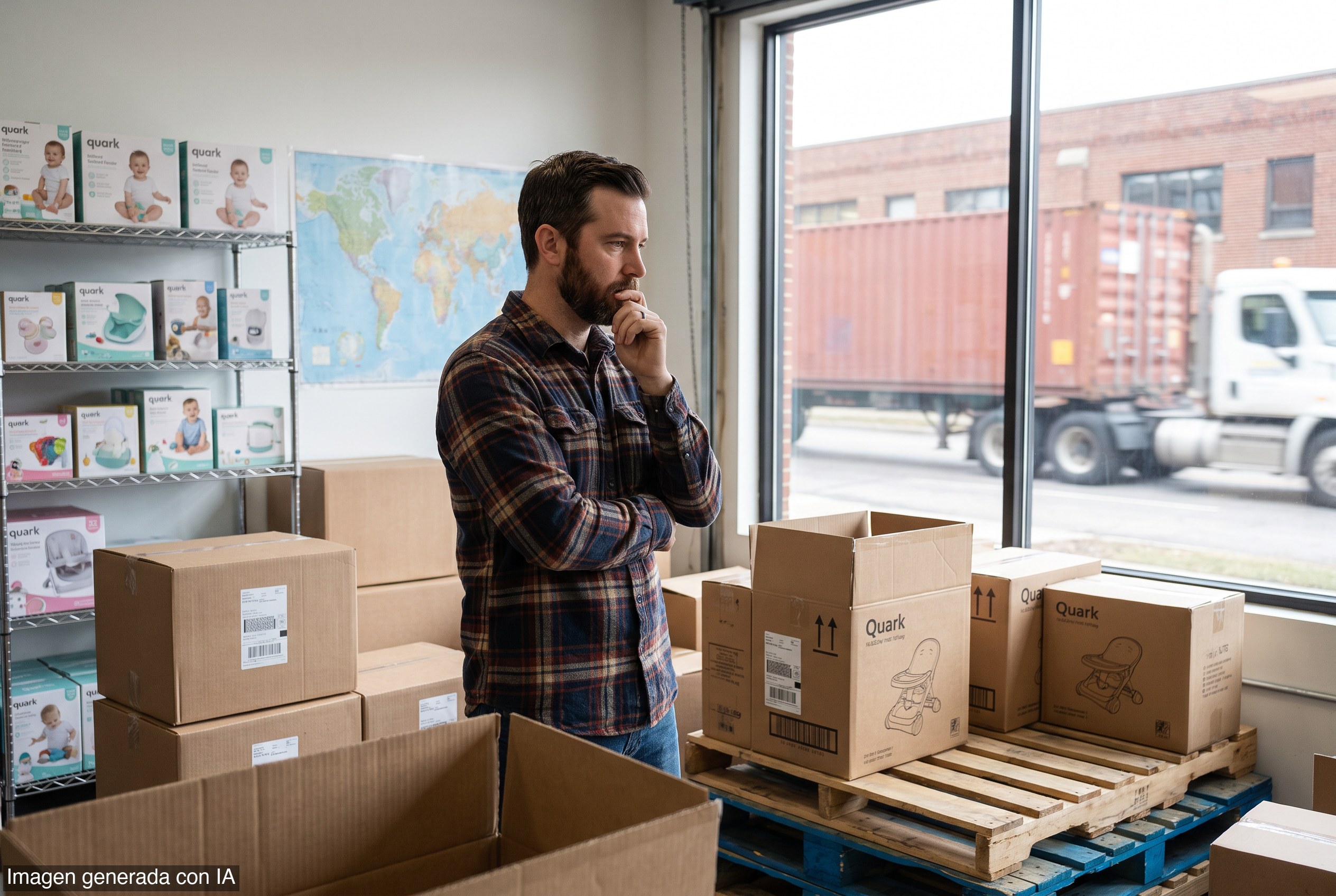
Tariffs on China and Canada have cost Quark Baby founder and CEO Garett Senez nearly $2 million, he said, while forcing the company to move manufacturing and rebuild parts of its logistics network.
Senez, who founded the Vancouver-based baby-feeding tech company in 2021, said the business started with six SKUs and now has 45. Many of those products were made in China, where the company had factories, molds, and production lines.
When tariffs hit, the first move was to look elsewhere. Senez said the company reviewed production options in Indonesia, Thailand, Vietnam, Cambodia, and Korea, then moved a lot of its production to South Korea. He said the shift cost just under $1 million when molds and production costs were included.
The pressure did not stop there. Senez said the company had to say no to large purchase orders because some SKUs became unbuyable, and it also lost stock when shipping costs were too high to bring goods in. He said the company’s entire drop-shipping business to the United States stopped after the $800 minimum was canceled, forcing Quark Baby to find a new warehouse in the US.
He said the business has four warehouses and moves goods between Canada and the United States regularly, but tariffs have created what he called a tariff block between them. Senez said there are still stranded goods and that he is on his third drop-shipper.
All in, he estimated the impact at $2 million, including IP, resourcing, and lost sales. He said about 90% came from the tariff on China and 10% from the tariff on Canada.
Senez also said the company may eventually relocate to the US if Canada does not reach an agreement with the United States, though he said he is trying not to. He said 90% of the business is in the US and that cross-border operations are simply too hard.
For founders, the lesson is blunt: tariffs do not just raise costs, they scramble planning, inventory, and margin. When a business cannot predict whether it can ship or profit, the administrative burden becomes part of the competitive moat. That hurts small companies first, because they have less room for error.
Senez’s answer is not surrender. It is adaptation: move production, keep innovating, and survive long enough for the market to reward the businesses that can still deliver.


