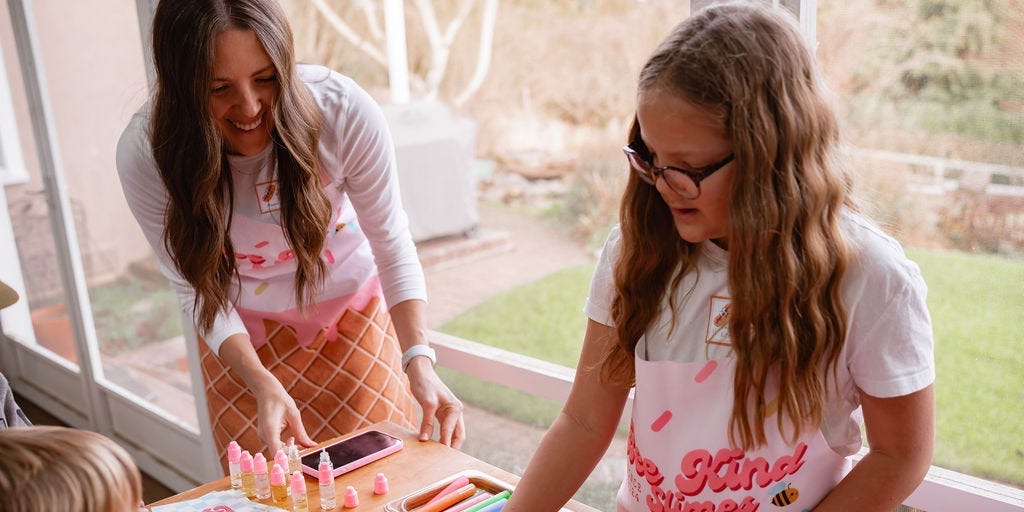
Two years ago, Nora Wrede wanted to buy something. Instead of simply handing over money, her parents offered a list of chores. She countered with an idea of her own: sell the homemade slime she already loved making.
She packed a tote bag and walked door to door through her neighborhood while her parents followed behind. Her mother, Karly Wrede, admits she expected a tearful walk home. Thirty minutes later, Nora returned with $100. Her parents looked at each other and wondered whether this was something bigger. That was the moment Bee Kind Slimes was born.
The early sales ran on charm. Customers bought because a sweet little girl was on their doorstep. Nora then moved to social media, and demand started to compound. A farmer's market invitation came in, then a holiday show, then online orders and birthday parties. The family kept saying yes.
The first real operational problem was spoilage. Slime that sits too long goes bad, and after each market or show the family spent hours emptying containers, reactivating the slime and repacking it. The fix came from a $ collapsible charcuterie cart spotted on Facebook Marketplace. The cart became a slime cart that rolls in and out of events. Kids pick their own colors and add charms and fake sprinkles, so every batch is unique. It is more of an experience, and far less work for the family.
Production also required an upgrade. Small batches in a KitchenAid mixer did not hold up, and the family went through five mixers in the first year. Nora applied for a grant through the Mason Makes Money Fund and received it. The money bought an industrial mixer that can make ten times as much slime as before.
Today Bee Kind Slimes is a part-time job. Nora works on it about 15 hours a week, more during the holidays, and has done 50 birthday parties this year, some of them back to back with the cart. The economics of the allowance changed too. Before the business, Nora received $10 a week and spent it almost immediately. She now receives $100 a month, paid at the end of the month, and her spending has tightened as a result.
The lessons go beyond the balance sheet. Karly Wrede says she wanted her daughter to learn generosity, to build confidence and to understand what it means to earn. She is clear that the slime was never the main point.
The family's next step was teaching others. Other moms kept messaging for advice, so Karly Wrede built a course, drawing on her work teaching classes in her corporate job. Since April, she and Nora have trained more than 130 parents and their kids to run their own slime businesses.
The lesson for founders is practical. Start with a product people will buy, learn where the operational friction is, and spend money on equipment only after the demand is proven. Here's the playbook the Wredes followed, from a single tote bag to a repeatable model that other families can copy.


