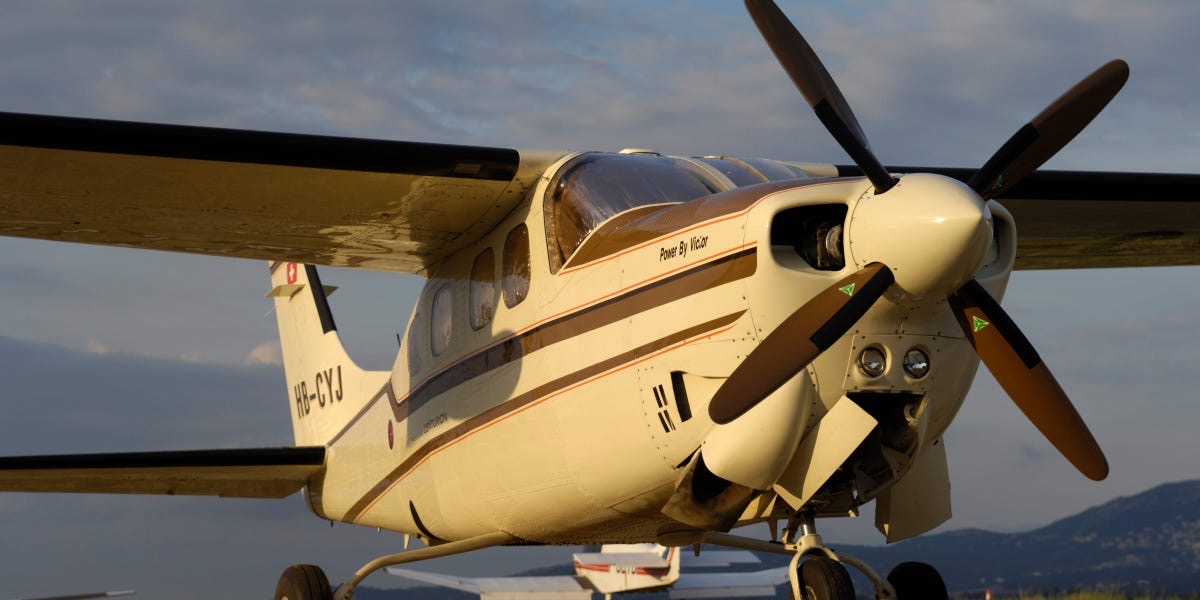
A private plane crashed off the coast of Mississippi on Tuesday, and rescue authorities are still searching for six people who were on board.
The aircraft was a Cessna 210 flying from New Orleans to Fort Myers, Florida. According to the Associated Press, citing Coast Guard spokesperson Juan Ros, the plane was carrying six people, including two children. Data from the flight tracker FlightRadar24 showed the plane abruptly lost signal about 30 minutes into the flight. Moments before that, it appeared to be losing altitude rapidly.
This is the second private plane crash in recent weeks. In the first week of November, a Learjet crashed near Palm Beach, Florida, killing all nine people aboard.
As of this report, Business Insider had not received a response to its requests for comment from the US Coast Guard or the Federal Aviation Administration. Investigators have not publicly identified a cause.
Why this matters beyond the headlines: many founders and small-company executives rely on light private aircraft to move quickly between customers, investors and job sites. The tradeoff is concentrated risk. A single aircraft can take out a leadership team, a family or a key engineer in seconds, and the business consequences can outlast the tragedy.
Here's the playbook for anyone who flies privately or manages people who do. Start with the basics: confirm your insurance covers the aircraft, the pilot and every passenger, and read the exclusions. Review whether your key-person coverage and buy-sell agreements would fund the company if a founder were lost. Keep documentation current, because the weeks after an accident are when gaps in paperwork become expensive.
The math is simple. A single lost founder can freeze fundraising, stall the pipeline and pull revenue forward into a crisis. Founders who plan for that risk keep their companies running when the unthinkable happens.
The Gulf search continues, and the families of those on board are waiting for answers. For the rest of us, the reminder is practical: treat travel risk as a line item on the operating budget, not an afterthought.


