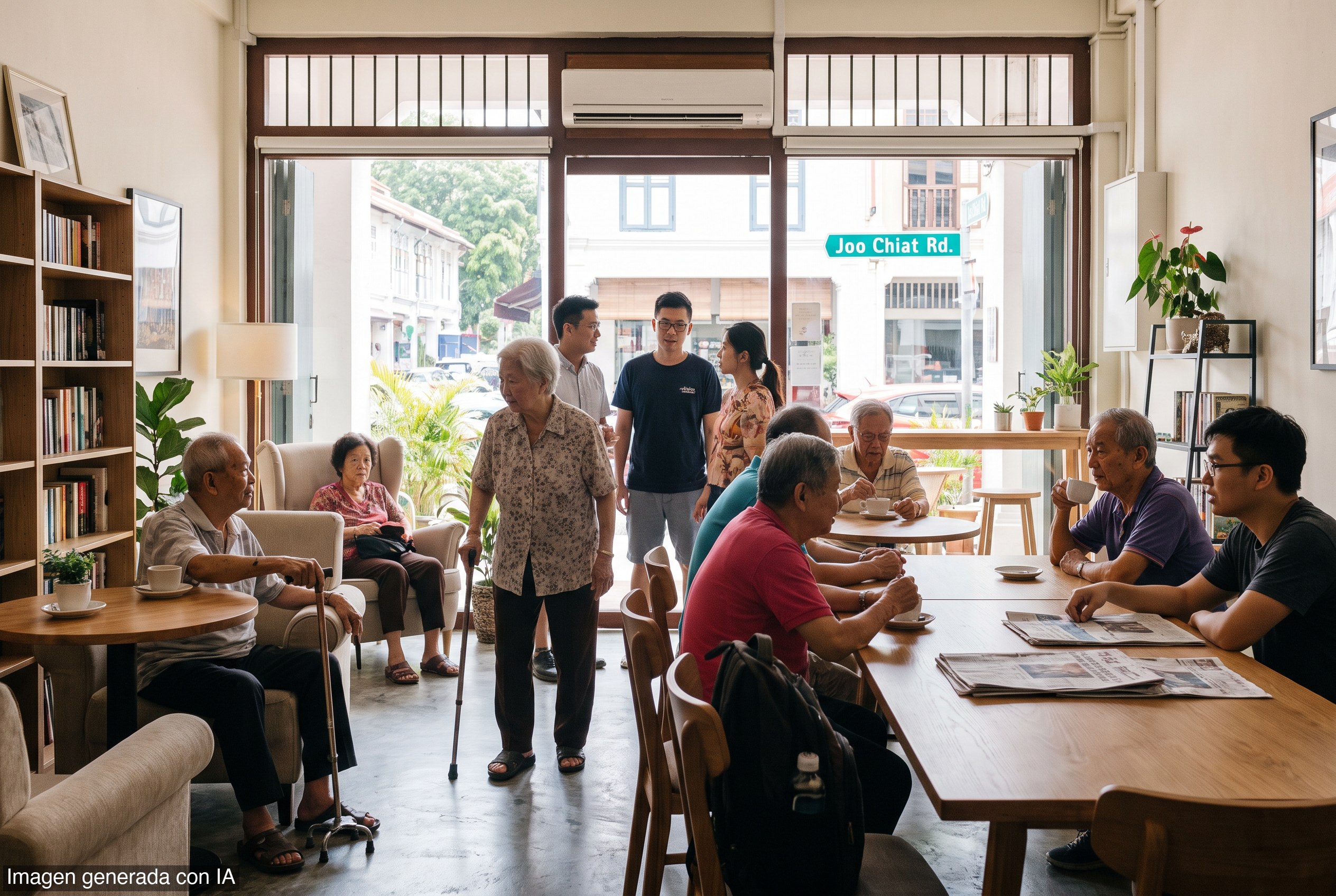
Singapore's Camino House is trying a different playbook for aging: assisted living in a conservation shophouse, plus an intergenerational social club on the ground floor.
The facility houses seven older adults, ages 69 to 93, in a two-story building in Joo Chiat, in eastern Singapore. It has six bedrooms, four singles and two twins, each with an en suite bathroom, and an elevator linking the floors. Three healthcare attendants work in shifts, including overnight, to provide round-the-clock support.
There is no doctor on-site, but a clinic is about a five-minute walk away, according to Chee. Public property records show the shophouse was bought for S$3.5 million in 2020.
Chee and Lee, both 32, founded Camino House because they wanted a place that was 'beautiful and welcoming, not clinical or institutional.' Chee has a background in early childhood development and Lee is an engineer. Lee also grew up around eldercare, since his parents are both doctors and founded another assisted-living provider in Singapore.
The model sits inside a bigger demographic shift. In 2026, Singapore became a 'super-aged' society, with 21.4% of its citizens aged 65 or older. About 152,000 citizens are now 80 and above, up by 60% from 91,000 in 2016.
Traditionally, older Singaporeans who can no longer live fully independently have relied on family members, home-based services, or nursing homes. Camino House is part of a small but growing private sector serving seniors who need some daily support but not nursing care. It was also one of five providers in a 2023 Singapore initiative to test shared caregiving for groups of seniors living together, a model the country formalized in late 2025.
The ground-floor Joo Chiat Social Club is a key part of the pitch. It hosts exercise, cooking, and rattan weaving, sometimes with volunteers or preschool children. Those sessions are open to residents, but also to non-residents, with a single-session pass costing about S$100 and covering activities, lunch, and care support during the session.
For families with relatives abroad, the appeal is obvious: safety, but also social connection. Christine Yee, who has lived in the US for nearly two decades, called Camino House a 'godsend' for her 93-year-old mother.
The broader lesson for founders is simple. Aging is creating demand for services that combine care, dignity, and community, and the market is already testing what that bundle should look like. The winners will be the operators who build trust without turning every touchpoint into a bureaucratic experience.
Founders who get this right move faster because they are solving a real problem families already feel. In a super-aged society, that is not a niche. It is pipeline.


