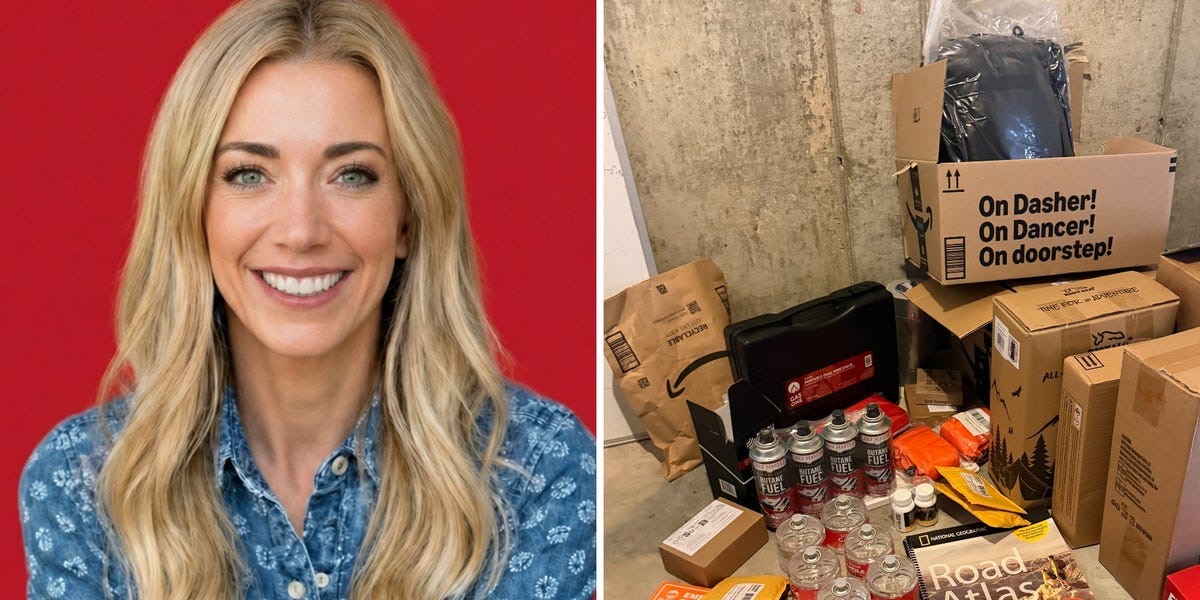
Heather Nianouris spent $1,200 on emergency supplies in a single spree on Amazon, and she says she did it without much thought. Nianouris, an AI educator and consultant, told her story to Business Insider as an as-told-to essay. She is not a prepper, and she says she does not believe in conspiracy theories. What drove her was a memory.
"I think I have a bit of lingering COVID trauma," she said. "I felt unprepared during COVID, and looking back, none of us would have thought it turned out the way it did." When she began seeing more posts about preparing for disruption, she decided she did not want to be caught off guard again.
The haul was large. She ended up with 16 boxes of gear, including tarps, batteries, zip ties, duct tape and flint. Some of it was not well chosen. She admitted she does not know how to use flint, and that the Amazon algorithm recommended it. She also bought a ham radio, which she now plans to return after learning it requires a license and a call sign.
The basics came later. Five cases of water and a good amount of canned tuna are now in her garage. She also bought several cans of butane fuel and a camping stove. She said she does not yet have enough for 90 days, and she does not plan to get there. Her stated priority is simple: if the power goes out and her kids need dinner, the family will be covered.
Her post on Instagram drew a flood of advice from experienced preppers. They told her she had done a solid job, then pointed to gaps, including candles and Mylar blankets, which trap body heat well. Some of the tips were extreme, such as not putting trash outside during a blackout so neighbors would not know the household had food. She said most of the advice was useful.
The costs are the part of her account worth examining. She has spent about $1,200 so far. Her answer to the question of waste is that many items have everyday value. "A flashlight doesn't have an expiration date," she said. The tarps were used to rake leaves, and the family now has sleeping bags it did not have before.
The more practical lesson may be the one she reached with her neighbors. She has talked with them about what each household could contribute, so the group does not have to duplicate spending and can share reusable gear across the street. That is voluntary coordination among families, the kind of local arrangement that needs no government program and no central plan.
The math is simple for any household. Spend first on water, a reliable light source, fuel for cooking and warmth, and the things your family actually needs. Buy in order of importance, not by algorithm. Coordinate with neighbors so you are not paying for ten generators nobody will use. Every dollar spent on gear that never gets used is a dollar taken from your own budget, and that choice belongs to you, not to a rumor or a recommendation feed.
Nianouris put her supplies in the basement, which her husband has started calling "the bunker." Once the rumors fade, she says, they will put everything away. Her account is a reminder that preparation can be modest, private and paid for by the people who benefit from it.


