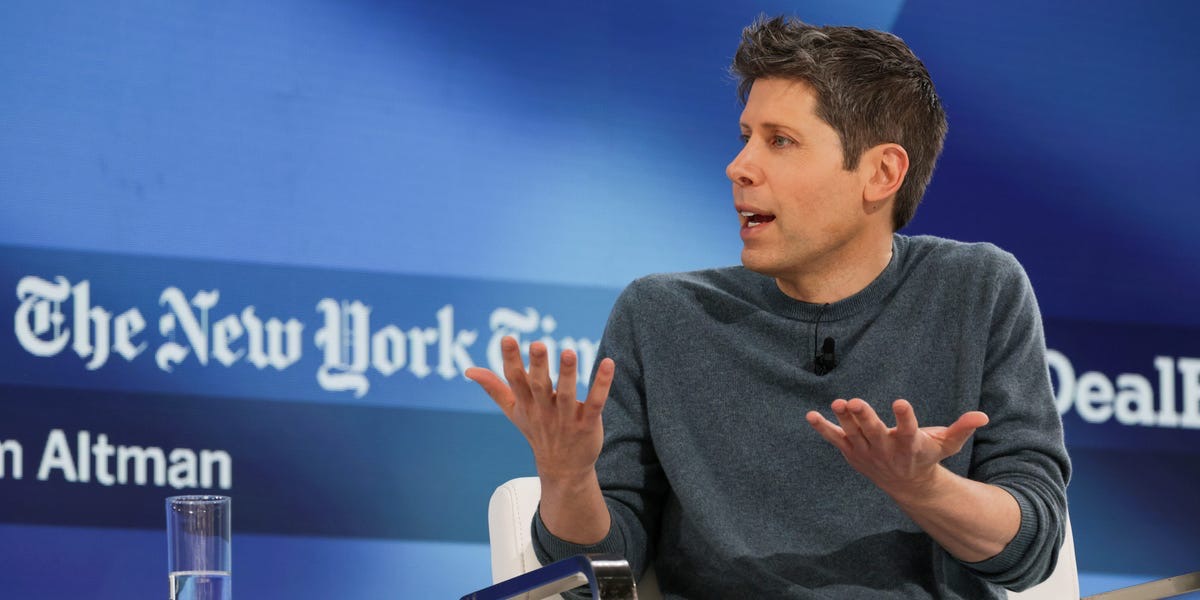
OpenAI CEO Sam Altman used an onstage interview at The New York Times Dealbook summit this week to take a direct shot at Elon Musk. Altman objected to Musk's past suggestion that AI could become so powerful that it would reduce humanity to the status of a house pet.
"I don't want to be a Labrador. I don't want my kids to be Labradors," Altman said. "I want people to have the agency over the future that we have had."
The jab has a history. In July, The Economist asked Musk about a comment he made more than a decade ago, that if AI advanced too quickly it would make humans "like a pet Labrador." Musk brushed it off. "Labradors are pretty happy creatures, that's my experience," he told the magazine while chuckling. In 2016, he also said, "I don't love the idea of being a house cat," and argued that the way to prevent that outcome was to hook human brains into computers.
The underlying concern is technical. In 2015, Musk and astrophysicist Neil deGrasse Tyson discussed what would happen if artificial intelligence reached recursive self-improvement, the stage where AI advances itself with minimal or no human guidance. Musk worried that such a system "could reprogram itself to be smarter and iterate very quickly and do that 24 hours a day on millions of computers." Some researchers argue that at that point AI could outpace human intelligence and any means of controlling it.
The two men are not entirely opposed on the risk. Anthropic CEO Dario Amodei, Altman and Musk all endorsed Amodei's September call to slow frontier AI research that pushes models toward self-improvement, and to use the time to find better ways to keep models under human control. Altman told the Dealbook audience that he and his counterparts agree a gradual handover of decision-making to AI is "a terrible idea," though he said he is not convinced all his competitors feel the same way.
The rivalry itself is older and more personal. Musk co-founded OpenAI and was an early financial backer before his anger over the lab's change in direction pushed the two apart. In May, a jury ruled that Musk had waited too long to sue Altman and OpenAI over the matter.
For founders, the headline is less about celebrity sparring than about who holds the controls. Capital, compute and model access are concentrated in a handful of labs, and the rules on how fast those systems can be pushed are still being written. Free enterprise works best when builders can see the rules clearly and when competition, not a single company's judgment, decides what gets built. If the leading labs are pressing for slowdowns, the cost of compliance and delay lands on smaller companies that depend on those platforms. Read the Dealbook remarks as a signal to watch how regulation and voluntary pledges get defined, because the terms set now will shape which companies can afford to play.


