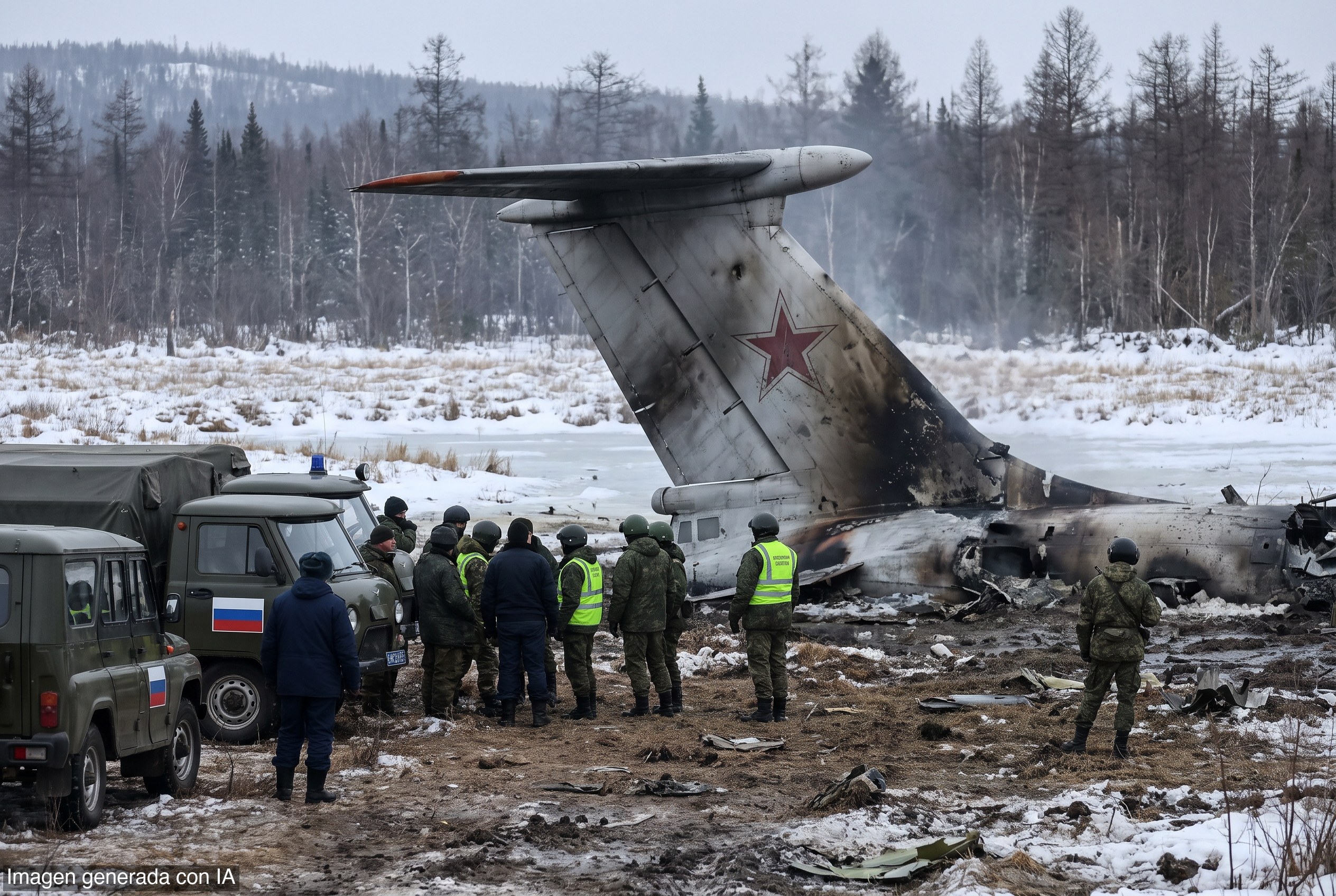
One of Russia’s Tu-95 strategic bombers crashed during a training flight in the Amur region, killing six crew members, the country’s defense ministry said.
A seventh crew member survived the initial crash and was hospitalized, and the plane was not carrying ammunition, the ministry added, per state media.
The defense ministry said the aircraft made an emergency landing near Krasnoyarovo while conducting a training flight. 'The crew did everything possible to divert the aircraft away from residential buildings,' the ministry said.
According to state media, the bomber went down shortly after taking off from the Ukrainka air base. Russian officials have not said what caused the crash.
The Tu-95 is central to Russia’s long-range nuclear bomber fleet. Business Insider said Russia is believed to possess 47 Tu-95MS bombers, while Ukrainian intelligence said in August that combat losses, maintenance issues, and a shortage of parts had reduced the operational fleet to 37 or 38 planes.
The crash comes more than a year after Ukraine’s Operation Spiderweb damaged an estimated seven to eight Tu-95 aircraft in a surprise drone attack on a Russian air base in June 2025.
The Tu-95MS can carry up to 16 nuclear or conventional missiles and has been used more recently to launch Kh-101 and Kh-555 cruise missiles at Ukraine from far behind the front lines. Russia cannot make any more of these aircraft after dismantling production facilities in the 1990s.
Moscow also fields about 18 Tu-160 bombers and the Tu-22M3, but both fleets face limits of their own. Business Insider said Tu-160 production has been slow under sanctions, with one or two planes delivered a year, if any, and Ukrainian open-source analysts believe about two-thirds are grounded for maintenance and upgrades. The Tu-22M3 fleet, it added, has been reduced to as few as nine flightworthy planes.
For Russia, this is not just another crash. It is a reminder that scarce military hardware becomes a taxpayer burden once it cannot be replaced or maintained at scale. A force built around aging aircraft, sanctions, and parts shortages is a force that gets weaker each time a plane goes down.


