The most famous open problem in mathematics just became a contest between human minds and machines.
Levent Alpöge, a mathematician at Anthropic, said on Friday that he had solved the Riemann Hypothesis using AI. Hours later, Alessandro Masullo, a postdoctoral researcher at Stanford, posted a paper claiming his own solution. Masullo said he had spent 12 years on the problem and was about a year away from releasing his results when Alpöge's report landed. According to Masullo, he was advised to publish the current version as it stands, and he warned that it may contain errors because it was rushed.
The two proofs are very different in scope. Alpöge described working with Claude for weeks to reach his solution. Masullo's version is far shorter. Neither had been formally proven by Friday afternoon, and mathematicians are now scrutinizing both with their own brains and with AI tools.
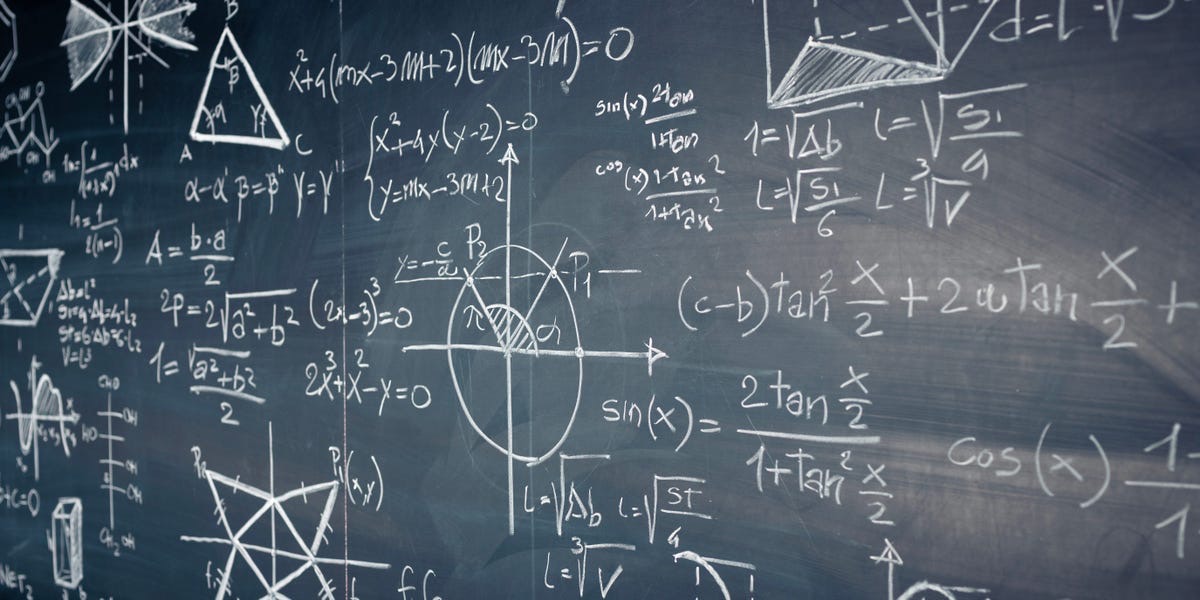
The stakes go beyond one result. The Riemann Hypothesis proposes a predicted distribution for how often prime numbers appear alongside other numbers, and Steven Strogatz, a math professor at Cornell, calls it the 'White Whale' of mathematics. Proving it is a Millennium Prize Problem, which carries a $1 million reward. The Navier-Stokes equations, which OpenAI has said it solved, sit in the same category. Sergei Gukov, a math professor at Caltech, called the claim a 'HUGE deal,' adding in the past tense that 'RH was the biggest problem in math.'
For the mathematics community, the question is credibility. Masullo said human mathematicians still have a place in the age of AI. 'We are still here,' he said. 'We are very much alive. We are not going anywhere.' His message was a pointed reply to the discouragement many researchers feel about the pace of AI announcements, which have included high-profile claims on long-standing problems for months.
Here is the playbook for anyone watching this unfold. Wait for formal verification before treating either proof as settled. Check which claims survive independent scrutiny. And recognize that the reputation of an AI tool and the reputation of a human researcher are now tied to the same test. If an AI-assisted proof holds, expect more labs to pursue similar claims. If it fails, expect a harder debate about how much trust these announcements deserve. Founders building on AI should note that the verification step is where the real work lies, and it is still done by people.