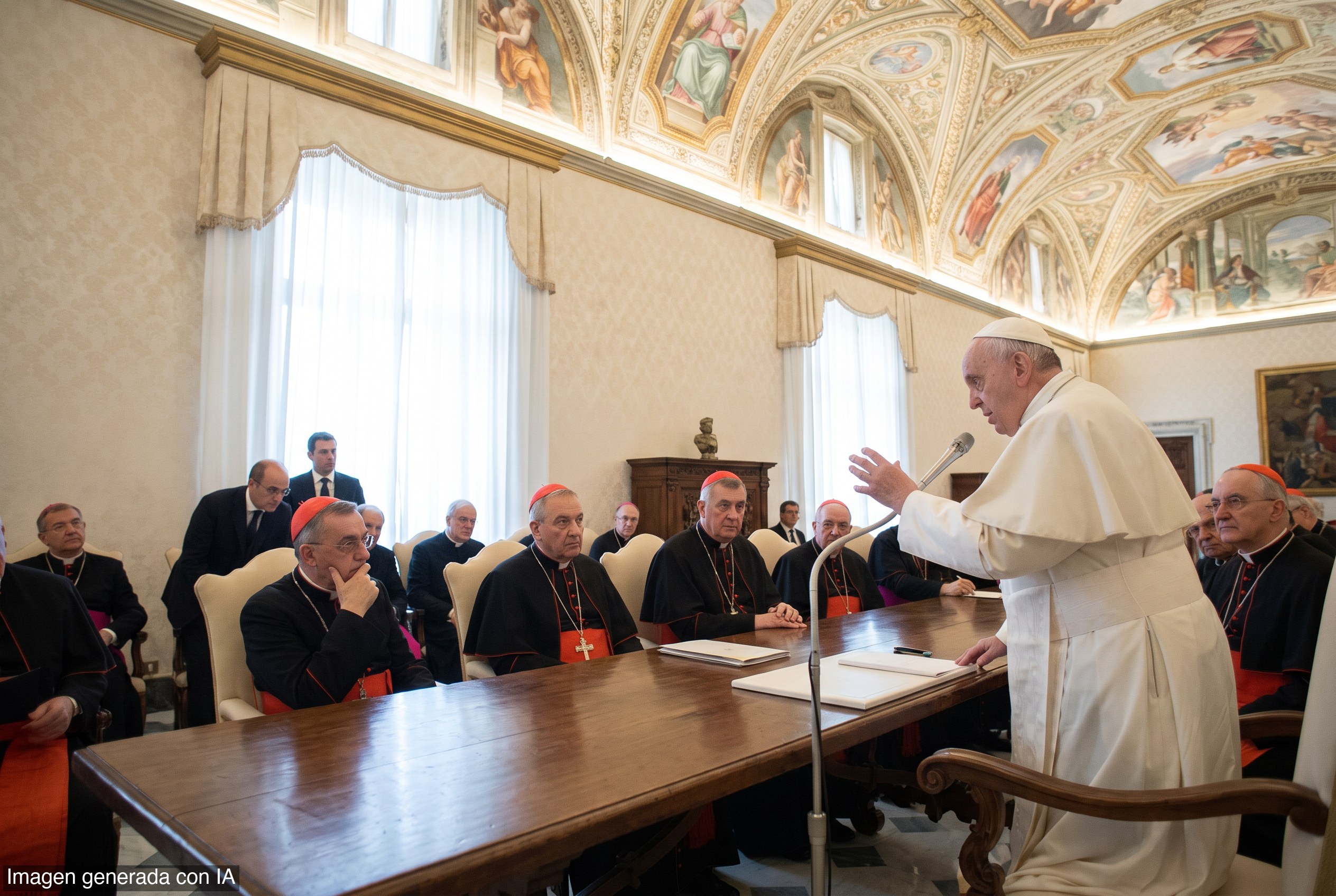
Pope Leo XIV used two speeches on Friday to deliver a blunt warning about artificial intelligence and the way it can reshape society.
Speaking to French diplomats, including President Emmanuel Macron, he said people must avoid losing their humanity amid a 'paradise of machines' that is invading and conditioning daily life. He called for 'education in ethical discernment' and the capacity to acknowledge the moral good, saying that is essential for human beings to flourish with 'unconditional respect for their interior freedom and their sacred dignity.'
In a separate speech at the United Nations Educational, Scientific, and Cultural Organization, the Pope said AI can amplify misinformation. 'Without truth, language becomes subject to the logic of violence and to the arbitrary will of the powerful,' he said.
His warning lands at a moment when tech companies like Google, Meta, and Anthropic are investing billions of dollars in the race to lead AI development. The stakes are enormous: profits, market dominance, and the power to set the rules for the next platform shift.
Pope Leo XIV has been consistent in pressing the human-first case. In August, he warned that AI could become a new form of 'economic colonialism,' saying the rapid development of AI risks creating new forms of technological dependence, with poorer nations increasingly reliant on wealthier ones. He has also spoken about possible effects on jobs, family units, and the environment.
The free-market case for AI is real: better tools can unlock productivity, lower costs, and create new business models. But the Pope is pointing to the downside founders and policymakers cannot ignore. If the race for scale outruns accountability, the winners may be the companies and governments that control the infrastructure, while workers, customers, and smaller nations absorb the risk.
Here's the playbook: build the technology, but keep humans in charge of the incentives, the rules, and the truth. Innovation is strongest when it expands freedom instead of concentrating power.


