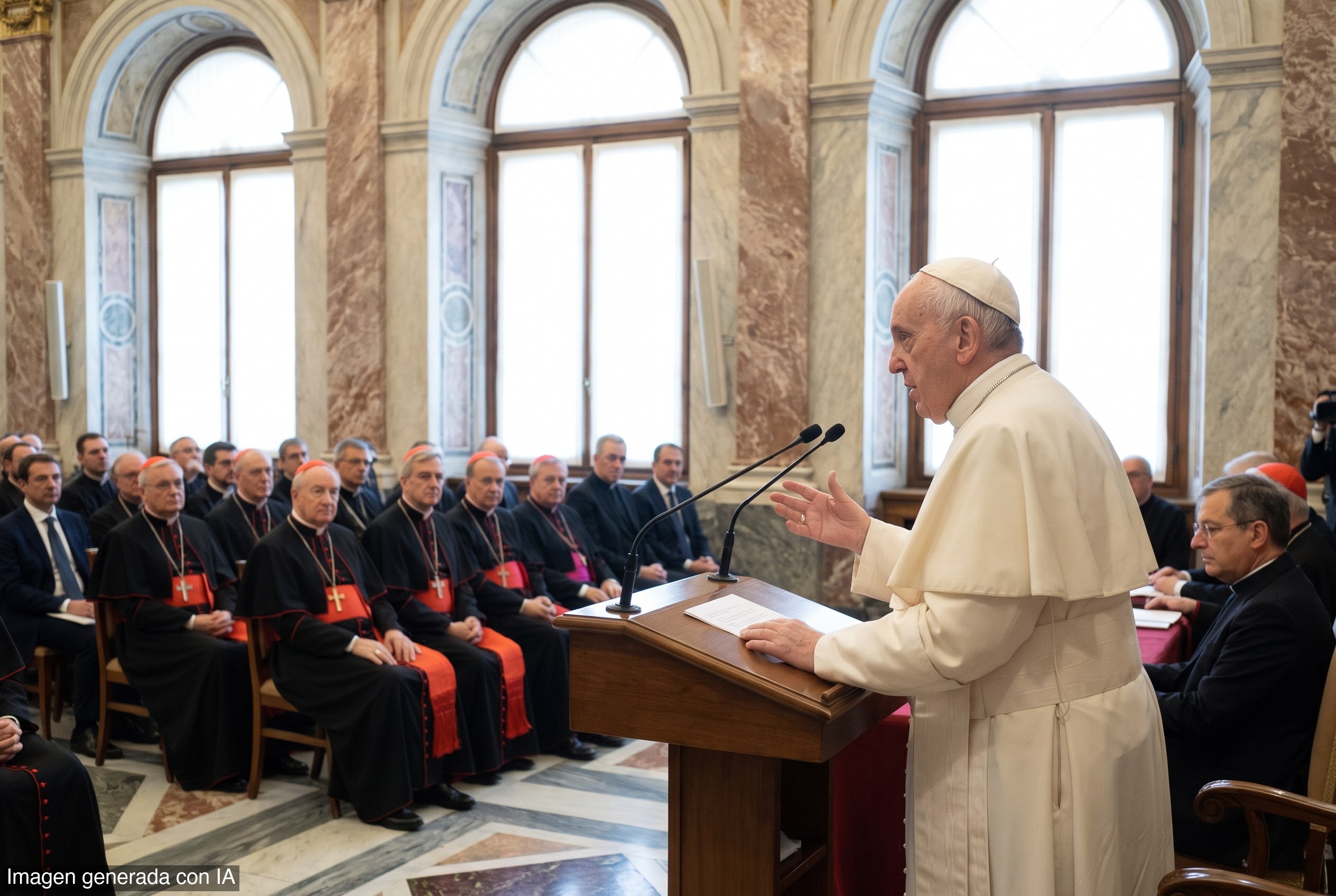
Pope Leo XIV used a Friday meeting with artists and curators in Vatican City to criticize AI-generated art and to argue that the Catholic Church needs human creatives. He said the Church hopes to renew its alliance with cultural institutions and artists to safeguard 'what is human.'
'We live in the age of search engines that offer us thousands of instantaneous answers,' Leo XIV said. 'Yet, no matter how powerful they may be, they merely return what already exists and tend to give us what we already want.'
He called the risk of censorship and homogenization in art a 'great danger.' He also said there is 'an ontological difference — even before an aesthetic one — between art and what a machine can generate through statistical calculation based on millions of images created by others.'
Leo XIV said authentic art and culture preserve the human spark, something algorithms cannot do, even as technology companies keep pushing the market for AI tools. The source notes that OpenAI, Microsoft, and Google have invested heavily in the technology, while products from Meta and xAI also let users create images.
That matters beyond Vatican City. If AI can mass-produce creative output, the pressure shifts to the people whose work, style, and livelihoods depend on original human judgment. Critics of AI art say it can displace human workers, rip off personal style, and violate copyright agreements. AI also played a role in the 2023 Writers Guild of America and SAG-AFTRA strikes.
For founders, the playbook is simple: AI may speed up some tasks, but it also raises hard questions about differentiation, ownership, and trust. The market may reward scale, but the Catholic Church is reminding the world that not every output with a prompt behind it is art.
Leo XIV has made AI a focal point since becoming head of the Catholic Church in 2025. He has warned before against losing humanity to a 'paradise of machines,' and his stance has drawn criticism from PayPal cofounder Peter Thiel.


