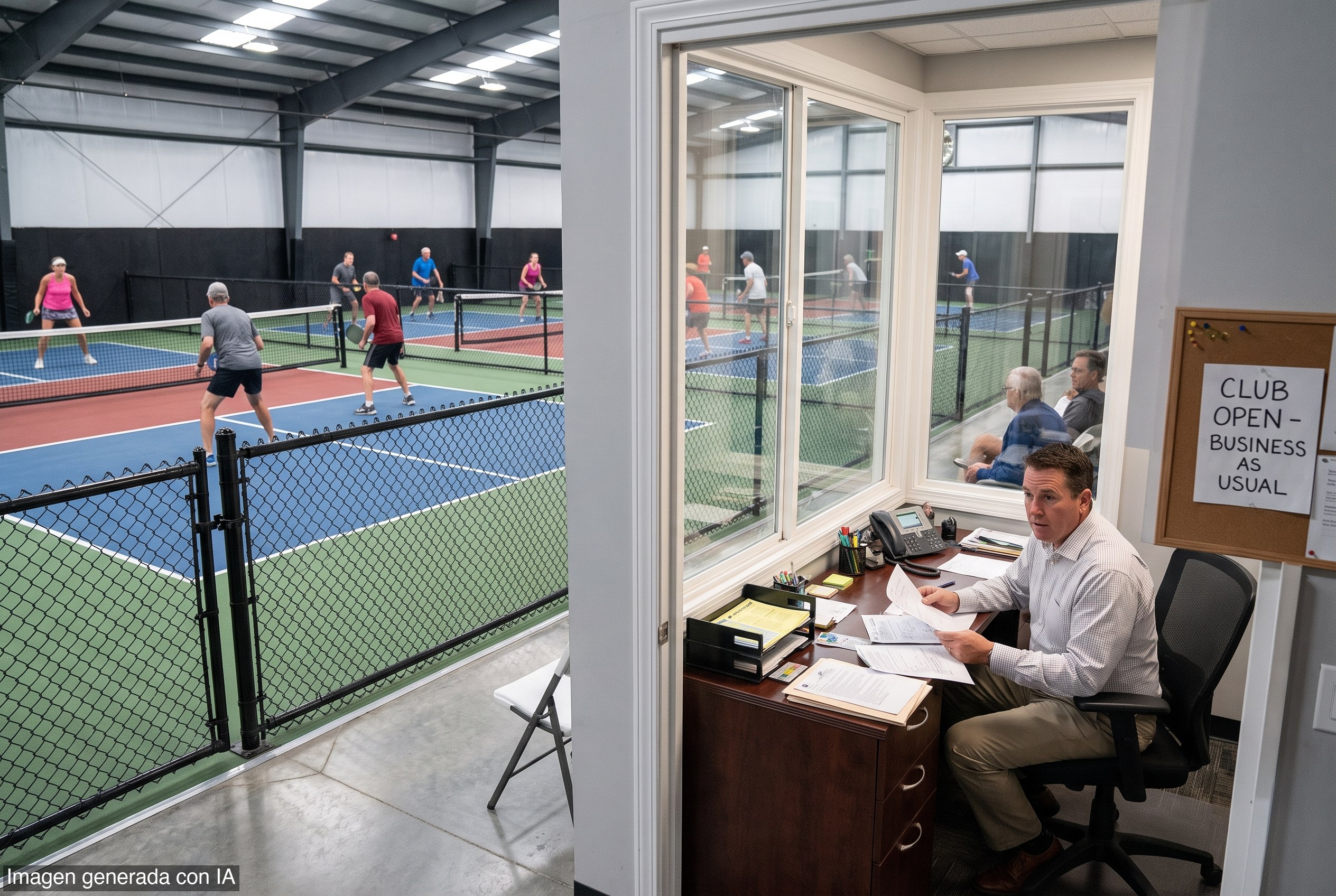
The Picklr, a pickleball facility franchisor founded in 2021, has filed for Chapter 11 bankruptcy protection in the U.S. Bankruptcy Court for the Northern District of Texas. The company said its clubs and independently owned franchise locations remain open.
The filing comes with new financing lined up, at least in part. The Picklr said an investor group led by one of its franchisees has committed $4.5 million in financing, subject to court approval. Sports Business Journal reported the group has committed $4.8 million to sponsor the reorganization.
Founder and CEO Jorge Barragan said the bankruptcy stems in part from The Picklr agreeing to guarantee lease payments for some early franchisees. Barragan said about 40 locations had those arrangements, which became too much for the parent company to carry.
'We signed, unfortunately, too many corporate guarantees that landed on the holding company, and that’s on us. I own it,' Barragan said. He said Chapter 11 should give the company room to work with landlords and reset the business around profitable operations.
The company said its franchise partners own and run their clubs. 'Our clubs are open. Our members are playing,' The Picklr said in a public statement cited by the International Association of Pickleball and Padel Facilities.
The business expanded fast. Sports Business Journal said The Picklr has more than 70 domestic locations and facilities in Australia, Canada and Japan. A balance sheet attached to the bankruptcy petition and dated Aug. 31 listed about $915,000 in assets, $2.39 million in liabilities and $70,000 in bank accounts, according to IAPPF.
That same filing listed seven unsecured claims described as guaranty obligations totaling about $783,000, all marked contingent, unliquidated and disputed, according to IAPPF. Sports Business Journal also reported that financial statements in the company’s franchise disclosure document showed a net loss of $4.4 million on $10.3 million in revenue in 2025, and about $19 million in total liabilities as of the end of March.
Tom Neale, a Picklr investor and franchisee, is leading the investor group expected to sponsor the reorganization. Neale told Sports Business Journal he believes the brand still has a viable future and that restructuring can help the company work through headwinds with landlords and franchisees.
For founders, this is the part of growth that can quietly break the model: scaling faster than the cash flow can support. Lease guarantees may help open doors early, but they can also turn into a long-term drag on the balance sheet when the business is still young.
The playbook is simple. Growth is not just more locations; it is durable unit economics. If a franchise system needs restructuring to unwind early promises, the real lesson is about discipline, not demand.


