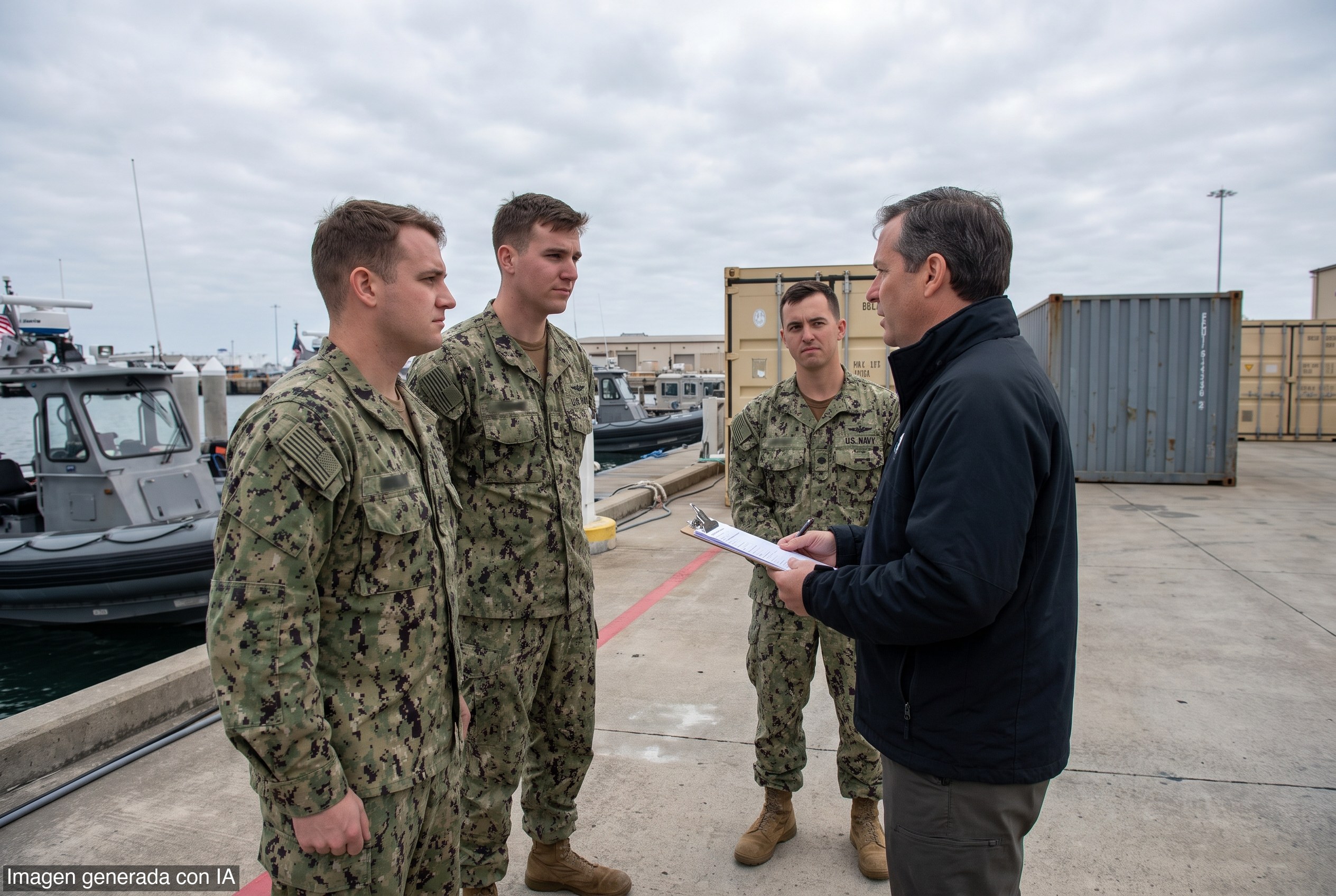
A Pentagon watchdog says some of the Navy's elite special warfare boat crews may be heading back to dangerous missions with undiagnosed brain injuries.
The Department of Defense's Office of the Inspector General said in a report released this week that breakdowns in reporting, screening, and follow-up evaluations could be letting service members return to duty with traumatic brain injuries.
Special Warfare Combatant-craft Crewmen, or SWCCs, are an elite special operations force. Aboard fast boats, they support and execute combat missions such as transporting other special operators, interdicting vessels, and conducting reconnaissance at sea.
The report said SWCCs repeatedly endure severe wave-slamming forces. It also warned that without an objective, standardized testing mechanism to identify injuries early, symptoms may be mistaken for routine fatigue.
That matters because sending service members back to high-risk maritime and riverine environments with undiagnosed mild traumatic brain injury can result in degraded operational decision-making, the report said.
The watchdog found that SWCCs have not been regularly filling out traumatic brain injury exposure forms. A medical officer told investigators that crews often skip the paperwork because it takes hours and affects rest, recovery, and preparation for future missions. The report said command did not enforce compliance.
Medical records reviewed by investigators also showed no completed Military Acute Concussion Evaluation, Version 2, or MACE-2 assessments, among reported TBI exposures between 2020 and 2026.
The report said the screening process itself has weaknesses. Corpsmen must first make a subjective call on whether symptoms are caused by a concussion or by seasickness, dehydration, or sleep deprivation. In some cases, crews said they can mask symptoms by memorizing portions of the MACE-2, which can reduce the accuracy of the assessment.
Follow-up care appears to be another weak point. The office found almost no evidence that operators received regular follow-up treatment. Without that care, a SWCC could return to work too soon, the report said.
The findings conclude that crews may have returned to duty while still suffering from undiagnosed or untreated TBIs, which could increase the risk of long-term ailments and hurt readiness.
The office recommended a standardized, objective TBI checklist, with estimated completion in December 2027. It also called for a mechanism to enforce accountability for required follow-up treatment and to mitigate gaps in unit readiness, with reinforced mandatory follow-up appointments and an escalation protocol expected by March 2027.
Naval Special Warfare Command agreed with the recommendations and said it is revising its concussion management approach, including developing a standardized screening tool for wave-impact and other non-blast concussive events.
For founders and operators, the lesson is straightforward: if the system cannot reliably flag damage early, it will optimize for throughput instead of safety. The Navy's problem is not just medical — it is also procedural, because missed follow-ups and weak compliance turn a known risk into a recurring one.
The math is simple. When accountability is optional, hidden injuries travel back into the mission with the team. That is a readiness problem, a people problem, and a management problem all at once.


