Palo Alto Networks shares rose 6% on Thursday as businesses increased spending on cybersecurity products and investors responded to a bigger strategic move: the company's acquisition of a startup that pushes it into securing open-weight artificial intelligence models.
The numbers behind the rally were strong. Palo Alto beat Wall Street's estimates for the fiscal first quarter, with revenue up 39% from a year ago, and it raised its guidance for the year.
Demand has been driven by a string of recent outages at Microsoft, banks and the Federal Aviation Administration. U.S. officials have not detected any malicious activity, but the disruptions have raised concerns about aging equipment and infrastructure. Many businesses are now scrambling to patch vulnerabilities faster than ever to keep up with the growing risk of AI-powered cyberattacks.
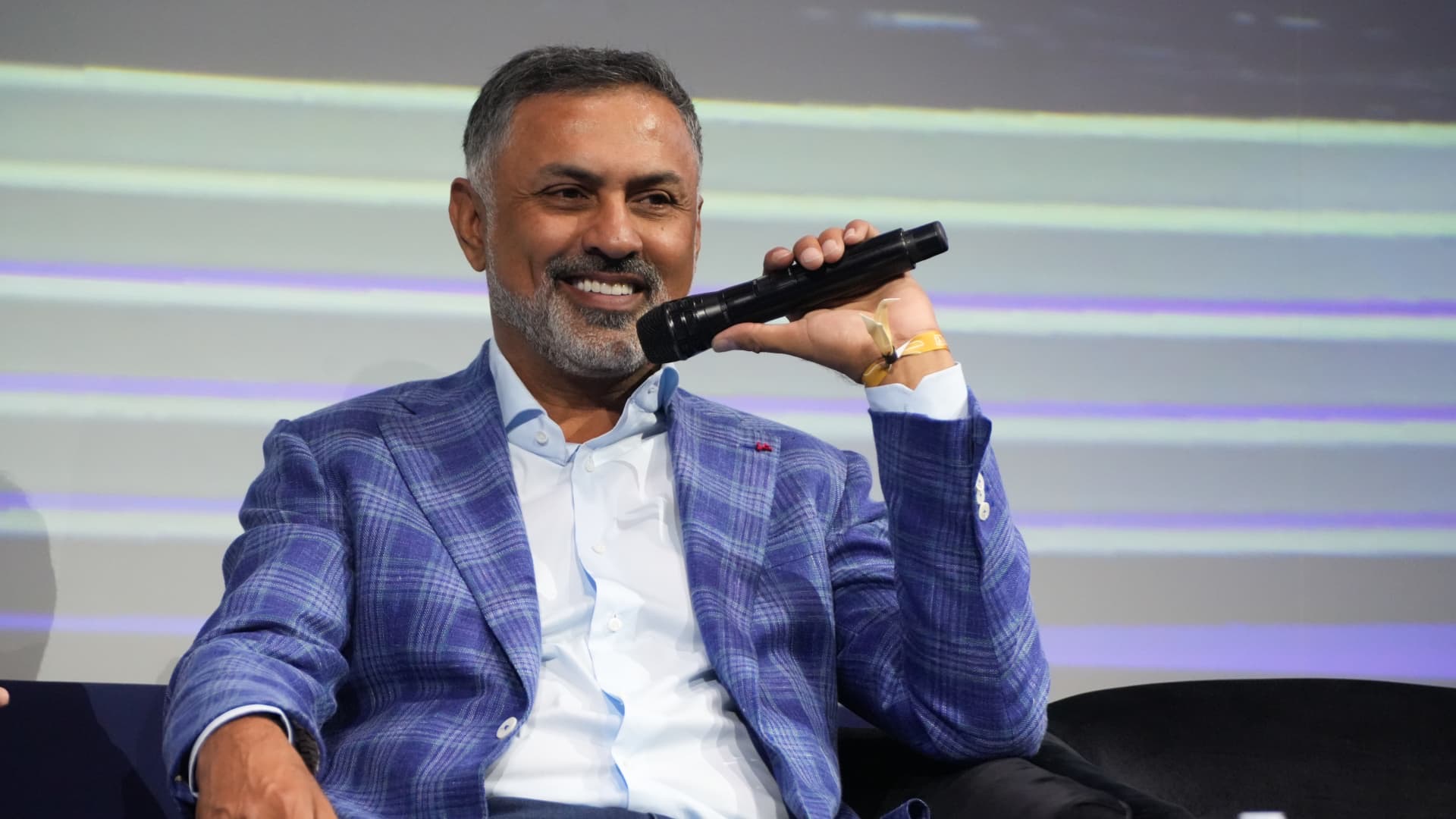
Those fears are pushing companies to consolidate their security platforms, and that is fueling growth in areas like firewall and AI security, according to Palo Alto Networks CEO Nikesh Arora, who spoke with CNBC's 'Mad Money' on Wednesday. 'They're going to have to make sure they get the best players in the market to come support them because this is no longer child's play,' Arora said.
Alongside earnings, Palo Alto announced a $4.5 billion deal to buy Applied Compute, a startup that helps train customized open-weight models. It is one of several recent deals in Arora's acquisition spree, and it marks a significant shift beyond cybersecurity. 'Rather than being one player out of 10 in the industry serving compute, we want to be the one player with Palo Alto that delivers secure compute and security capability,' Arora told CNBC.
The company expects the deal to add more than $1 billion in annual recurring revenue to its next-generation security business by the 2029 fiscal year.
Analysts were broadly positive. Bank of America analysts called the deal a 'bold move' to expand beyond securing AI into training open-weight models, one that could let Palo Alto lead the next phase of the AI revolution. Citigroup analysts wrote that the deal 'appears consistent with PANW's 'long-game' - become indispensable beyond cyber into multidisciplinary IT domains across AI-value-chain.'
For founders, the lesson is about focus versus expansion. Palo Alto built its lead by owning a clear category, and it is now using that position to buy adjacent capabilities. Acquisitions of this size only pay off when the customer base is already loyal and the cash flow is strong enough to absorb the risk. Here, the company's revenue growth gives it that room, and the market is rewarding the bet.
The close is worth reading as a warning as much as a signal. When a dominant platform keeps buying its way into new markets, smaller competitors lose ground, and customers who value choice have fewer independent options. Free enterprise rewards the company that wins the customer, but it should not become a reason to pile consolidation on top of consolidation. Investors are cheering now. The real test is whether the $1 billion in promised recurring revenue arrives on schedule and whether customers keep choosing one vendor for everything.


