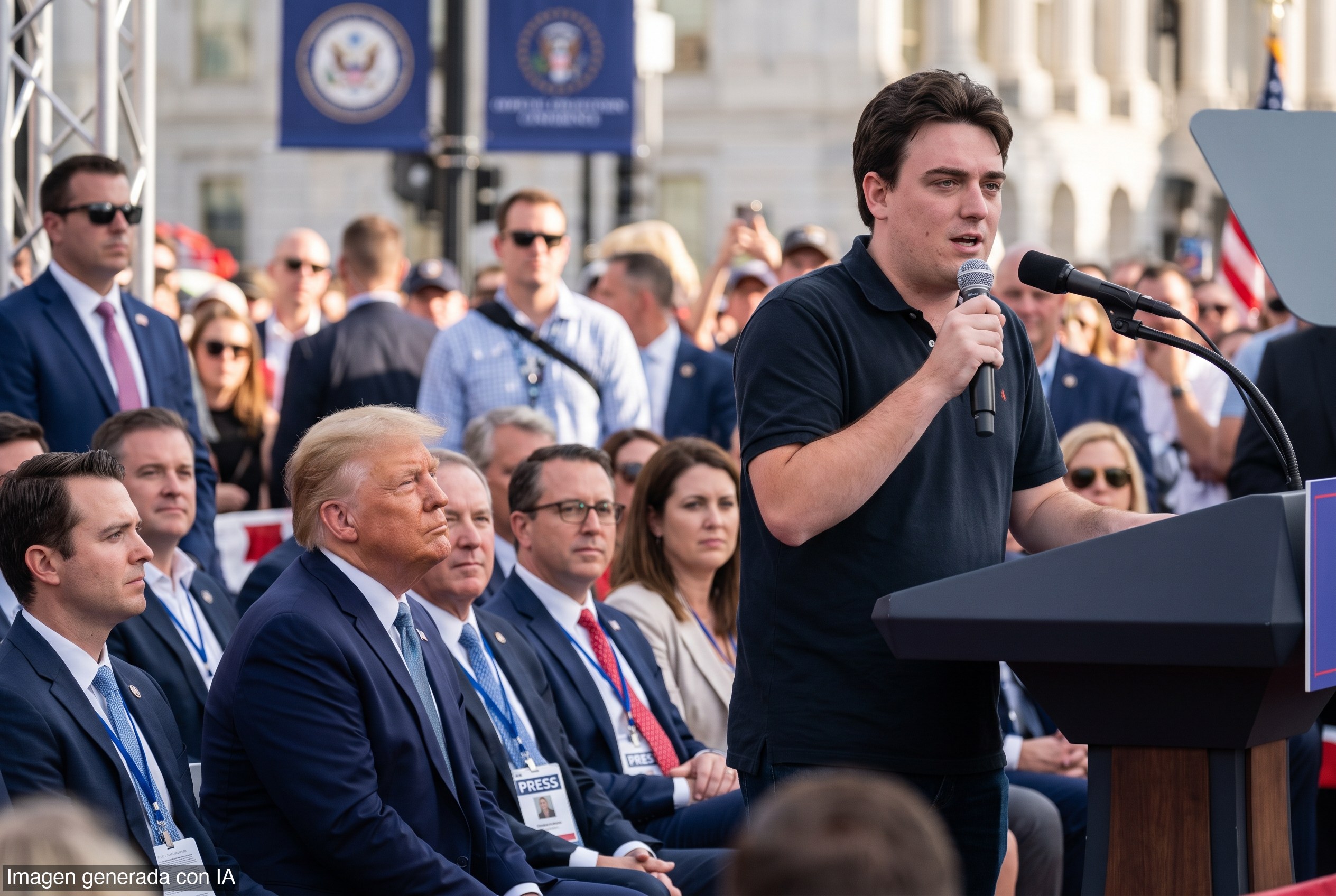
Palmer Luckey wants executions to be seen, not hidden.
The Anduril cofounder weighed in on the case of Nidal Hasan, who was convicted of killing 13 people at Fort Hood in 2009. Defense Secretary Pete Hegseth said Hasan's execution would be livestreamed, while President Donald Trump said he was still weighing the decision.
Luckey said he had been 'outspoken on wanting public executions for over a decade' and that his position had not changed. In a Sunday post on X, he wrote: 'Executions should be public and brutal, not private and medicalized.'
He added that executions are 'the ultimate example of the state's monopoly on violence' and said voters need to be confronted with the reality of state killings so they can have 'confidence or revulsion in the institution.'
Luckey also called private executions 'awful and dystopian,' and argued that the shift away from public punishment 'makes needless executions more likely, not less so.' He said people who dismiss public executions as 'barbaric or yucky' are missing 'the whole point.'
The post drew strong reaction on X. Some users called Luckey a 'true psycho,' while others compared Silicon Valley to a psych ward. One user wrote: 'Next they will be rationalising gladiatorial arenas for condemned prisoners.'
Others backed him, including Palantir cofounder Joe Lonsdale, who said he agreed. 'Palmer Luckey and George Washington are not barbaric,' Lonsdale wrote. 'Our society today is too soft in ways that cause our fellow citizens harm.'
The larger issue here is not just the death penalty. It is whether state power should be hidden behind antiseptic language and closed doors, or forced into the open where citizens can judge it for themselves. Luckey's argument is that transparency is the point. The counterargument is that brutality is not a virtue, no matter how public it is.
For founders and investors, the takeaway is about incentives and power. When the state normalizes violence, it changes the moral cost of using it. When it performs punishment as spectacle, it also changes the political cost of defending it. That is a debate about liberty, order, and the limits of government that is not going away soon.


