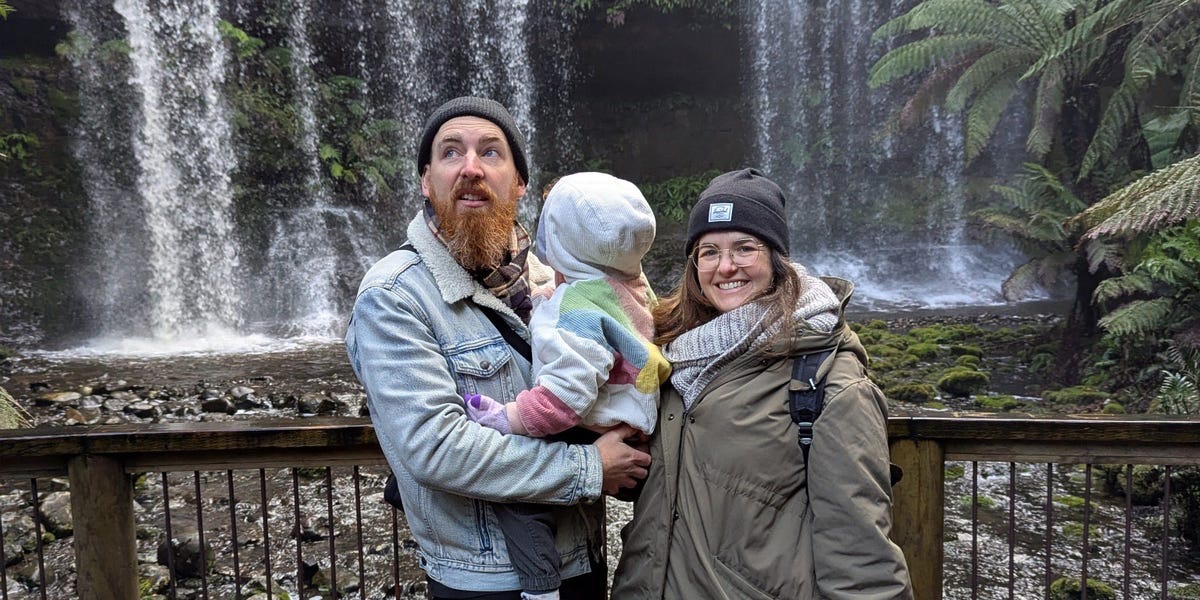
Jessica Moran and Michael Dearnley had been around the world. They had walked the Camino de Santiago in the rain, slept in 12-bunk dorm rooms and visited more than 40 countries. Then they took their 4-month-old daughter on a short local trip to the Victorian High Country of Australia, and they were packing the car after just two nights.
The plan looked clean on paper. Four nights in caravan parks, split between Beechworth and Yarrawonga, only three hours from home. A slow road trip, restful accommodations and plenty of sights. The reality was different. The couple spent hours stuck in the car, afraid to wake a sleeping child and miss the landmarks along the way. Their daughter's cries filled the quiet country town at night, and neither parent got much sleep. During the day, they spent much of their time back in their lodgings, managing diaper explosions whenever they ventured out.
After a second sleepless night, they decided to go home. The baby cried for the entire three-hour drive back.
Here's the playbook they took from it. The biggest mistake, as they put it, was going in with high expectations. Expectations set the scoreboard, and a family trip with an infant is almost always going to miss a scoreboard built for adult travel. When the plan falls apart, the gap between what you hoped for and what happened becomes the disappointment.
Six months later, they set out on their first international trip as a family. They were still learning as they went, but they changed the operating model. They prioritized routine and structure over spontaneity. They slowed down, focused on their daughter and cut the itinerary down to avoid overloading the day.
That trip went far better. Four years on, they have had many successful adventures with their daughter, and the rules have stayed the same. They plan only one or two simple activities per day. If things don't go to plan, they don't count it as a loss, because they never locked in the outcome to begin with.
For founders, the parallel is direct. Overcommitting to a schedule that ignores real constraints is a recipe for burnout, and it tends to show up as a cash-and-capacity problem before anyone names it. Cut the scope before the market or your own team does it for you. Build in slack for the unexpected, and measure progress against what you can actually sustain.
The couple did not give up on travel, and they did not stop being adventurous. They changed how they planned. Start smaller than you think, protect the basics like sleep and routine, and count the wins that are actually available to you. Trips and companies both run better when the plan matches the people running them.


