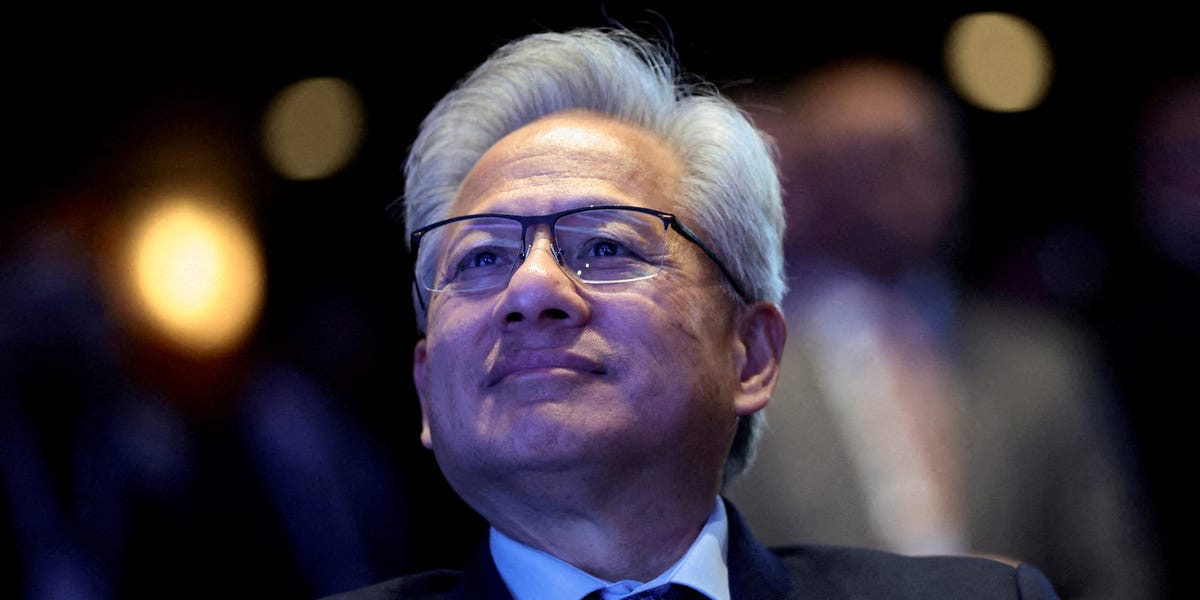
Jensen Huang reportedly told colleagues he doesn't 'believe in succession planning.' His reasoning: a plan would suggest some executives matter more than others.
That's a strong stance for a company this size. Here's the problem. Experts in corporate governance say the board, not the CEO, owns the job of preparing for a future without him.
Umesh Ramakrishnan, cofounder and chief strategy officer at the executive search firm Kingsley Gate, put it plainly: 'If the CEO is hit by the proverbial bus, somebody has to be in charge.'
The rating agency is taking the same view. On Wednesday, S&P Global Ratings placed Nvidia's AA credit rating on watch for a possible downgrade, citing concerns about management and governance. S&P said a downgrade could come within 90 days if it determines governance deficiencies remain. It called out 'weak executive oversight and lack of succession planning' and a 'key man' risk.
This isn't rare. In a 2025 Nasdaq survey of about 700 board members, CEOs, executives, and governance professionals, 21% said their boards had no succession plan. Another 16% said they had only an emergency plan.
Most companies that do plan keep it quiet. Ramakrishnan says the reason is practical: a visible plan can turn a sitting CEO into a lame duck or push passed-over contenders out the door. His advice is to start early. Boards should develop two or three serious internal candidates, give them real operating responsibility, and create incentives for them to stay through a transition.
Nvidia's structure makes the problem harder. Huang has around 60 direct reports, a setup he has credited with keeping information flowing. David Astorino, a senior partner at leadership consulting firm RHR International, has noted that many of those executives run individual pieces of the business and may not be ready to run the whole company.
The board's decision to reinstate Huang also raises questions. Nvidia's directors said they were satisfied with his 'candor' and had received 'input from senior levels of the United States government.' That came after his resignation, which followed reports of an intimate relationship with a client, US officials' concerns that he may have been the target of a foreign intelligence effort, and reports of affairs with two employees, one of them a direct report. Charles Elson, founding director of the Weinberg Center for Corporate Governance at the University of Delaware, said the swift return suggests the directors are unwilling to challenge him.
For investors, the takeaway is straightforward. A company that rests on one person is exposed, however strong that person is. Kim Scott, a former Apple and Google executive and cofounder of Radical Candor, warned that if everything depends on one leader, 'it's a house of cards.'
Huang himself has said he won't live forever. He told Garry Tan, CEO of Y Combinator, that he expected to die on the job, and that his successor 'can figure it out.'
That's the core issue. A successor will eventually take over, and the board should have been planning for it long before the crisis arrived.


