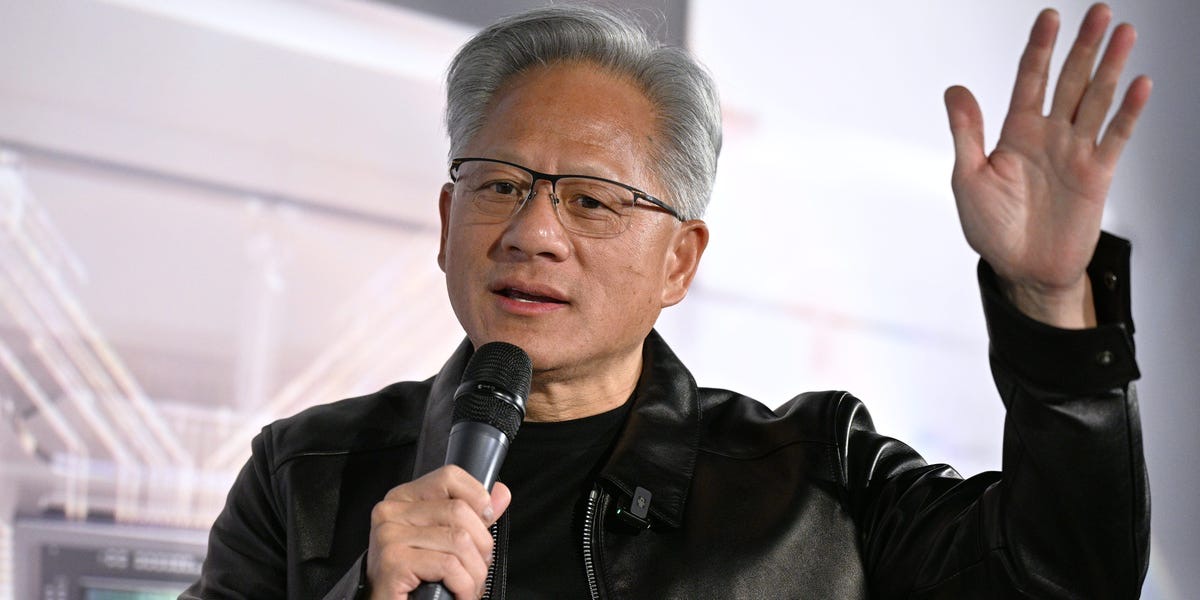
Nvidia's market value swung more than most founders will ever see in a lifetime, and the cause had little to do with chips. Shares rocketed 31% on Monday, adding nearly $1 trillion to the company's market capitalization, after cofounder Jensen Huang was reinstated as CEO. He had resigned less than two weeks earlier following reports of extramarital affairs with a woman accused of being a Chinese spy (China has denied those allegations) and a direct subordinate.
Go back a few weeks and the same stock told the opposite story. Nvidia's market cap cratered by nearly $3 trillion, or almost 50%, between October 6 and November 20. Investors were reacting to the snowballing Huang scandal, but also to fears that the debt-fueled AI infrastructure boom would end badly, that newly elected Democratic lawmakers would curb the data-center buildout, and that stubborn inflation would push interest rates higher.
Here's the playbook lesson. Erik Gordon, an entrepreneurship professor at the University of Michigan's Ross School of Business, told Business Insider that the company's market value has 'little to do' with its business and 'everything to do' with its leader. He drew a parallel to Tesla and Elon Musk. Alistair Barr of Business Insider called Huang's reinstatement a rare chance for investors to put a clear dollar value on a CEO.
The business underneath is not the problem. Nvidia generated about $78 billion of operating income in the three months ended October 25, a 115% increase from the same period last year. Strong operations and a fragile valuation can coexist, and that is exactly what makes the swings so revealing.
What should founders take from this? Key-person risk is a line item. If your revenue, fundraising and hiring all run through one executive, your cap table is quietly pricing that person's health and reputation. Gordon said a rational Nvidia investor 'should now price in the risk if Huang has a heart attack, or is tossed back out.' Ask yourself the same question about your own company, and then reduce the answer.
Build a succession map, document the decisions only you can make, and keep a board that can act without a crisis. Start smaller than you think: one named backup for each critical function is cheaper than a single 50% drawdown.
Not everyone sees a bubble. Wedbush analyst Dan Ives said in an X post that the 'AI Revolution is hitting its next gear of growth' and that Huang's return 'restores order at Nvidia.' Michael Burry, the investor known for The Big Short, has flagged aggressive accounting, hidden debts and circular deals as red flags, and he has repeatedly bet against Nvidia this year. Both can be right about different things. The lesson for founders is to stop letting one personality set your valuation, whether that personality is a hero or a headline.


