NATO militaries need to learn how to disperse weapons production before entering a war, according to Latvia's defense minister, Raivis Melnis.
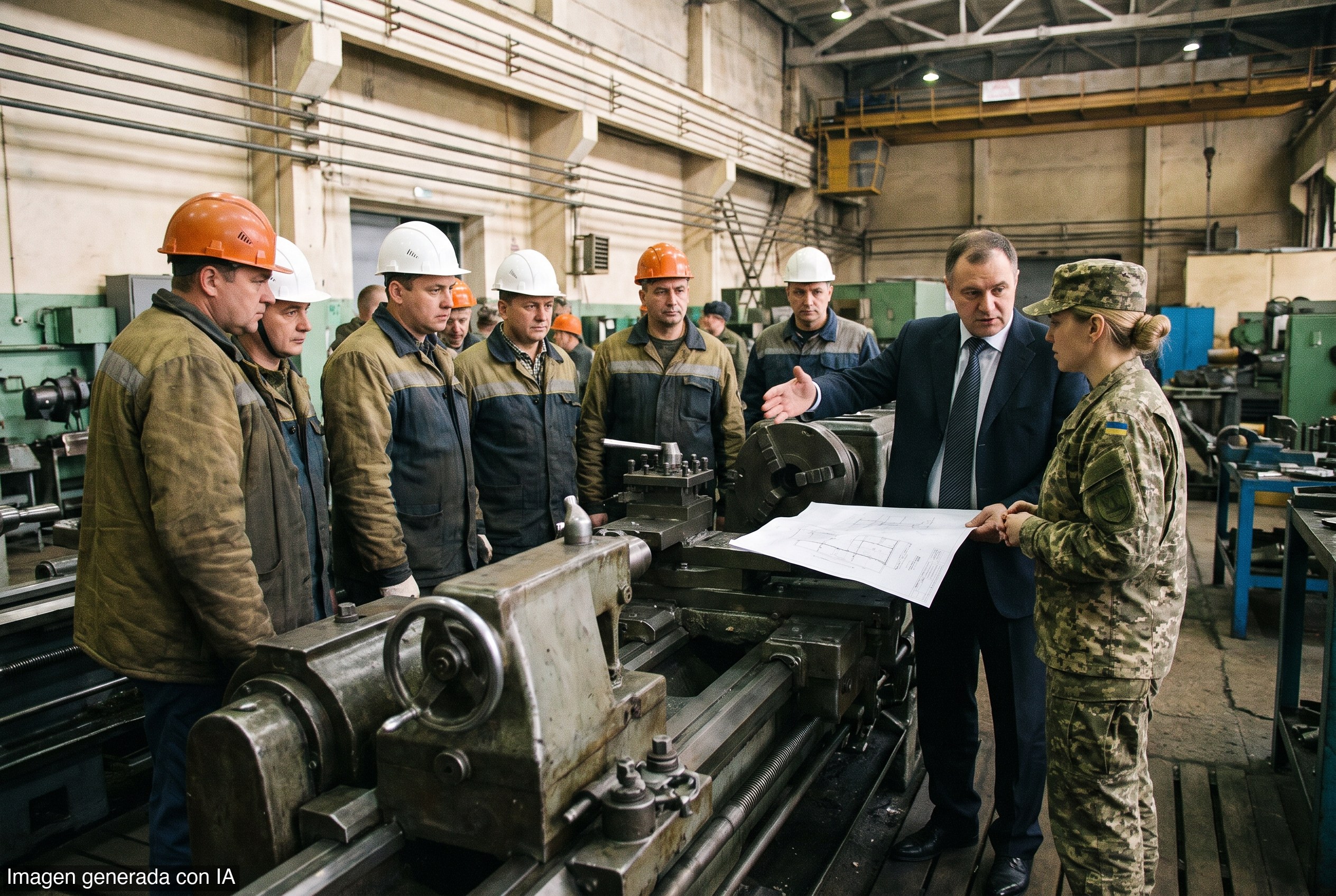
Melnis told Business Insider that industry in the West may not be ready to operate as it would need to in wartime. Ukrainian arms makers, he said, split manufacturing across multiple sites, operate underground, and move around to avoid a single Russian strike causing major damage.
By contrast, many European companies run projects from larger factories that could become a single point of failure. Melnis called Western industry a 'peacetime establishment' built under conditions where 'there is no threat.'
He said NATO companies work in a far more concentrated way and questioned whether they are ready to produce systems in different locations, dispersed, and organized differently. That is why he is encouraging partnerships between Latvian and Ukrainian defense companies.
According to Melnis, Latvia is trying to learn directly from Ukraine's battlefield experience and pair that with its own scientists and engineers. He said Latvia has announced a series of deals to deepen cooperation between the two countries' defense industries.
Ukraine has also shown one way to cushion the blow if a site is hit. Kyiv offers compensation for some business properties damaged or destroyed in Russian attacks and is planning additional support.
Other Ukrainian and regional defense executives echoed the same warning. Davyd Aloian, the deputy secretary of Ukraine's National Security and Defense Council, said the Russian threat to Europe is so substantial that companies across NATO should 'definitely' start breaking up their production more.
Mykyta Rozhkov, the chief business development officer at Ukrainian arms maker Frontline Robotics, said some alliance defense firms have already sought the company's advice on dispersing manufacturing operations. He said Frontline has adapted to 'endure the loss of any site,' even if any loss is still 'painful.'
Oleg, a company executive at Ukrainian drone maker TechEx, said the company faces 'another level of threat from Russia trying to hit the factories' every day. He said the company has to switch locations every couple of months to keep people safe.
The math is simple: concentrated production is cheaper in peacetime, but it can be a liability in war. Karmo Saar, head of sales at Estonian drone maker Krattworks, said that while one big facility would be 'a lot more economical, cheaper, and better,' Ukraine cannot operate that way. 'In Europe, we do that,' he said. 'And when the war strikes, I think we're going to be punished.'
For founders and operators, the lesson is about resilience over convenience. Distributed manufacturing may carry economic downsides, but it reduces the chance that one attack wipes out the whole operation. In defense, as in any hard business, survivability is part of the margin.


