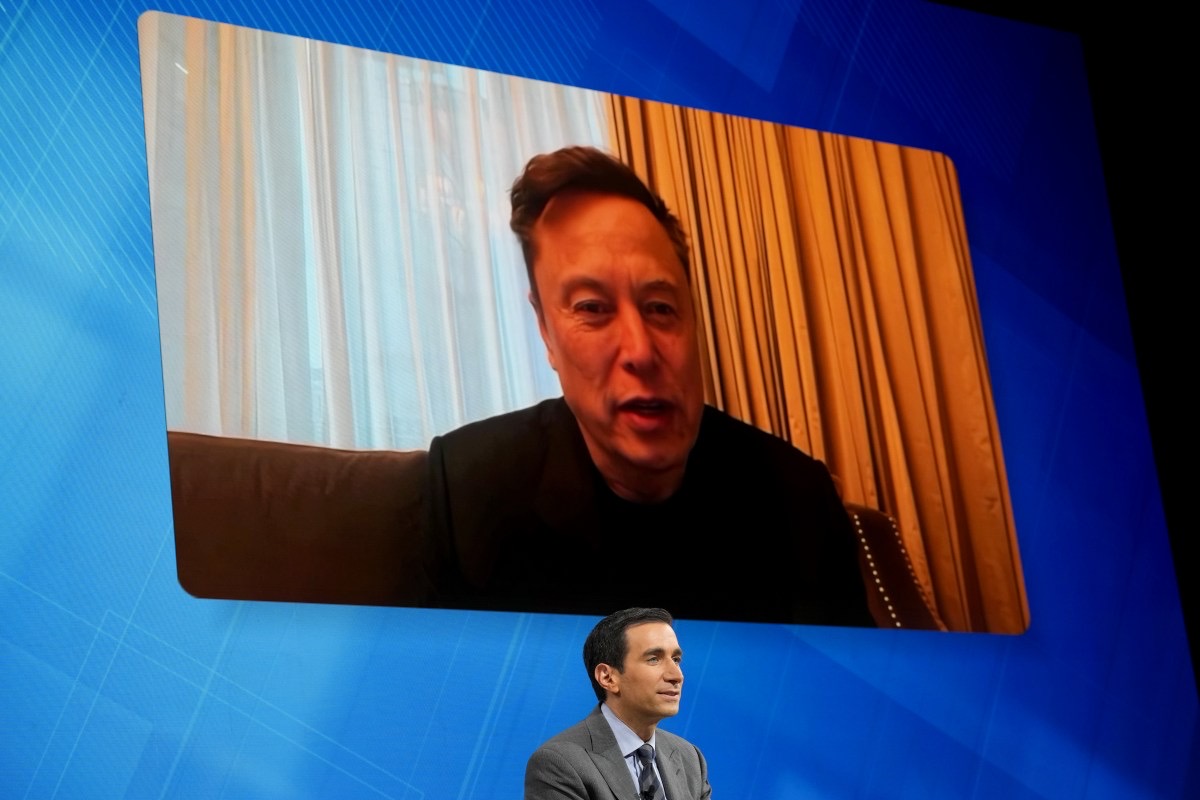
Elon Musk, the CEO of Tesla and SpaceX, told the New York Times DealBook Summit on Wednesday that he feels foolish about how much money he put into the 2026 midterms. 'I feel pretty foolish about having spent so much money and not seeing much for it,' he said, speaking by video from China, where he was joining President Trump for the APEC summit.
The numbers are large. Business Insider reported that Musk donated at least $446 million to support GOP candidates, with much of it aimed at Texas, where Tesla and SpaceX are headquartered. In September he gave $158 million to the Senate GOP's main super PAC, which backed Republican candidate Ken Paxton. The results went the other way. Democrats seized both chambers of Congress, and Gina Hinojosa defeated Republican Greg Abbott in the Texas governor's race, the first time in more than 30 years that Texas has elected a Democratic governor.
Musk did not fully abandon the idea that money helped. He said the outcome might have been worse without it, but added that 'American elections are not just about money.' 'If I could rewind the clock, I would have spent less money,' he said. Business Insider noted that this is not his first expression of regret; last year, around the time he left the Department of Government Efficiency, he said he had probably spent too much time on politics and would cut back on political spending.
He also distanced himself from the MAGA label. 'I'm not MAGA,' Musk said. 'If that means sort of blind adherence to a set of policies by the Republican Party, then I certainly don't have that.' Asked about his views on immigration, which some critics call extreme, he replied, 'Like what?'
Musk also said he expects Anthropic to keep renting computing capacity from SpaceX and would like to see the arrangement grow. He said the most likely outcome was that Anthropic would seek an additional 10 gigawatts of capacity from SpaceX.
The legal backdrop is less comfortable. Democratic lawmakers have signaled they may investigate Musk's role in DOGE and Starlink's activities in Ukraine. Musk said he does not need a pardon because he has committed no crimes, and he suggested that a Texas Democratic official who called for him to face prison was echoing Lavrentiy Beria, the Soviet secret police chief. Those are his claims, and no investigation has yet reached a conclusion.
For the free-market reader, the point is not whether Musk is right or wrong about himself. It is the cost. Nearly $500 million in private money went into a campaign that did not hold Texas, and the lesson is that political spending is no guarantee of a return. Every dollar spent on elections is a dollar not spent building products, hiring workers or returning capital to shareholders. Founders who write checks to politicians should weigh that tradeoff as carefully as they weigh a customer acquisition budget.


