Elon Musk has put a number on SpaceX's future that is hard to take seriously: $128 quintillion. That is 128 followed by 18 zeros, or 128 billion billions.
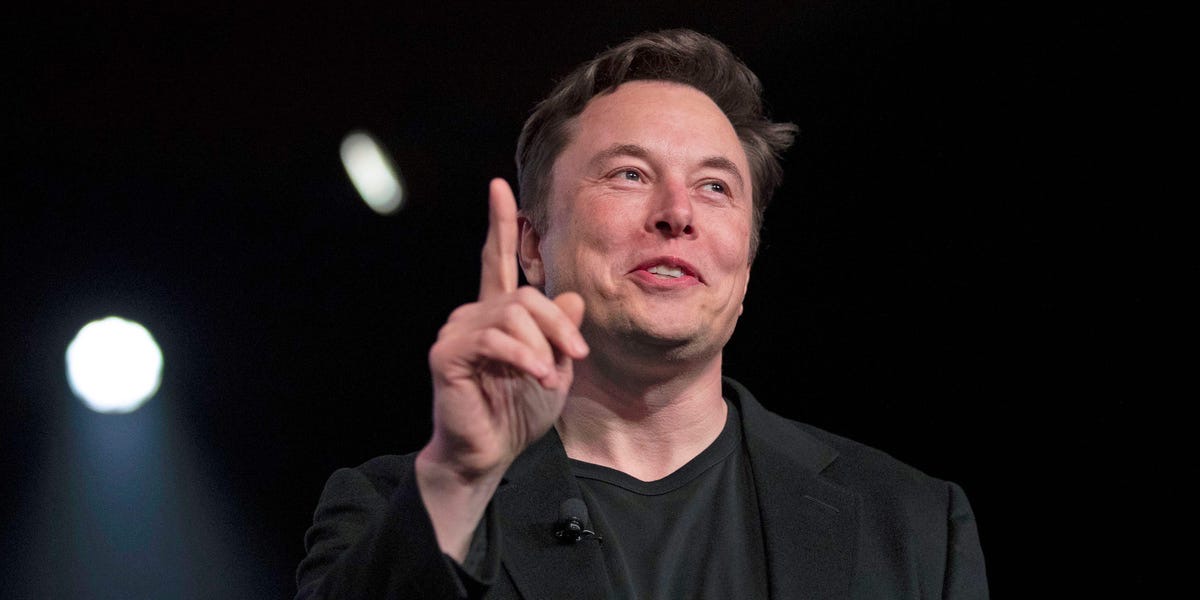
In an early morning X post on Thursday, Musk said that 'if SpaceX succeeds in making life multiplanetary and harnessing even a millionth of the Sun's energy, it will be worth about a million times the current global economy.' The International Monetary Fund puts the world economy at around $128 trillion, so Musk's math lands on a figure a million times larger. Measured against SpaceX's $1.7 trillion market capitalization as of Wednesday's close, that would be a roughly 75 million-fold increase.
Here's the playbook for reading claims like this. Start with the base: SpaceX generated $14.6 billion of revenue last quarter, up 161% from the same period a year earlier, and swung from a $1.1 billion net loss to a $4.4 billion net income. Those are strong numbers for any company. Now run the math on the headline. Musk's post implies that a single share, worth around $127 at Wednesday's close, could one day be worth about $9.5 billion, assuming no dilution.
Even the more grounded goal Musk floated in October does not close the gap. He said SpaceX hitting $1 trillion in annual revenue in 2028 was 'no longer impossible.' Suppose the company reached that mark and then grew revenue another 1,000-fold to $1 quadrillion. That would still be less than 1% of $128 quintillion.
Musk himself has framed this kind of statement as something other than a forecast. After the October post, he said it was not a 'statement of extreme confidence,' but a belief that 'there is such a path and the probability of achieving it is not zero.' Founders should note the distinction. A probability that is not zero is not a valuation, and it is not a plan you can put in front of a board or a lender.
There is also a second thread here. Musk tied the valuation claim to a pledge to match the company's gift of one share to every active Trump Account, and said the rocket maker was part of his commitment to give one of his SpaceX shares to 'every kid in America' next year. Whatever you think of that program, a giveaway of equity lifts the headline number while leaving the economics of the business unchanged.
For founders, the lesson is practical. Investors and employees price a company on revenue, margins, and cash flow they can verify today, not on a figure that requires the sun's energy to be harnessed. Build your model from the bottom up: current revenue, net margin, runway, and the customers who keep paying. Let the ambitious story sit on top of that foundation, not replace it.
SpaceX has earned real attention with its growth. The $128 quintillion number adds nothing to that case, and it may give skeptics an easy reason to dismiss the company's genuine results.


