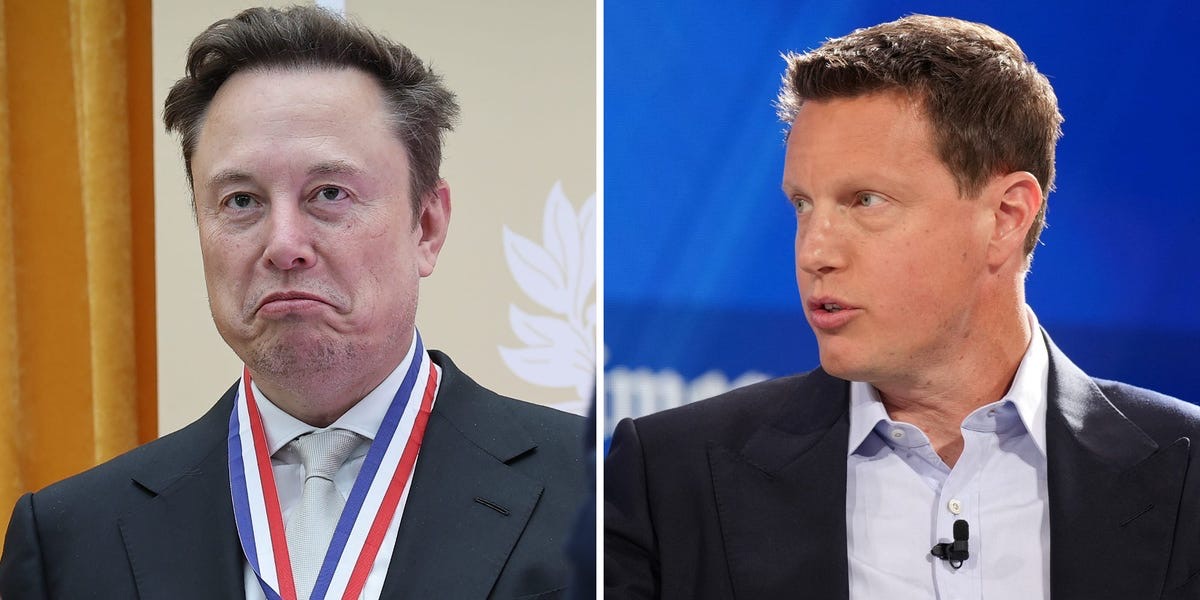
Skydance CEO David Ellison has a lot of kind words for Elon Musk. Speaking at The New York Times' DealBook Summit on Wednesday, Ellison called Musk 'the greatest entrepreneur of our time' and said that having him as a shareholder is 'an honor and a privilege.'
Ellison confirmed that Musk holds a stake in the company, though he did not give the amount. Semafor reported in October that Musk invested about $1 billion, and Hollywood Reporter and Deadline both cite that figure. Ellison also said he would be 'thrilled' to collaborate with Musk in the future, noting that the world's richest man 'doesn't invest in a lot of companies.'
The investment arrived as Skydance sought capital amid cost-cutting efforts. The merger that created the company was initially backed by roughly $46.7 billion in equity financing from Larry Ellison and RedBird Capital. That financing was later spread among a larger group of investors, including Saudi Arabia's Public Investment Fund, the Qatar Investment Authority and the Abu Dhabi Investment Authority. Whether Musk's stake came from that existing pool or from a new equity raise has not been made public.
The documentary is the harder part of the story. Filmmaker Alex Gibney's four-hour film 'Musk' takes a less than flattering look at the rise of the world's richest man. Deadline reports that HBO Max will stream it, and Ellison said the company will honor that commitment. Musk has called the film a 'hit piece' in an X post and threatened Gibney with a defamation suit before its release. Ellison's answer was blunt: 'We believe in independence. We don't believe in censorship of any kind.'
The investment has also raised questions about whether Musk could seek influence over CNN and CBS News. Ellison said he would defend the editorial independence of both outlets, describing the company's approach as 'truth-based, fact-based, bipartisan.' Ellison has faced accusations of political bias over a private dinner 'honoring the Trump White House' and his attendance at several UFC events with the president. CBS News' Bari Weiss, whom Ellison handpicked, has also been accused of political bias, which she denies.
For taxpayers and investors, the question is simple. A company that wants outside capital must still prove it can operate without interference, and private investors are the ones who should decide whether that promise holds. For readers, the real test is whether a free press can criticize its own shareholders. Ellison has made that promise in public. The market, and the audience, will hold him to it.


