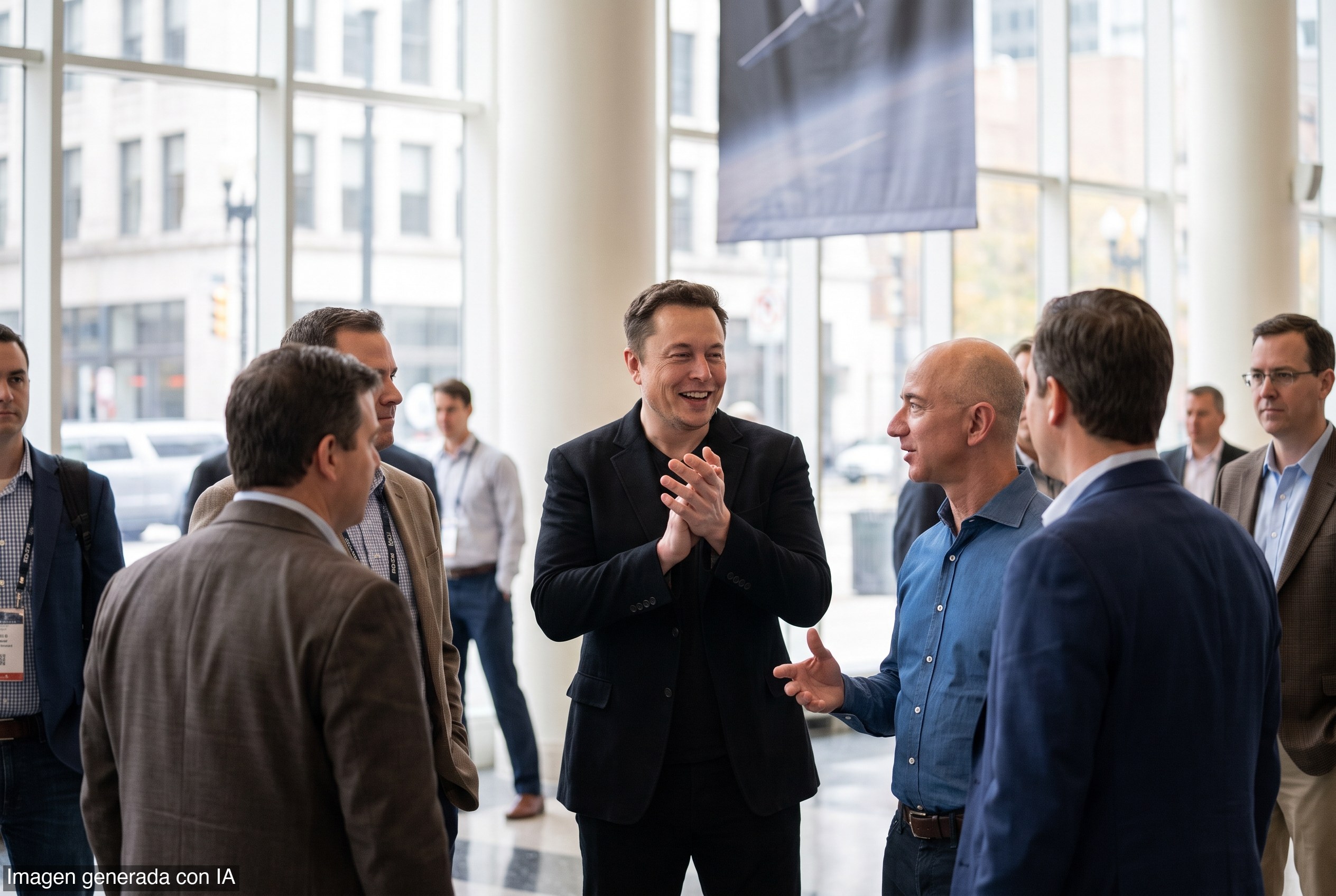
Elon Musk responded with 'Bravo!' after Jeff Bezos said he has 'personally invested $28 billion' of his own money into Blue Origin since founding it in 2000.
Bezos told Fox News that Blue Origin had just raised more than $10 billion in its first external funding round. He said he was ready to stop self-funding the space company because he now sees 'the financial future of Blue with some clarity.'
Bezos, who stepped down as Amazon CEO in 2021 and remains executive chair, said he did not want outside investors until he was sure it would be a good investment for them. He also said he expects Blue Origin to 'be a public company at some point,' though its IPO is 'several years from now.'
Musk and Bezos have long clashed over launchpads, government contracts, patents, talent, and copycatting. Musk once called Bezos' company 'Sue Origin.' But Musk has also said he teases Bezos to push him to work harder at Blue Origin.
The math is simple: Blue Origin is now moving from pure founder bankroll to outside capital, and that usually changes the pressure profile. Once a company takes in billions from external investors, the runway gets more visible, but so does the expectation for execution, margins, and eventually a public market story.
For founders, the bigger lesson is not the rivalry. It's the discipline. Bezos spent years keeping control while he built, then opened the door when he felt the business had enough clarity to stand on its own. That is the kind of capital strategy that can preserve optionality instead of forcing a rushed exit.
The other takeaway is that self-funding on this scale is a luxury very few builders can afford. Most founders cannot write a $28 billion check to buy time. They have to earn it through customers, cash flow, and a tighter playbook. When outside money finally comes in, it should extend the mission, not replace the discipline that got the company there.


