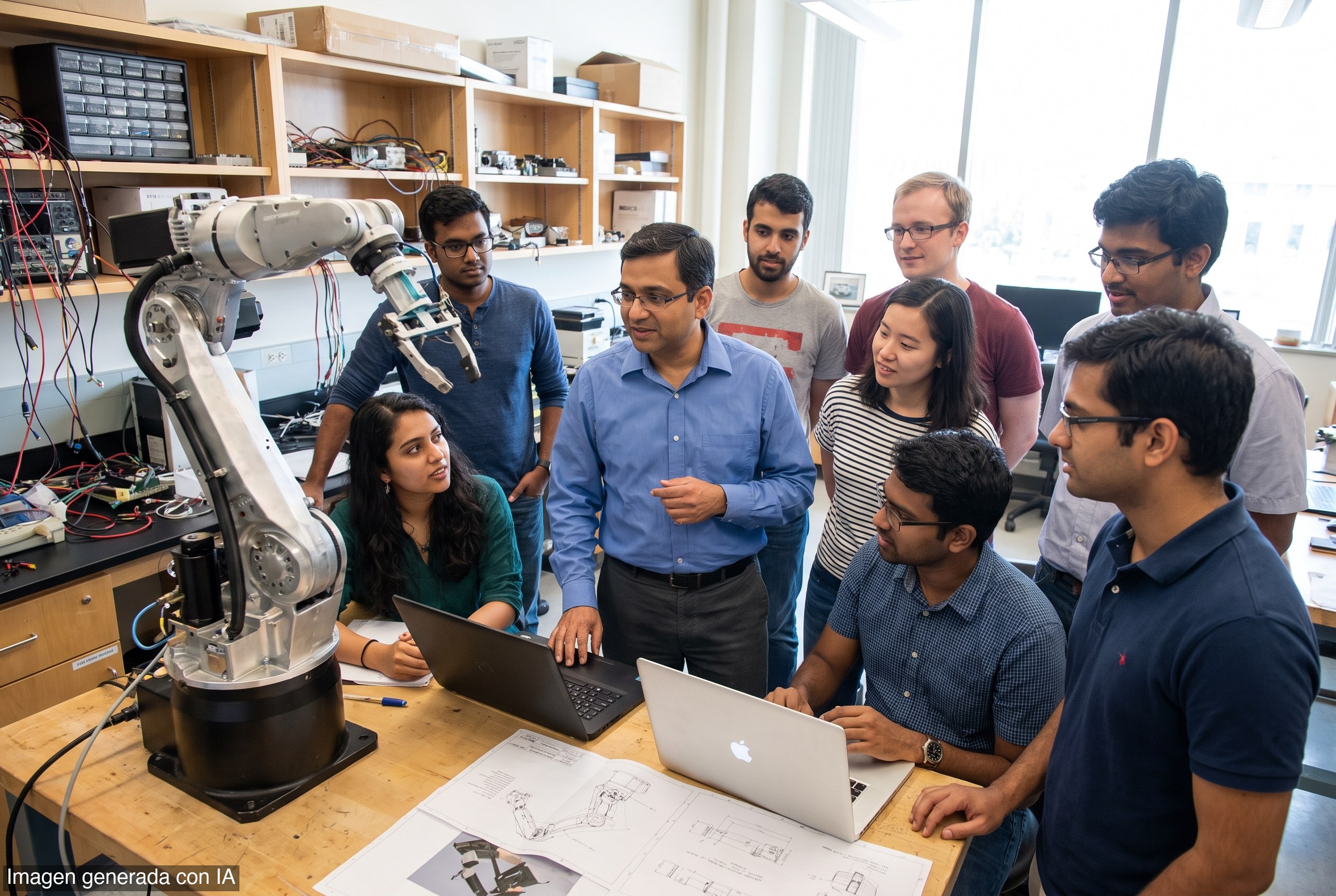
Microagi has hired Animesh Garg, a Georgia Tech professor and former Nvidia researcher, as chief research officer.
The German startup is also bringing seven members of Garg's research group with him through its acquisition of a startup the group had been building in stealth. Garg and Microagi declined to disclose the terms of the deal.
The hire adds to a wave of academic talent moving into robotics startups. Carnegie Mellon professors Deepak Pathak and Abhinav Gupta cofounded Skild AI, which has raised more than $2 billion. Stanford professor Chelsea Finn and UC Berkeley professor Sergey Levine cofounded Physical Intelligence, which has raised more than $1 billion. MIT professor Russ Tedrake brought Walden Robotics out of stealth this summer.
Microagi raised $55 million this summer in the largest seed round raised by a German startup. The company works with manufacturers in the automotive, logistics, and food industries. It trains robots for factory jobs using data collected from workers. That data helps adapt general-purpose robotics models to each customer's operations.
Garg will lead Microagi's work on post-training. That means adapting general-purpose robotics models into systems that can perform specific tasks. He said he joined because robotics is moving from lab demonstrations toward large-scale commercial deployment.
'The technology has crossed a threshold,' Garg told Business Insider. 'We have gotten to a point where we can create sustainable businesses.'
Garg has spent more than 15 years researching how robots learn. At Nvidia, he worked on simulation technology that was eventually incorporated into Isaac Lab, Nvidia's open-source platform for training robots virtually. His more recent research has focused on teaching robots from human demonstrations and helping them improve through experience.
Microagi CEO Bercan Kilic said the company wants to help deploy at least 10 million robots for customers over the next five years.
The playbook is simple. Robotics founders do not just need capital. They need people who can turn lab-grade research into revenue, faster margins, and real customers. Microagi is betting that academic talent can shorten that path.
For founders watching the market, this is the signal. The money is flowing into physical AI, but the winners will still have to ship. If university researchers can help get robots into factories sooner, that is a direct advantage for customers, and for the startups chasing scale.


