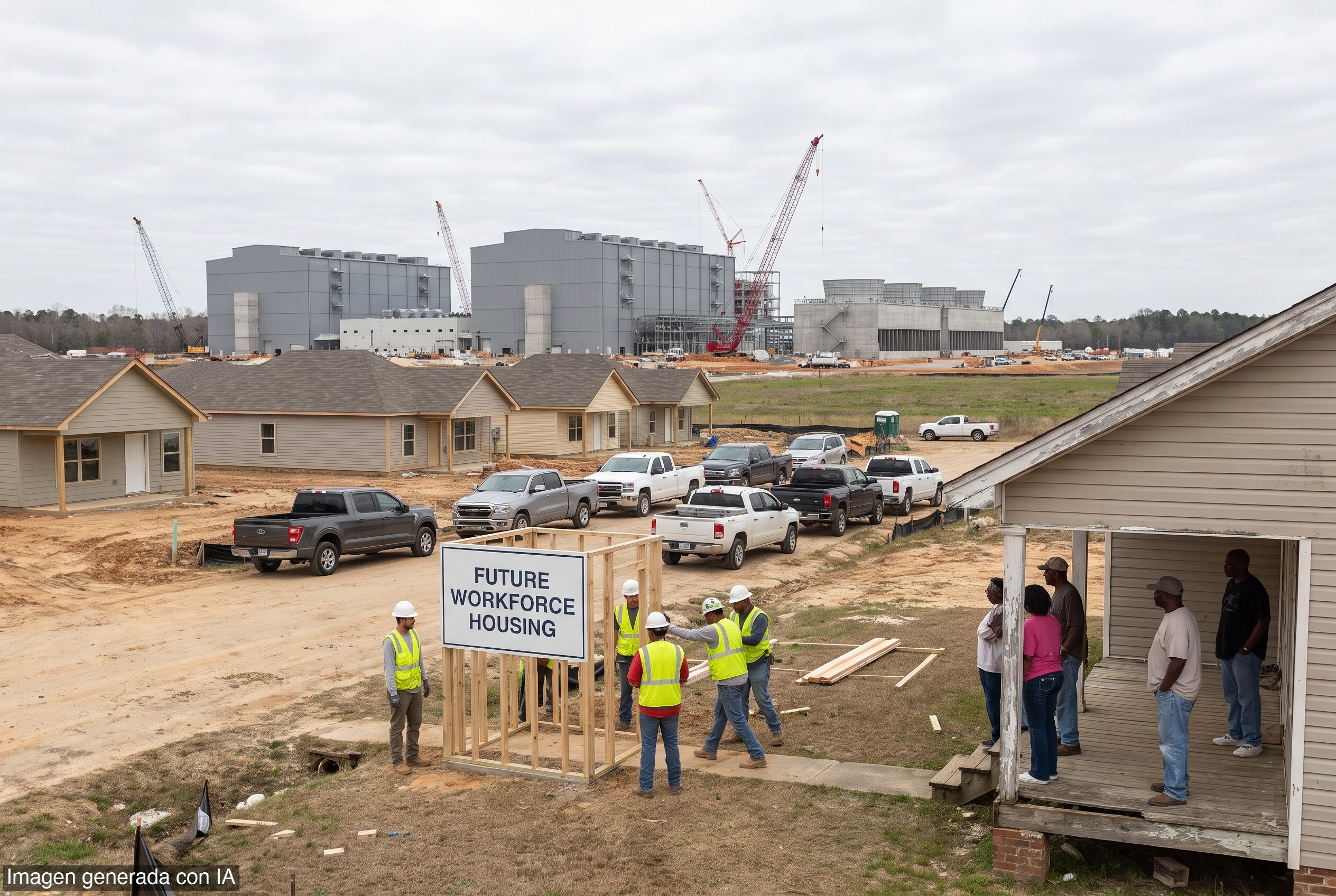
Meta's Hyperion data center is changing Richland Parish, Louisiana, a rural area long known for farming, back roads, and small towns.
Meta announced in December 2024 that it would build its largest data center to date near Holly Ridge, a community with fewer than 2,000 residents. The company said the $50 billion, multi-year project would support around 7,500 jobs at the peak of construction and around 1,000 operational jobs.
That demand is already spilling into housing. Angel Crawford of Delhi said she noticed a surge in construction and operational workers arriving last year. She and her husband, Bryan, opened a mobile home park to meet the housing gap.
The couple founded Parish Line Properties in 2024. It now operates 18 homes in the area, including Antley Pines, a mobile home park. Of the 18 homes, 14 are considered workforce housing.
Angel said all the homes at Antley Pines were secured by deposits from Meta workers before the park even opened. She said many tenants are subcontractors, including electricians working with Meta.
The economics are straightforward. Angel said the furnished four-bedroom, two-bathroom homes average $3,000 a month with utilities. Before Meta arrived, she said an unfurnished house without utilities in the same area would probably rent for around $1,200 to $1,500 a month.
Richland Parish had a median household income of around $53,000 in 2024, which shows how sharply the new labor market is reshaping local housing prices.
Angel said the workers value being close to the job site because many are working six to seven days a week and 12-plus hours a day. She also said rural driving times make proximity more important than it would be in a metro area.
The local reaction is split. Angel said people around the data center either see opportunity or dislike it, with 'no in between.' Some Americans welcome data centers for jobs and economic revival, while others worry about the environment, utility grids, and AI's impact on the labor market.
For founders, the lesson is familiar: when a giant project lands, the best returns often go to the businesses that solve the immediate bottlenecks it creates. Housing, logistics, and services move first. Bureaucracy and political arguments come later. The market moves when workers need a place to sleep, a commute that works, and a landlord who can meet demand.
That is what free enterprise looks like on the ground. A single $50 billion investment is not just building servers in Holly Ridge. It is creating a new customer base for local capital, and the entrepreneurs who move first are already capturing the margin.


