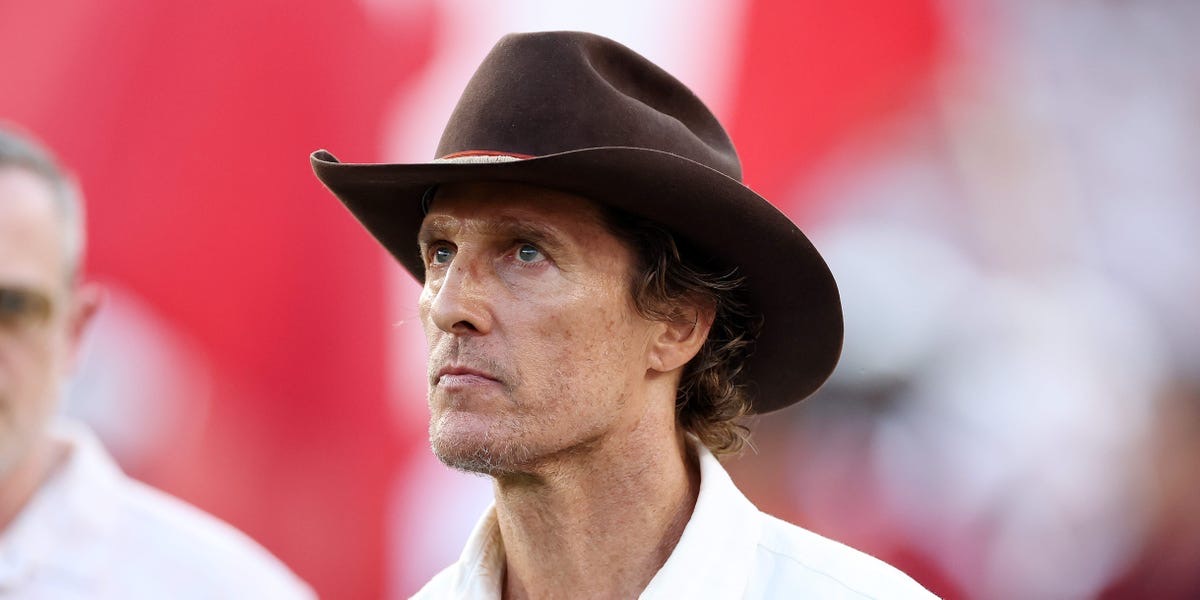
Matthew McConaughey has a problem that many founders will recognize. On The Daily Stoic podcast, he told host Ryan Holiday that his can-do attitude cuts both ways.
"One of my greatest strengths is that I think I can make anything work. One of my greatest weaknesses is I think I can make anything work," McConaughey said.
He described taking on projects he was sure he could turn around, only to realize months later that they weren't worth the effort. "That's not a smart use of your time and work. I've done that before, many times. Succeeded sometimes, but where's our time best spent, and what fights are worth picking?" he said.
Here's the playbook. Start by treating your calendar like a balance sheet. Every hour spent rescuing a deal, a hire or a product line is an hour not spent on your best customers and your highest-margin work. The math is simple: if a project consumes your team's time and returns little, it is a cost, not an opportunity.
McConaughey's fix is blunt. "No one can argue if you say, 'I can't do that,'" he said. He also wants clarity before a project starts. "Everyone needs to state what they can and cannot do," he said.
That clarity matters because the worst outcome is discovering midway through that everyone wants different things. McConaughey described the result: "We have two different opinions, and we come out middle of the fiddle, and we look at the final product, and we go, 'That's not here or there, man.' It's not what I wanted or what you wanted." A compromise that satisfies no one burns budget and goodwill at the same time.
When you do have to walk away, McConaughey says it's better to "shake hands" and part on good terms without making the disagreement personal.
Being direct doesn't have to be confrontational. Etiquette experts Lizzie Post and Daniel Post Senning told Business Insider that workers can set limits by explaining what they would need to put aside to take on another task. Post Senning put the difference this way: "The difference between 'No, I can't believe you asked me to do that' and 'I'd like to sit down and talk with you about my workload' is huge."
Founders who get this right move faster. Before your next project, ask three questions: What is the expected return? What will it cost in people and hours? What am I giving up to do it? If the answers are fuzzy, the project is probably not worth your best people.
The lesson is not to stop being ambitious. It is to be ruthless about where ambition goes. Saying no clearly, early and without drama is one of the highest-leverage skills a founder can build, and it costs nothing but a little courage.


