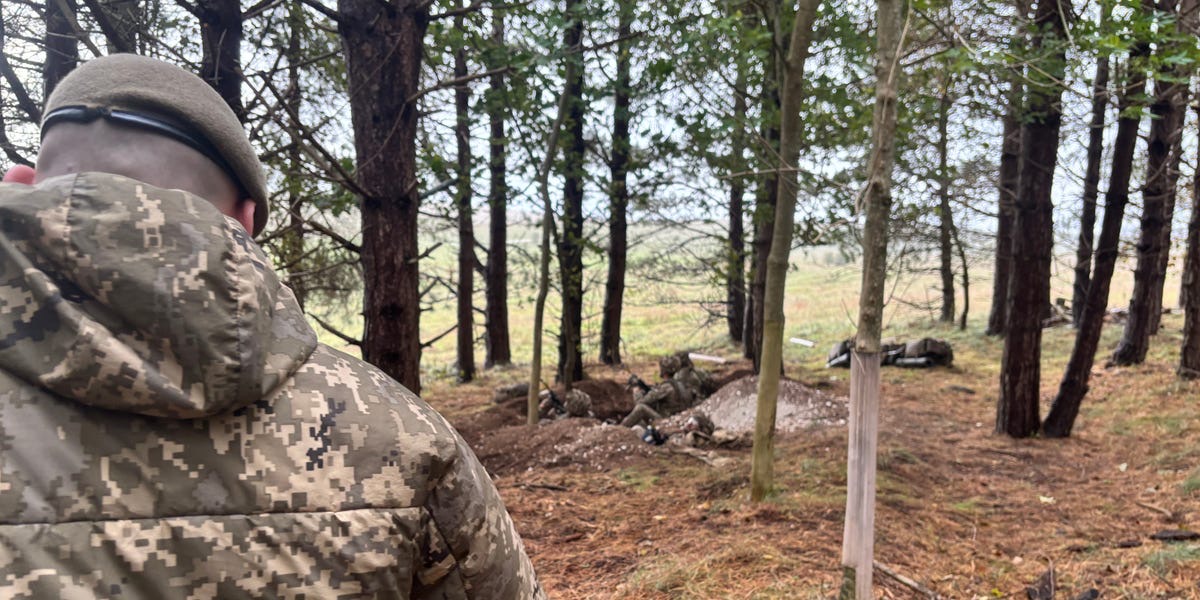
On Salisbury Plain, British Army officer cadets spent their time peppering a Ukrainian combat veteran with questions. How many drones do Ukrainian soldiers face? How do they dig in without exposing themselves? How do they stay hidden from the enemy? The answers are reshaping how Britain prepares its next generation of military leaders.
The officer, known by his call sign Zero, served as a platoon commander on Ukraine's front lines. He had already completed the British Army's officer training course at the Royal Military Academy Sandhurst in 2022, before returning to the war. Now he is back, but as an advisor rather than a formal instructor. He told Business Insider, "I'm here as an observer." He watches how the field exercises are run and offers advice.
The value of that advice is practical. Brigadier Nick Wight-Boycott, commander of Sandhurst, said it is useful to be able to ask, "What from Sandhurst worked for you?" Captain Will Kriehn, a platoon commander, called firsthand experience "gold dust" for cadets. The brigadier also said that instructors benefit from bouncing ideas off someone who knows the realities of the war, which keeps the training grounded.
The changes are visible in the field. The 44-week commissioning course has been reworked in response to the war in Ukraine. When Kriehn trained in 2022, cadets dug for days in open fields with no cover. Now they dig under tree cover, because, as Wight-Boycott put it, "nobody ever digs in an open field." The exercise also moves faster. Cadets must relocate rather than stay in one place too long, and they now build L-shaped trenches, a design borrowed from Ukraine's battlefield, because the bends stop a grenade blast from traveling down a straight line.
The six-day defensive exercise Business Insider observed involved nearly 200 cadets, 23 of them international, digging in and bracing for simulated attacks, including persistent drone threats. Sleep was scarce, and the final phase was a combined-arms operation with tanks and Chinook helicopters. The brigadier described the new scenario as "more realistic than the one we've used in the past."
A cadet named Marcus, identified only by his first name, said it was "quite surreal" to train beside a Ukrainian officer. He pointed to a stark contrast: once commissioned, British officers will likely return to peacetime duties, while the Ukrainian officers who advise them go back to the front.
For anyone who leads people, the story offers a clear principle. Doctrine written before a conflict can look sound on paper and fail in the field. Organizations that want to stay ready should build a direct channel to people who have recently faced the problem, ask them blunt questions, and change the training when the answers demand it. The British Army is doing exactly that, and the trenches it now digs tell the story.


