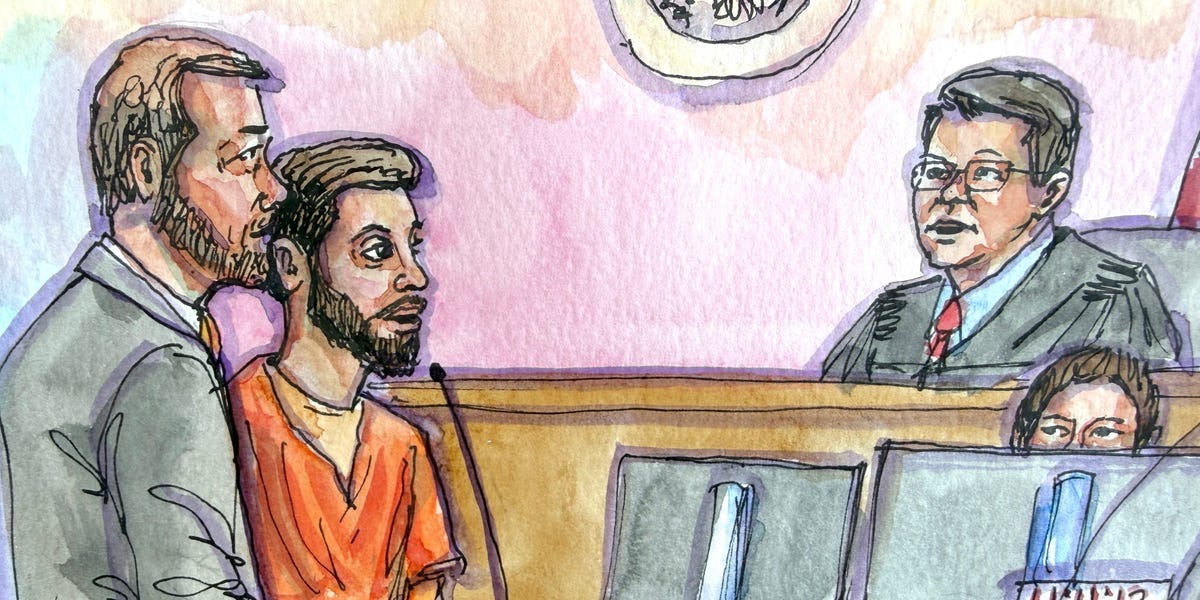
A lawyer for the Saudi national accused of bugging OpenAI's San Francisco office is pushing again to get his client out of jail. According to David Rizk, the attorney for Abdulrahman Alfozan, Justice Department prosecutors have not turned up any evidence that would support espionage charges.
Rizk said in a court filing ahead of his client's Tuesday court appearance that government counsel acknowledged that if supporting evidence existed, new charges would have been brought when Alfozan was indicted. Instead, Rizk wrote, Alfozan was indicted solely on a Wiretap Act count, the same charge at the center of the original complaint. Rizk said prosecutors told him in two meetings this month that no evidence had emerged to justify additional charges.
The underlying allegations are specific. Federal prosecutors in San Francisco arrested Alfozan in October, accusing him of planting a listening device in a conference room at the office where he worked as an engineer. The criminal complaint cited interception of oral communications. Photos included in the complaint show a USB device plugged into the back of a conference room TV and wrapped in toilet paper. Prosecutors also said a photo showed Alfozan checking on the device a week after another OpenAI employee found it hidden there. A grand jury indicted him later in October, but without more severe counts such as espionage or theft of trade secrets. Alfozan has pleaded not guilty.
The bail question is where the stakes become concrete. A federal judge ordered him held pending trial, finding a high risk he would flee. The judge pointed to the Saudi government's offer to pay his bond and to the fact that his wife and son had already flown to Saudi Arabia. Rizk has asked US District Judge Vince Chhabria, who is overseeing the case, to order the Justice Department to hand over more information so he can formally request his client's release.
Rizk also raised two other points. He said the discovery produced so far does not show that prosecutors investigated any ties between Alfozan and the government of Saudi Arabia. He added that Alfozan offered voluntarily to unlock his cellphone, which the Justice Department seized, after prosecutors said they lost access to it earlier this month because of a power failure at an FBI facility. Separately, Rizk asked the judge to modify an order restricting his use of AI while preparing the defense. 'The U.S. Attorney's Office should not be in the business of policing defense counsel's discovery practices,' he wrote.
A spokesperson for the U.S. Attorney's office in San Francisco did not immediately respond to a request for comment.
What the editorial reading takes from this: the government has the burden of proof, and a defendant is presumed innocent until that burden is met. A pretrial jail term is a serious cost to a man who has not been convicted, and it is paid by the individual and his family long before any verdict. Companies should read the case as a practical lesson too. Physical access controls in conference rooms, and a quick response when a stranger's device turns up, are the protections that matter most. Founders who handle sensitive intellectual property should treat office security as part of the core operating budget, not an afterthought, and should document every incident before the facts are litigated.


