When Lauren Patton bought a 1,000-square-foot bungalow in Central Texas in 2022 for about $400,000, she was a steady earner in tech. Then she was laid off a year later, and the math stopped working. Her mortgage ran about $4,000 a month, her savings were thin, and she was still paying down credit card debt.
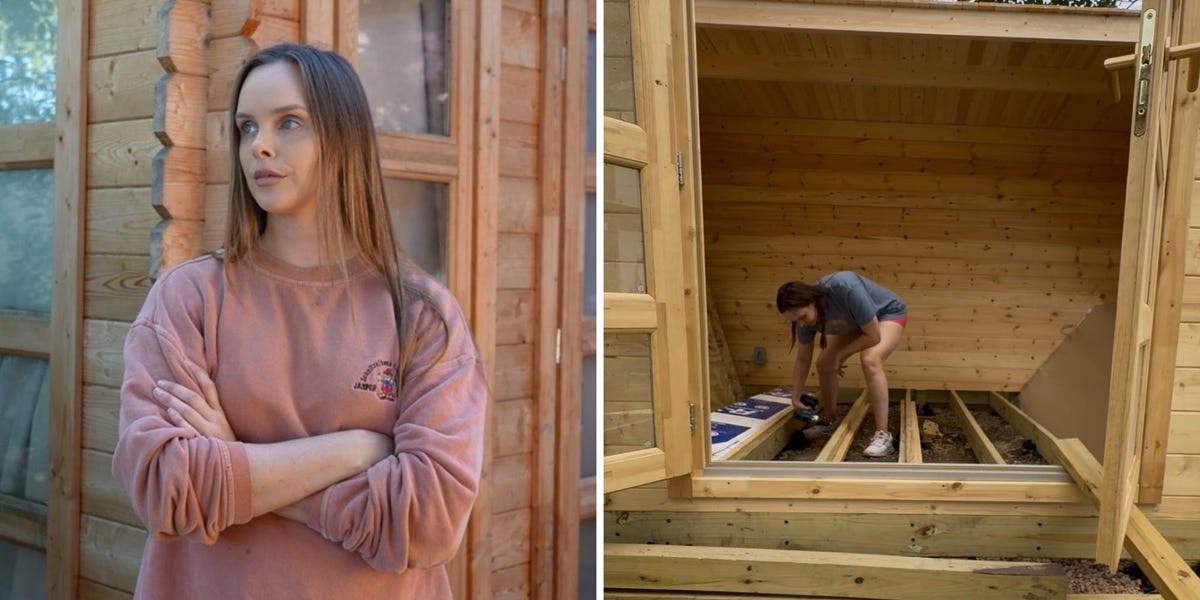
Patton first rented out the two bedrooms of the house on Airbnb while she stayed with friends. She describes that as a short-term fix for a long-term problem. Her next move was the one that defines her story. In 2025 she bought a 100-square-foot shed kit for about $8,500, built the foundation, roof and floor herself, and moved into it. The main house now earns rental income on Airbnb.
Here's the playbook she is living, and what it teaches anyone running a tight personal budget.
Lesson one: the math is simple, but the build is not. The kit came with stackable wood slats, beams and large windows. Everything else, including an outhouse and an outdoor shower, was her job. Patton had no formal construction training and relied on YouTube and ChatGPT. She says the project consumed her time, money and energy, and that people around her did not understand it. A boyfriend ended the relationship when she announced the plan, and she lost a few friends over it.
Lesson two: plan utilities before you pour concrete. Patton admits she had no plan for water or power. She installed a dry-flush toilet, uses a solar-heated outdoor shower in summer and propane heat in winter. Electricity has been the hard part. "There have been plenty of mornings where I've had to choose between having heat, making coffee, or blow-drying my hair." Her advice is blunt: find out how much power you need before you start building.
Lesson three: downsizing costs more than square footage. Going from 1,000 square feet to 100 meant giving up a kitchen, running water and ice. She keeps a small fridge and stocks jugs of water. The hardest part, she says, is never having everything on hand. "I'll go to grill chicken and realize I'm out of salt." She has started to wonder whether the constant runs to the store are worth the savings.
Lesson four: the rental income is real, but it is not the whole answer. Patton charges about $200 on a typical weekend night and roughly $125 on weekday rates during the school year. October is her best month because of the Austin City Limits Music Festival, when occupancy reached about 96% and brought in about $6,517. That money has helped her make payments and tackle other debt, but it does not cover the full mortgage.
The lesson for founders and for anyone managing a household balance sheet is that a property asset can be restructured to produce cash, but every shortcut moves cost somewhere else: into your time, your privacy or your daily comfort. Patton's own verdict is measured. She says she feels better mentally now, and she no longer minds the tiny space as much as she did.
Start with the numbers, then test the cheapest version of the plan before you commit the capital. Patton's story is a reminder that the most valuable asset in a bootstrapped plan is your own clear-eyed accounting of what the workaround costs.


