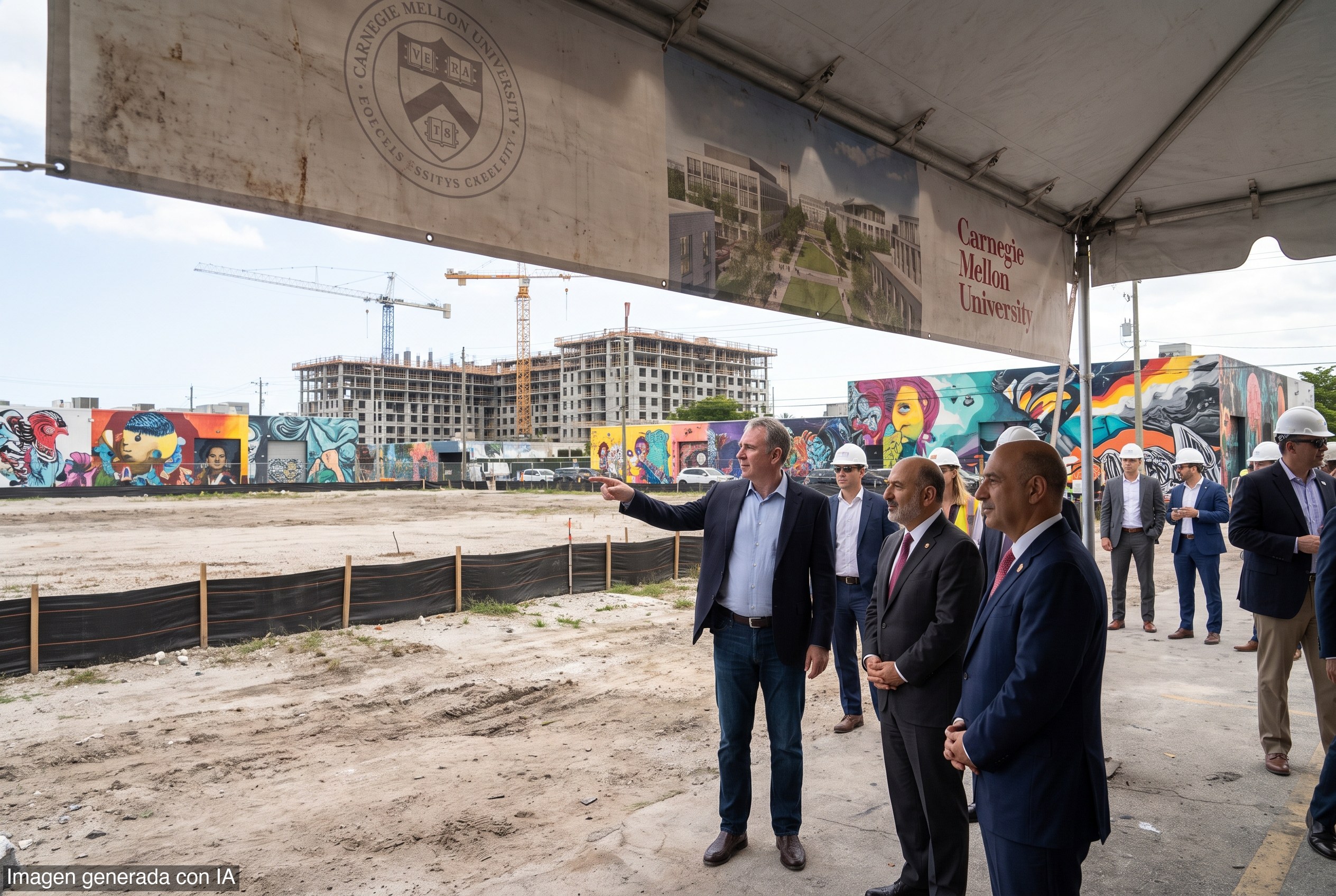
Ken Griffin has committed $3 billion to Carnegie Mellon University, and the school says it will use $2 billion of that to launch CMU Miami in Wynwood.
The university said the gift is the largest ever given by an individual to a higher education institution. Of the total, $1 billion will support Carnegie Mellon’s Pittsburgh campus and the remaining $2 billion will fund the new Miami campus.
Griffin also closed on the purchase of Mana Wynwood for $1.1 billion in cash from Moishe Mana. The property covers 12 hectares and includes the main convention center, Wynwood Marketplace, and the former RC Cola bottling plant. Mana’s team will keep managing events there for at least another year.
Carnegie Mellon says the Miami campus will sit on 35 acres, or 14 hectares, in Wynwood and is expected to serve more than 3,500 students, nearly 300 faculty, and about 600 employees. Construction is slated to begin in 2027, with first enrollments planned for 2028, pending regulatory approvals.
The school says the new campus will focus on four challenge areas: human health and biological discovery; national security and strategic capabilities; energy and climate resilience; and advanced manufacturing and industrial transformation. It also says CMU Miami will 'invert the traditional higher education model' by organizing learning around societal challenges rather than academic majors.
Griffin has been building a larger footprint in Miami since moving his family and the headquarters of both Citadel and Citadel Securities there in 2022. Citadel now employs about 500 people in Miami and is building a 54-story headquarters on Brickell Bay, slated for completion in 2030 at an estimated cost of $2.5 billion.
The campus plan fits a broader bet on Miami’s rise as a business and education hub. Griffin told the Financial Times that 'Great American cities are anchored by great universities, with almost no exception.' Carnegie Mellon said Griffin will join its board of trustees.
He has now given more than $5.7 billion to education, opportunity, and health sciences causes, according to the university, including more than $500 million to Harvard University.
For founders and operators, the signal is clear: capital follows institutions that can attract talent, research, and long-term demand. Miami is getting more than a flashy headline; it is getting another anchor for free enterprise, skilled jobs, and a deeper pipeline of students and researchers.
The market lesson is simple. Big private gifts can reshape a city faster than public planning, especially when they come with real property, operating campuses, and a runway measured in decades. In this case, the money, the land, and the university all point in the same direction.


