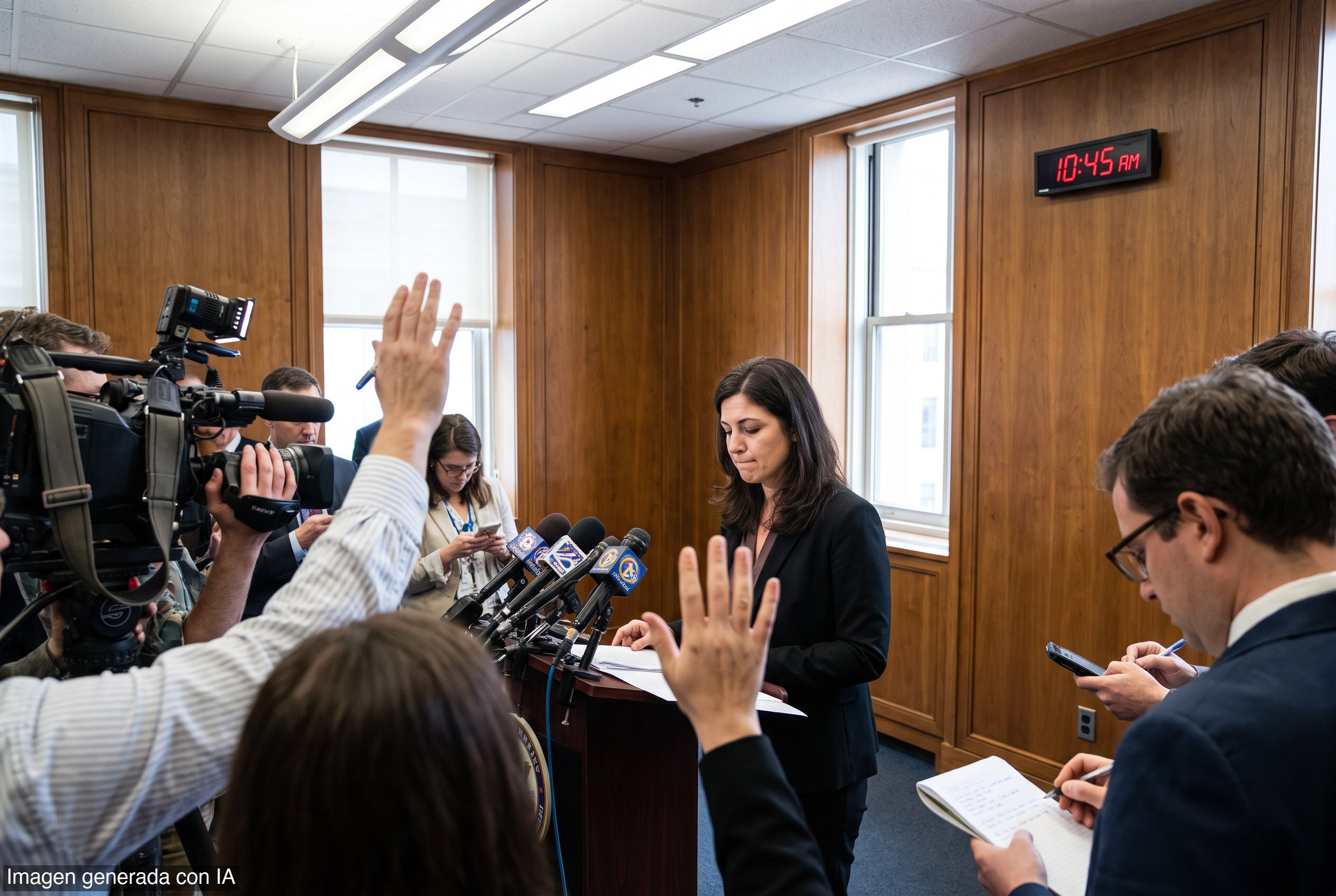
Katie Zacharia's first week as White House press secretary has been rough by any standard.
Her first briefing lasted about 14 minutes, and she took three questions. In a Thursday appearance on Fox News' 'Hannity', she said she had done her 'very best' in the debut and that she had been on the job for 'less than maybe eight hours' with briefing materials arriving Tuesday morning, the day of the press conference.
Zacharia also said she 'probably should have stepped aside' after introducing herself rather than take questions. She said she called on the Daily Mail, which she described as 'not known to be a conservative outlet or friendly to conservatives.'
The questions around her are not just about performance. Zacharia confirmed that she had taken the bar exam but had not passed, and had not retaken it. She said she consulted legal professionals about whether she could call herself a lawyer because she had a 'valid Juris Doctor from a good law school.'
Her legal background has drawn scrutiny beyond cable news. Popular Information reported that she had not been admitted to any state bar. On Wednesday, two watchdog groups filed complaints with California's state bar, asking it to investigate whether she had violated state law by calling herself a lawyer.
Her work in China has also come under scrutiny. Zacharia said she worked in the 'international practice of a Chinese law firm' on 'cross-country border transactions and multimillion dollar shareholder agreements.' But Chinese law experts told Business Insider that only Chinese nationals can take the country's bar exam, and that foreign employees at international law firms can work on some transactions without passing it, though their role is limited. Jacques deLisle of the University of Pennsylvania law school said, 'She was never a lawyer in China. It doesn't mean she didn't do law-related work, but she was never a lawyer in China.'
The math is simple: when a top spokesperson starts with confusion over basic credentials, the White House does not just lose a news cycle. It burns time, invites distractions, and weakens message control. That is costly in any organization, and it is especially costly in government, where credibility is the only real product.
Founders know the playbook. If the front line is shaky, the whole operation pays for it. The same logic applies here: staffing mistakes at the top create avoidable friction, and friction is expensive.


