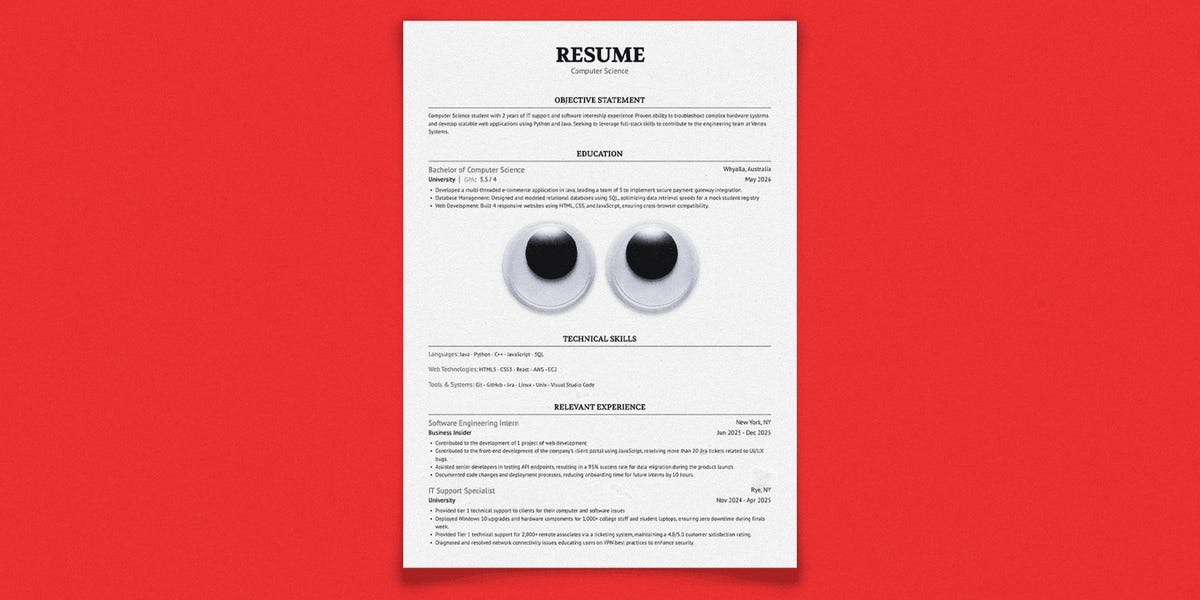
The old job search rewarded polish. Today, polish is the problem. When 84% of job seekers use AI to write or edit their résumés, according to recent survey data from Ladders, every application starts to sound the same. Recruiters notice, and so do you.
Take the case of Amanda McDormand, a 43-year-old senior leader laid off from Comcast in December. After her LinkedIn feed filled with stories of hundreds of unanswered applications, she stopped playing it safe. She opened one cover letter with a pitch: "This isn't a job application—it's an idea." She tried an "I am not AI" bit. She wove in golf references for a hiring manager who loved the sport. Her first big win came from a cover letter laced with Taylor Swift lyrics, and it led to a fractional role before her current full-time job.
The pattern is spreading. Recruiters say they are seeing résumé interest sections with odd details, candid personal statements and fun-fact infographics. Some candidates even leave in small errors on purpose to signal that a human wrote the thing. Carly Martinetti, cofounder of the PR and AI visibility firm Notably, said one candidate described herself as having "been an in-house girly my whole career." As she put it, that's "totally not something AI would say."
Here's the math founders should understand. A 2026 Greenhouse analysis found that companies receive an average of 194 applications per hire, and only 3.2% of applications reach a first interview. Those odds are the reason candidates adopt a 'screw it' mentality, and the reason recruiters get picky. As executive recruiter Kristin Raiford put it, "You're like, what's different about this person from the last person?"
What does this mean for you as a founder hiring? First, your screening process is part of your brand. If you are drowning in tailored, AI-polished résumés, you are not learning much about who can do the work. Build a step where candidates show their thinking, such as a short task or a live problem, rather than relying on the document alone.
Second, if you are the one job hunting, lead with what is specific to you. A memorable detail beats a generic list of keywords. Keep it true, keep it relevant to the role, and keep it short.
The weird résumé is not a gimmick for its own sake. It is a signal that a real person with a real point of view is on the other end. In a market flooded with machine-written sameness, that signal is worth more than another perfectly optimized bullet point.


