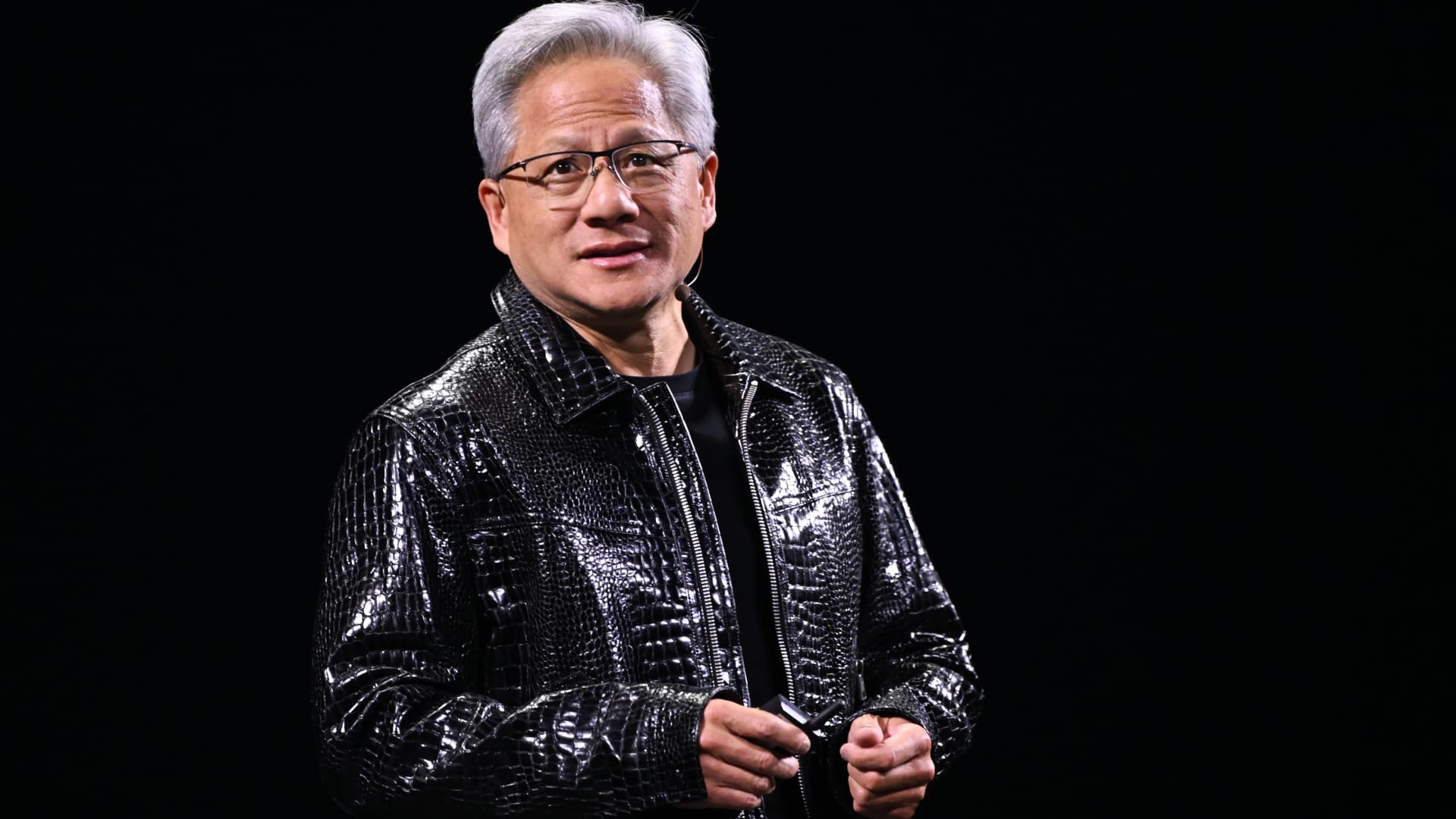
Jensen Huang has broken his silence. In his first public statement since resigning as Nvidia CEO last week, he struck a contrite tone and said he is willing to come back if the board wants him.
"I created problems for the Board that I deeply regret," Huang said in a written statement obtained by CNBC. "I own my mistakes completely, and I am committed to cooperating with the Board's independent investigation."
Huang resigned after 33 years as CEO. The move came days after he admitted to an affair, and news stories alleged a liaison with Alice Huang, who worked for a customer and is alleged to have contact with Chinese intelligence. Reports also said he had romances with employees at Nvidia.
He framed his return as a question for the board. "If the Board of Directors decides that my return is in the best interest of our shareholders, our employees, the company, and America, I would be honored to answer these calls and return as CEO," he said.
The signals are mixed. Sources told CNBC on Monday that the board is not considering bringing Huang back. A petition calling for his reinstatement has gathered more than 180,000 signatures, and President Donald Trump said he is open to Huang returning. Nvidia has hired the law firm Wachtell Lipton to probe his conduct and whether it compromised national security or company secrets.
The pressure is building in other directions too. According to Business Insider, a research note from Yorkville Ives argued that Nvidia's bylaws allow a critical mass of shareholders to call a special meeting, and that the statement "moves the fight from a petition to the board." That same note said federal authorities will likely want an outsider and compliance with export controls. Kalanick, the Uber cofounder, celebrated the statement on X.
Shareholder Baker, who co-wrote a letter urging the board not to rush its CEO search, told CNBC that he would like to see Huang given a second chance if he is cleared. Brad Gerstner, a major investor who knows Huang personally, later said on a Semafor panel that his earlier open letter had been misunderstood. He said the investigation needs to run its course and that "no one is above the law."
Huang is also expected to face questions before several US congressional committees in the weeks ahead, according to the BBC, because of the alleged link to a woman suspected of being an asset for Beijing.
What this means for free-market readers is straightforward. Shareholders own Nvidia, and a company of this size has a stake in clear, enforceable standards for its leaders. An executive who misleads his own board puts the capital of every owner at risk, and the board's independent investigation is the mechanism that protects them. Whether Huang returns or not, the test is whether the board acts on the facts rather than on petitions, online pressure or political signals. Markets reward companies that show their governance works.
For founders, the takeaway is concrete. Document decisions, separate personal conduct from company authority in your own governance, and make sure your board has a clear, independent process before a crisis arrives. Founders who build that structure early have far more control over their own exit, and their own comeback, if one ever comes.


