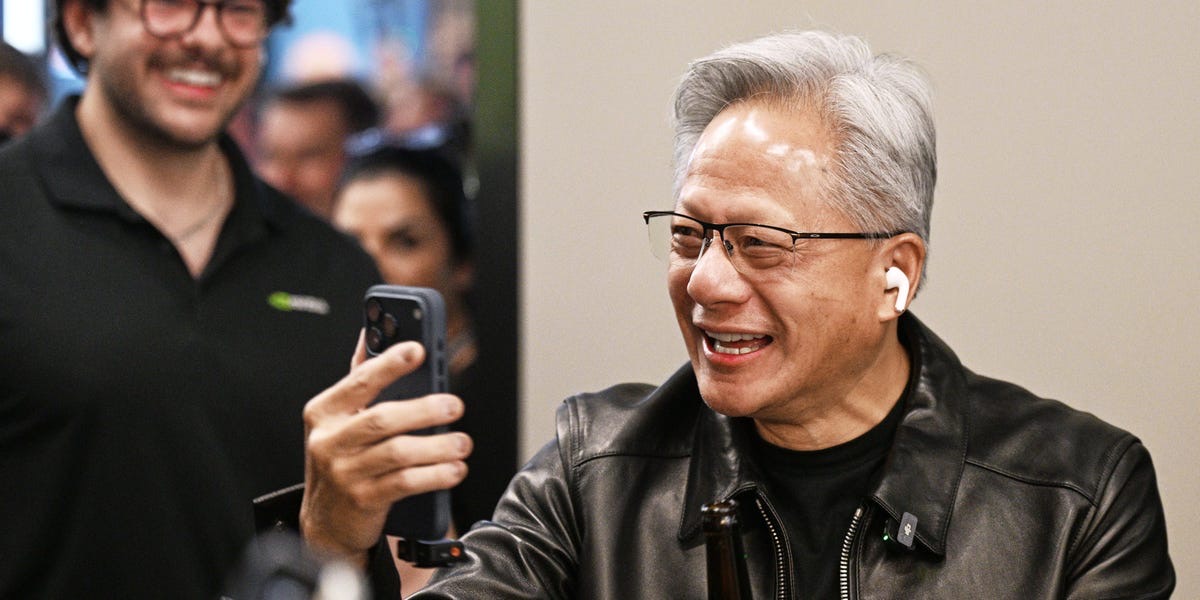
Jensen Huang is fielding calls and emails from tech CEOs as he weighs a possible return to Nvidia. The 63-year-old chip executive resigned as CEO on November 12, following accusations that he had at least two affairs. One was with a Chinese executive, Alice Huang (no relation), the former CEO of Megaspeed, whom US intelligence says is spying for Beijing. The other was with a direct report at Nvidia. Huang has since indicated interest in returning, and in a lengthy X post five days after he stepped down, he said he had seen 'an outpouring of calls from NVIDIA's employees, investors, business partners, and customers for me to return as CEO.'
The support is loud. Venture capitalist Gavin Baker said on CNBC that he has been telling Huang to 'work out, watch the sunrise, and get eight hours of sleep,' adding that Huang 'has more to contribute to America, to AI, and technology.' OpenAI CEO Sam Altman said at The New York Times DealBook summit that 'it's hard to imagine the AI industry without Jensen.' Microsoft CEO Satya Nadella said he texted Huang to let him know he is thinking of him, but was careful to add: 'It's not up to me. It's up to the Nvidia board to decide what happens next.' Travis Kalanick, the former Uber CEO who now heads the AI robotics firm Atoms, said he told Huang that a petition for his return was good, but a walkout was better.
President Donald Trump has also weighed in. Trump said he called Huang at least twice since the affairs became public. According to the New York Times, in one of those calls Trump urged Huang to fight to keep his job. Trump also said he asked Huang whether he knew Alice Huang was a Chinese spy, and that Huang said he did not.
The board, however, has drawn a hard line. Nvidia's board has said it has no plans to reinstate the founder, who wrote to staff that he had been 'unfaithful' to his wife, Lori Huang.
Here's the takeaway for founders. The network can rally around you, and the cheerleading can be genuine. But in a public company, the people who decide your fate are the directors who answer to shareholders, not the CEOs texting you encouragement or the president on the phone. Personal conduct, especially where it touches national security questions, can end a career at the top overnight, and no amount of allies changes the vote.
The lesson is the one founders hear too rarely: build governance that can act on hard facts before the story breaks. Know who your board will defend you to, and who they will not. Your friends can give you space. Only the board can give you your job back.


