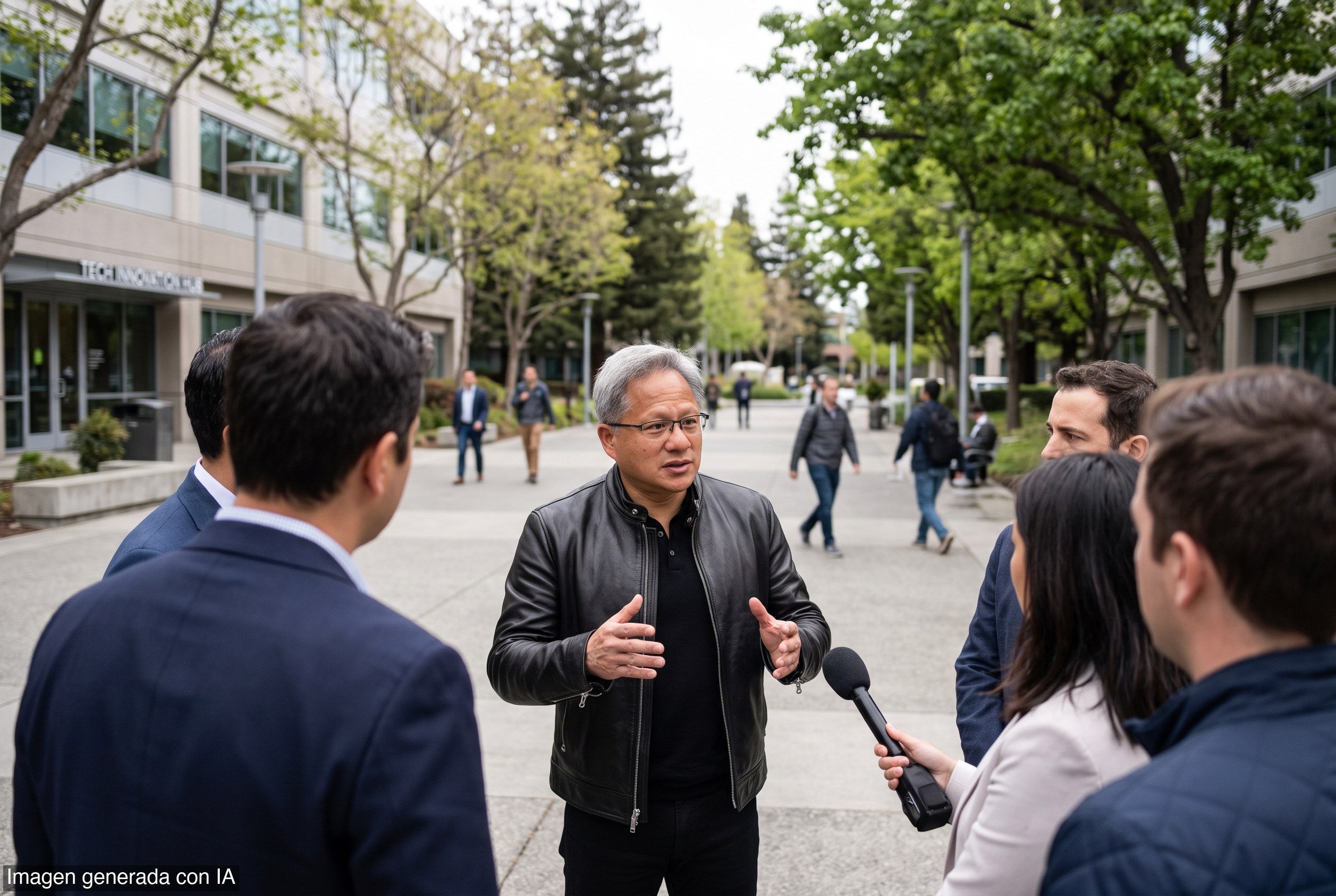
Nvidia CEO Jensen Huang is making the case for more immigration at the same time the Trump administration is moving harder on H-1B visas.
Huang, who was born in Taiwan, said on the Bg2 podcast that the United States needs to keep its status as a magnet for top tech talent. 'We want all the world's great minds to come here, bring their great ideas,' he said. Huang added that 'the inflow of intellectual property into this country is unlike anything else the world's ever seen.'
He also said immigrants should enter 'lawfully' and argued for balance. 'Surely we want to do it,' he said of attracting foreign talent.
The comments land in direct tension with the Trump administration's immigration agenda. The White House spokeswoman said, 'There is no shortage of American minds and hands to grow our labor force, and President Trump's agenda to create jobs for American workers represents this Administration's commitment to capitalizing on that untapped potential.'
The administration has already targeted the visa pipeline that many tech firms use to hire abroad. In September last year, Trump signed an executive order setting a '$100,000 fee' for new H-1B applications, to be paid by companies hiring the foreign workers.
Business Insider said some of the top tech companies sponsoring H-1B visas include Amazon, Microsoft, Alphabet, Meta, and Apple. Last week, Vance and other US officials also said the administration was banning Microsoft and Adobe from a federal visa sponsorship program that links an H-1B visa to a green card.
Huang has also backed a lighter regulatory touch on AI. He said last month that AI CEOs were scaring people about the technology for 'ulterior reasons,' and called that 'irresponsible' and 'unnecessary.' 'We don't need more regulations,' Huang said. 'We need to apply the current regulations we have.'
For founders and investors, the playbook is straightforward: talent policy is growth policy. If the U.S. makes it harder and more expensive to hire global specialists, the cost does not disappear; it shows up in headcount, timelines, and margin pressure. That helps incumbents with scale, but it can squeeze startups that need fast access to specialized labor.
The larger point is simple. Free enterprise runs on access to skills, ideas, and mobility. When government narrows that pipeline, it is not just changing immigration rules. It is changing who gets to build the next wave of technology.


