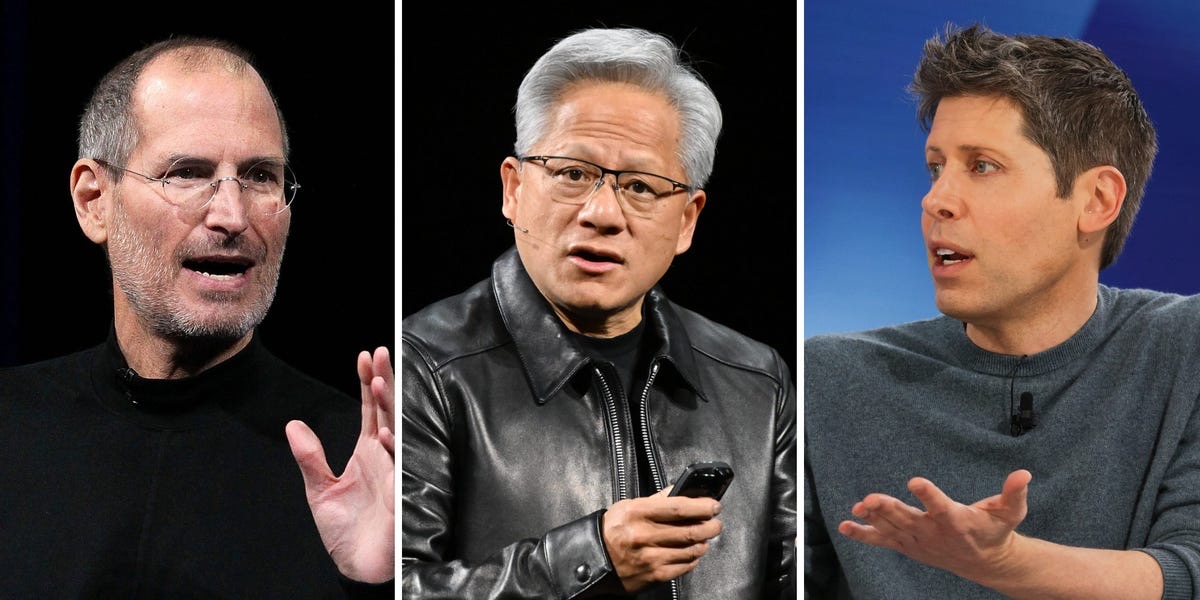
Nvidia has reinstated Jensen Huang as CEO, 11 days after his November 12 resignation amid reports of extramarital affairs. He is now one of several founders who made a comeback after being pushed out, and the pattern is worth studying if you run a company with a board.
The most dramatic recent case is OpenAI. Its board fired Sam Altman on November 17, 2023, saying he had not been consistently candid in his communications with directors. Within days, more than 700 OpenAI employees signed an open letter demanding that the board resign and reinstate him, threatening to join him at Microsoft if it didn't. On November 21, OpenAI announced an agreement in principle for Altman to return under a reconstituted board. He officially resumed the job on November 29.
Steve Jobs followed a longer arc. In 1985, then-CEO John Sculley and Apple's board stripped him of operational responsibilities, and he eventually left to start NeXT. Apple bought NeXT for roughly $400 million, and Jobs returned as an advisor before becoming interim CEO in 1997. By the time he resigned again in 2011, Apple had grown from a roughly $2 billion company to one worth about $350 billion.
Jack Dorsey was pushed out of Twitter's CEO role in October 2008 as directors questioned his management approach. He went on to cofound Square, now known as Block, and returned as Twitter's interim CEO in July 2015, roughly seven years later.
The shortest case belongs to Matt Mullenweg. Automattic's board placed him on paid leave in September 2026 and named CFO Mark Davies as interim CEO. Mullenweg said board members conspired against him in messages to employees. He challenged the move and used his controlling voting stake to regain authority. The ouster lasted 33 hours and 20 minutes, and the company confirmed his reinstatement on September 12. Mullenweg had said at TechCrunch Disrupt in 2024 that he controlled 84% of the company's voting power.
Here's what the playbook looks like for founders. Voting control is the single biggest factor in whether a board's decision sticks. Mullenweg's 84% stake ended the coup in a day, while Dorsey and Jobs had to wait years. Employee and investor support matters too: at OpenAI, the open letter and the threat of a mass exit reshaped the board's options within a week. The founders who return fastest are the ones with both the votes and the people behind them.
For everyone else, the lesson is less comfortable. If your board has the power to remove you, it has the power to do so for reasons you may not control. Map your governance before you need it, because when a board moves against a founder, the clock starts immediately.


