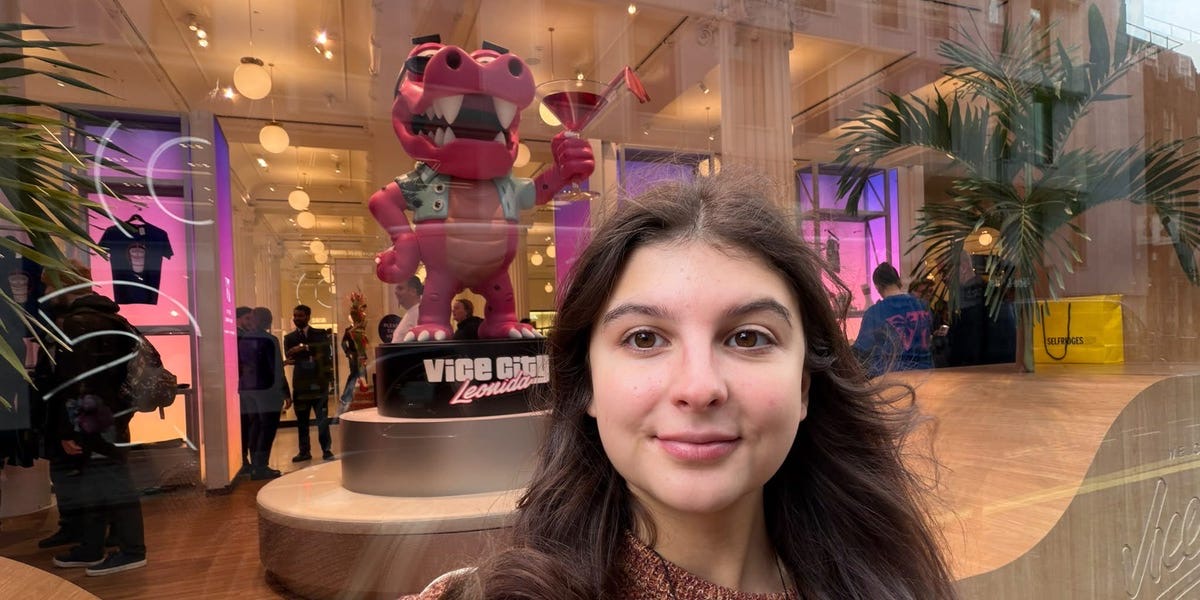
The queue outside Selfridges on Oxford Street was already long on a grey, drizzly morning. The shoppers, mostly men, stood in raincoats and hoods, waiting to see what was left after the collection sold out online. The draw was Rockstar Games' next Grand Theft Auto release, which drops on Thursday, and the chance to own a piece of the hype around it.
The centerpiece is a Ferrari Testarossa with a custom blue-and-pink paint job, offered for sale at $1.3 million. The car is the model for one of GTA 6's in-game supercars, the Grotti Cheetah. It is a clear signal of what the brand is willing to sell at the top of the market, and it draws attention to everything else on the floor.
The prices on the rest of the range are where the math gets interesting. One shopper, a retail worker who said he had come to conduct what he called 'competitor analysis,' questioned who the pop-up was for. 'If you're willing to spend £2,000 (about $2,650) on a jacket, surely you're not going to be queuing up with the rest of us,' he said. He also called the prices 'unreal' for some of the merchandise.
The pattern at the front of the line was familiar from any product drop. A father and son from the Netherlands had come back early the next morning to get inside, and a Paris-based visitor said he would only join the line if it looked manageable. When the group discovered a keyring that sold for $10.50 at the pop-up was listed on eBay for $80, the resale logic was out in the open.
Inside, the scarcity was plain. A man walked the shop floor with a roll of cash, asking assistants for items they no longer had. The only football jersey left turned out to be an extra-small women's crop top. Assistants reported no new deliveries.
Here's the playbook behind moves like this. Limited stock, a sold-out online channel and a physical event create urgency that does more marketing than any ad buy. The customers who stay in line are not always the ones who will use the product. Some are there to collect, and some are there to resell.
For founders, the lesson is to decide early who you are selling to. If your most engaged buyers are fans, the pop-up is a loyalty play. If a meaningful share of your demand is speculative, you need pricing, purchase limits or product design that protects the people who actually want the item.
The free-market reading is simple. Scarcity and resale let the market price a cultural moment in real time. The price of a keyring on eBay is the most honest review of what this merchandise is worth. Companies that build demand this way should expect the secondary market to show up, and should treat that as data rather than a surprise.


