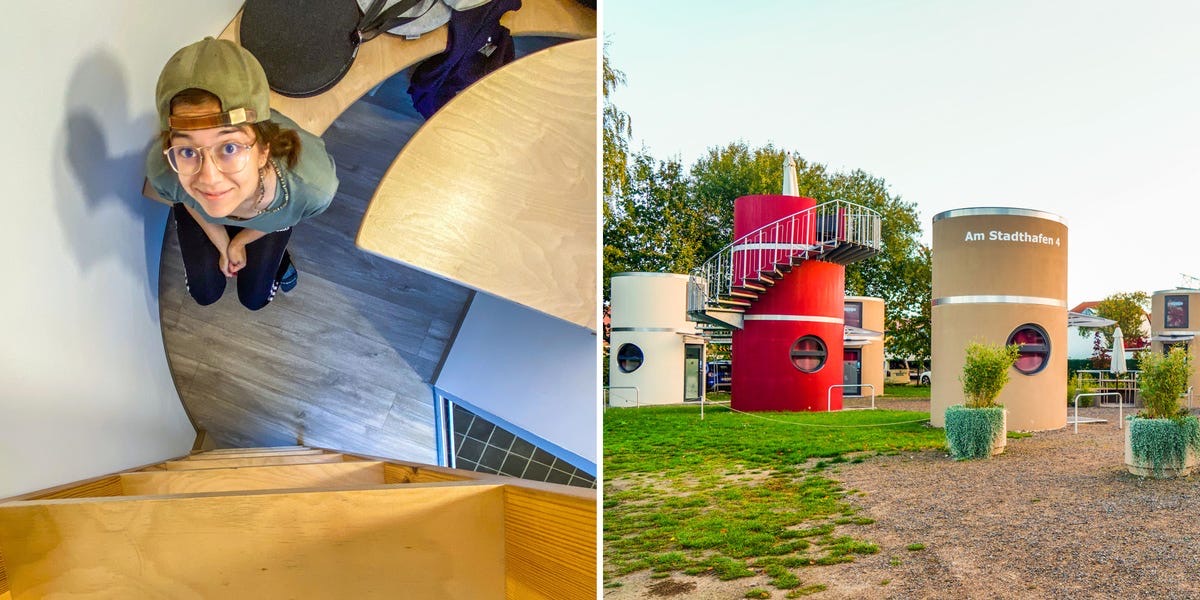
Here's the playbook from a two-night stay that turned out to be a masterclass in doing more with less.
The reporter booked a Slube Home, one of three formats the German company offers, alongside the one-story Basic and the Tower with a rooftop terrace. The Home is 16 feet tall, with two floors totaling 106 square feet, and it sleeps up to two adults and one child. The reporter paid $140 for two nights, roughly $70 a night. Slube has three locations around Germany, and the Neustrelitz site has 10 accommodations.
The math is simple: the unit's footprint is less than half the size of any tiny home the reporter had booked in the US, yet it still delivers a lounge area, a bathroom and a loft bedroom. That is a lean product, and lean products win when margins are tight.
The first lesson is operational. Check-in happened without any staff on site. A code sent to the phone opened the door, and the reporter never had to track a physical key. For a hospitality business, that removes a recurring labor cost from every booking.
The second lesson is automation. Lights and temperature on each floor were controlled from a phone browser, so the guest never had to get out of bed. Small tech touches like this raise perceived value without raising the price.
The third lesson is layout. Each floor measured 53 square feet. The bedroom had a raised platform around the bed that doubled as a nightstand, with accessible outlets, a pocket for the remote and room for a water bottle. The reporter had expected to have no bedside table at all, so this detail stood out.
The fourth lesson is zoning. The 26-square-foot bathroom used a shower curtain to separate the showerhead and sink from the toilet and storage. The reporter said the space felt spacious, and the separation made it feel like two rooms.
The fifth lesson is light without exposure. Film covering most of the first-floor glass let the guest keep curtains open without being seen from neighboring units. The reporter had never seen this in a tiny home and said it solved a real tradeoff between brightness and privacy.
None of this is exotic. Each choice reduces cost, cuts friction or adds perceived value, and that is exactly the discipline a bootstrapped founder needs. Start with the constraint, then design every square foot to earn its place.
The reporter concluded that the home felt more comfortable than most small units while leaving no space unused, and recommended it to tiny-space enthusiasts. For operators, the takeaway is that a compact footprint is not a limit on the guest experience. It is a forcing function for better decisions.


