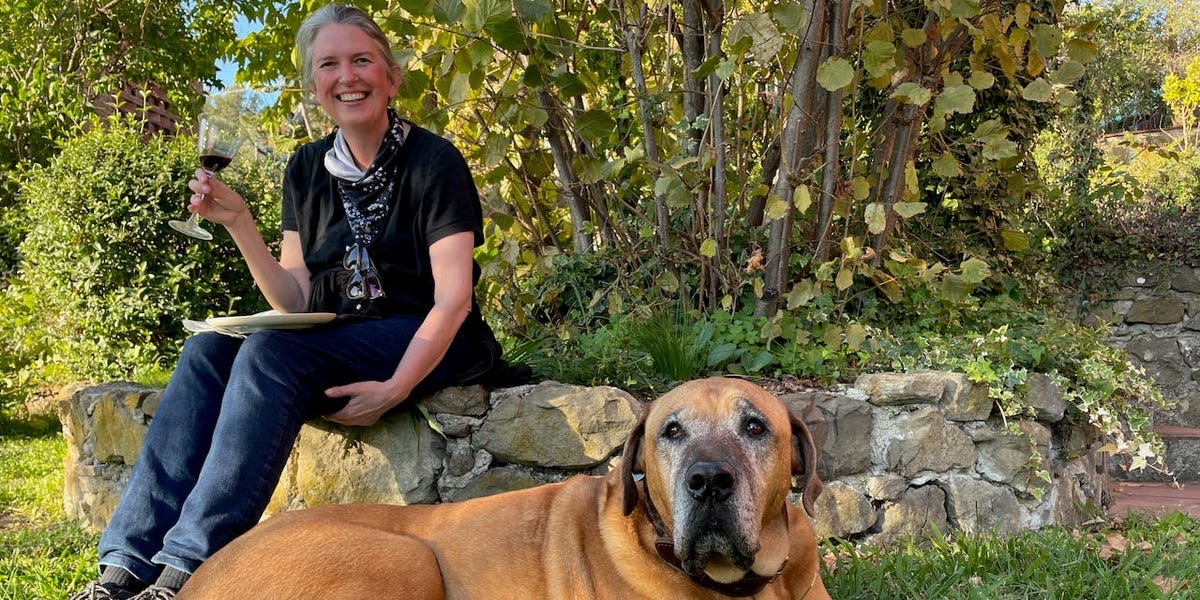
For more than 25 years, the author worked in film, eventually running production at companies for Ridley Scott, Tony Scott, Barry Sonnenfeld, and Luc Besson. By her own account, she had a career she was proud of, a beautiful Los Angeles house, and the professional life she had spent decades building. Success, she says, meant the next promotion, a bigger salary, a bigger house, and more responsibility.
She did not leave because she disliked the work. 'I loved making movies, solving creative problems with smart people, and mentoring younger executives,' she wrote. What she wanted was more control over her life. By 2021, the company she worked for was running out of money, and her job was ending. That forced the question she had been avoiding.
The household math is the part founders should study. The couple owned a five-bedroom 1911 Craftsman house in Los Angeles. They could not imagine selling it, but they could rent it out. They could live in something smaller, healthcare in Italy would cost dramatically less, and they would carry no mortgage there. 'We realized we didn't need to replicate our Los Angeles income to live well,' she wrote. That was the turning point.
The move was not glamorous. They enrolled in language school for four hours a day, five days a week, starting from scratch, and kept that schedule for six months. She also found that years of practical know-how vanished with the border crossing. In the US she knew how to pay a bill, fill a prescription, or book an appointment. In Rome, she said, 'I didn't know how to do anything.'
The trade-off is concrete. The Los Angeles home held separate offices, a gym, a movie theater, a yard, and furniture collected over the years. Their Rome apartment has one bedroom, one bathroom, and two couches in the living room. She misses walking barefoot in her backyard, a desk with a computer on it, and, in her words, 'I kind of miss my Emmy statue.'
What she gained is the part that tends to matter most to people who run their own time. 'I don't miss having nearly every hour of my life spoken for,' she wrote. She can spend a morning with a single painting, cook for two hours, or decide on a whim to spend a few days in Umbria. Errands that were once a few clicks now mean a trip to the pharmacy, a tabaccheria, or the post office, and a conversation with a real person. Some days she loves it, and some days she would 'kill for a functioning website.'
She has not stopped working. She continues to develop film projects and says she would happily leave Italy for several months to produce the right movie. She still misses having a team.
The lesson for founders is blunt. For decades she assumed that earning more was how you buy freedom. Her experience suggests that needing less can buy the same thing, and sometimes more of it. Lower fixed costs give you room to choose, and room to choose is what a salary cannot always provide. The cost is real, including the lost house, the lost network of routines, and the lost sense of a team. But for someone who measured success in promotions, the reward was the one thing a bigger paycheck could never guarantee: the ability to decide what to do with her own day.


