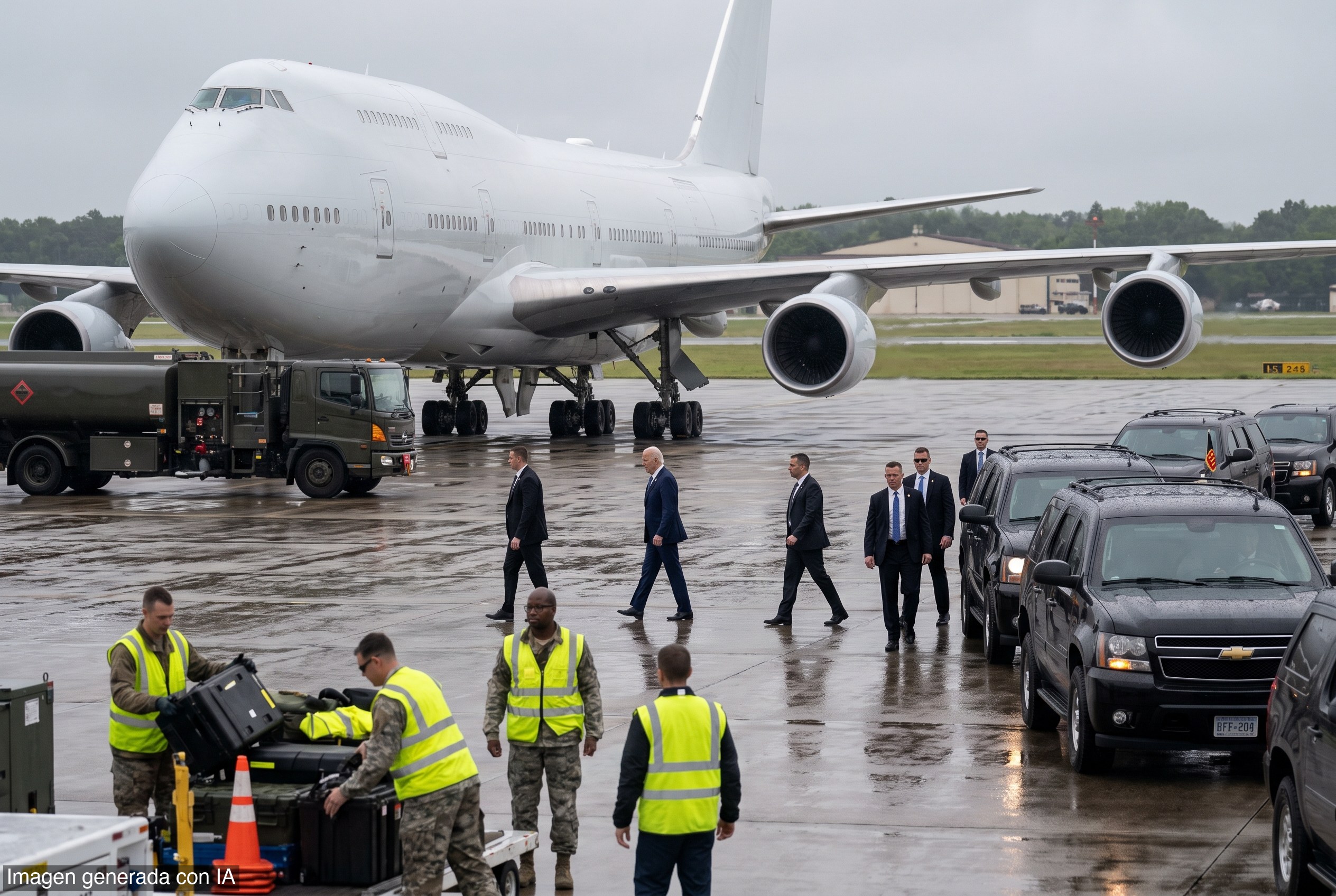
President Donald Trump greeted Chinese President Xi Jinping as he disembarked from China’s presidential jet on Wednesday, as Xi arrived at Joint Base Andrews in Maryland for a state visit. Trump and first lady Melania Trump later hosted a state dinner at the White House attended by numerous tech leaders.
The Boeing VC-25 is better known as Air Force One when the U.S. president is on board, and it remains one of the world’s most recognizable aircraft. The U.S. is not alone: prominent leaders around the world also rely on executive transport built around Boeing 747s, Airbus A330s and A340s, and other VIP-configured aircraft.
Trump accepted the luxury business jet previously used by the Qatari royal family as a gift from Qatar in May 2025, saying he would be 'stupid' to turn it down. After the plane was retrofitted to serve as Air Force One, it became known as the VC-25B Bridge and will serve as an interim presidential aircraft until Boeing’s new VC-25Bs are delivered.
That stopgap has already drawn attention for security concerns and operational mishaps, including the accidental deployment of its emergency slide on the tarmac at Joint Base Andrews in September. New VC-25B Air Force One planes, based on the Boeing 747-8i, are now expected to be ready by 2028 after years of delays. Boeing has already lost over $2 billion on the project due to manufacturing and supply-chain issues.
Other countries use similarly expensive and specialized aircraft. The UK’s modified Airbus A330 was converted for VIP duties in 2015 and can still serve as a refueling tanker when not on state business. Its 2020 repaint cost £900,000, or around $1.1 million, according to the BBC. Germany’s modified Airbus A340-300s were withdrawn from service and put up for sale in 2024 after maintenance issues with German officials on board.
Russia’s 'Flying Kremlin,' the Ilyushin Il-96-300, includes meeting space and bedrooms, while France’s presidential plane carries the call sign COTAM 001. Brazil, Canada, South Korea, Poland, and India also operate their own executive aircraft, with features ranging from office rooms and bedrooms to additional security measures.
The playbook is familiar: sovereignty, security, and status all get bundled into one aircraft, but the costs do not disappear. For founders and taxpayers alike, the real question is who pays for the prestige and who absorbs the delays when large, politically connected programs run over budget and behind schedule.
That is why these fleets matter beyond ceremony. They are a reminder that the administrative state can turn transportation into a symbol of power — and a very expensive one. The math is simple: when governments choose bespoke luxury and complex procurement, the bill lands on the public, while the promises of control and efficiency arrive much later, if at all.


