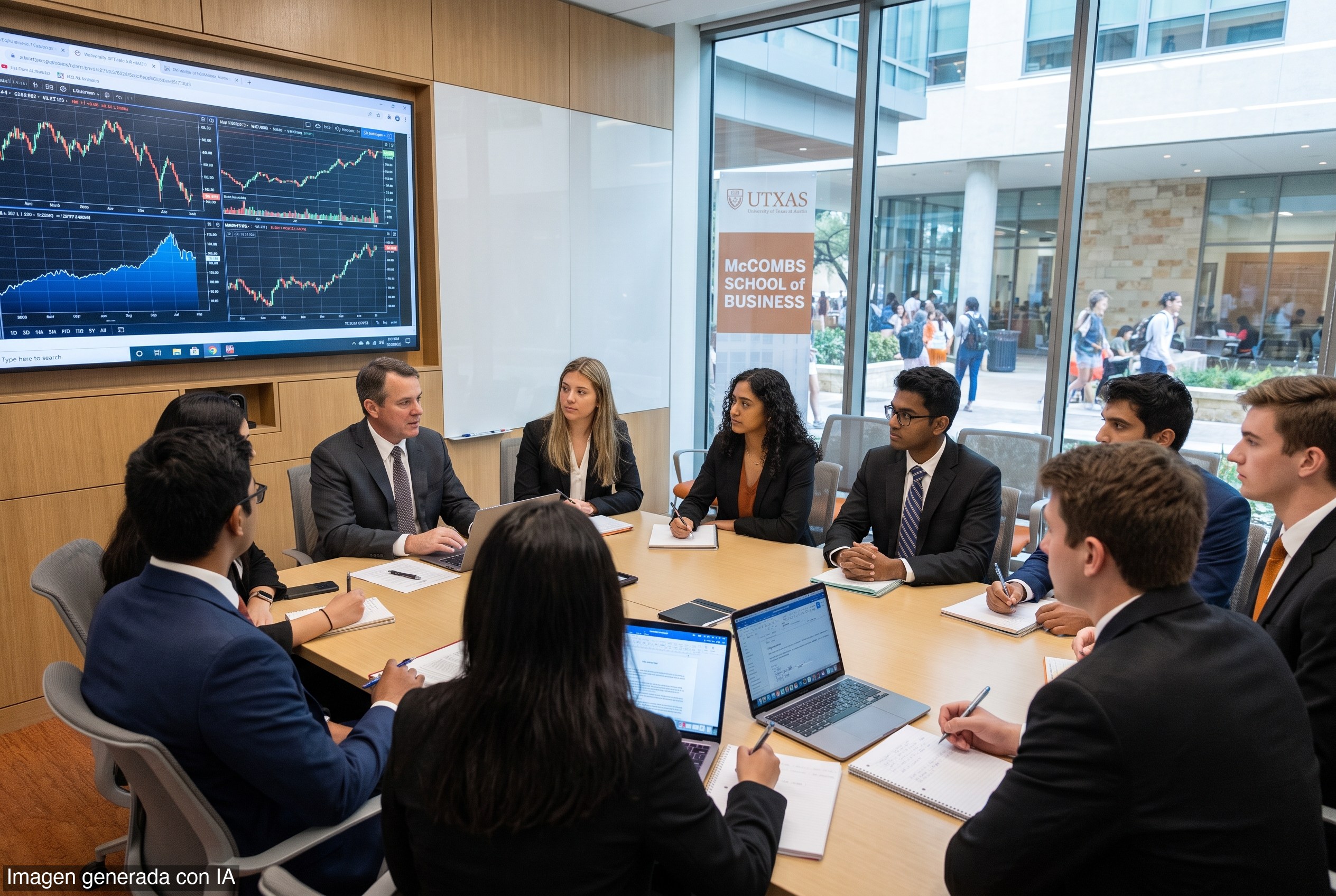
UT Austin's Wall Street for McCombs Leadership Program has grown from sending fewer than 10 students to New York for investment banking a decade ago to helping around 150 students land internships at more than 50 banks for the summer of 2027, according to Xavier Sztejnberg.
Sztejnberg, a finance professor at the McCombs School of Business who founded the program in 2016, said the school built it to give UT a bigger presence in New York and become a stronger finance school overall. He said the program now has almost 500 applications for only 75 spots, with students applying in sophomore year and going through resumes, essays, and two rounds of behavioral and technical interviews.
Once students get in, the program focuses on formal training, one-on-one coaching, and mentorship from the alumni board. Sztejnberg said he views Wall Street for McCombs as a leadership program, not just an internship training club, and said the school looks for students who will become successful alumni and give back to UT.
The timeline has also moved earlier. Sztejnberg said junior summer internship interviews are now starting in November of sophomore year, which can be tough on later bloomers. He said the program shifted its admissions timeline from October to September to keep up with the market.
The training is practical. Students take part in a banking simulation where they build a pitchbook for a real corporate client, such as Nike or Pepsi, and present to the company's CFO. Sztejnberg said the program also keeps its focus on fundamentals and technical skills, even with AI in the picture, because students still need to understand how to build a model.
He said landing the internship is only half the battle. The other half is getting the return offer, so the program coaches students to perform well during the summer. Sztejnberg said UT students are also helped by an engaged alumni base that takes ownership of students and tries to grow the UT presence at their firms.
For founders and operators, the lesson is simple: pipelines win when they are built early and reinforced hard. UT is not just chasing placements; it is building a repeatable system with training, coaching, and alumni pull. That is how a school turns one good internship into a larger revenue engine for talent and reputation.
The bigger point is about execution. As other schools copy the model, Sztejnberg said UT has had to step up its game. In markets where timing and relationships matter, the winners are the ones who build a process before the competition does.


