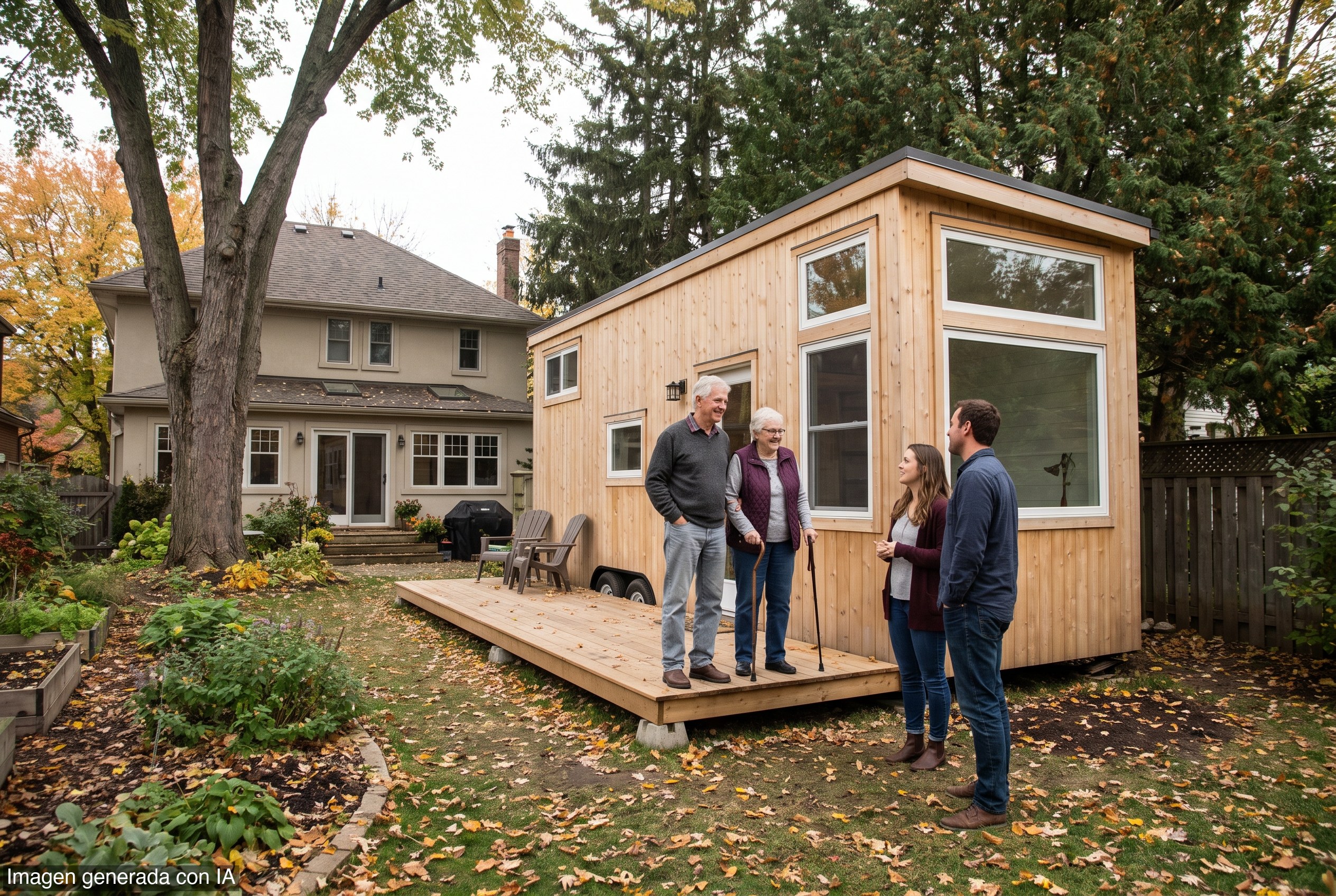
For some families, the new retirement housing strategy is not a luxury build. It is a cost-control move.
Linda Barton and her husband bought a tiny home for $37,000 outside Houston after her mom and stepdad needed more care than they could safely handle on their own. A year later, they bought another tiny home for her father-in-law for $43,000. They also hired caregivers at rates below assisted living, but Barton said they are still 'drowning' in caregiving bills because Medicare and hospice have not provided much financial relief.
The core problem is simple: long-term care is expensive, and it is getting more expensive. Business Insider cited CareScout data showing annual private room costs in nursing homes rose from $111,000 to $130,000 between 2022 and 2025. By comparison, the ADU route can still be a major project, but it can look less punishing than a year in a nursing home.
In Texas, Barton had to add a septic system, an electrical line, an entrance ramp, and indoor essentials before her parents could move in. In California, Shalini Karnani Bonjour and her family bought a home in the Coachella Valley and plan to build an ADU in the backyard for her mother. Bonjour said the $475,000 project is still more affordable than buying a larger home in the area.
The trend is not just about cost. It is also about keeping families together, staying in familiar neighborhoods, and preserving routines for aging parents. Rachael Reiner of Villa said 75% of the company's sales so far in 2026 have been for multigenerational households, many for caregiving purposes.
Still, there is no easy version of this playbook. Over a dozen people interviewed by Business Insider described permitting as a hassle, while some said the costs were higher than expected. Others worried about property values or regretted the decision after loved ones moved out.
The takeaway for founders and homeowners is blunt: when the state and the care system do not cover enough, families end up building their own solution. That means more upfront capital, more paperwork, and more private risk — but also more control over where loved ones live and how care gets delivered.
For free-market readers, that is the real signal here. Demand for ADUs is not just a housing story; it is a market response to the rising cost of care and the limits of public support. When institutional options get too expensive, families innovate with their own balance sheets. The winner is not bureaucracy. It is the household that can still afford to adapt.


