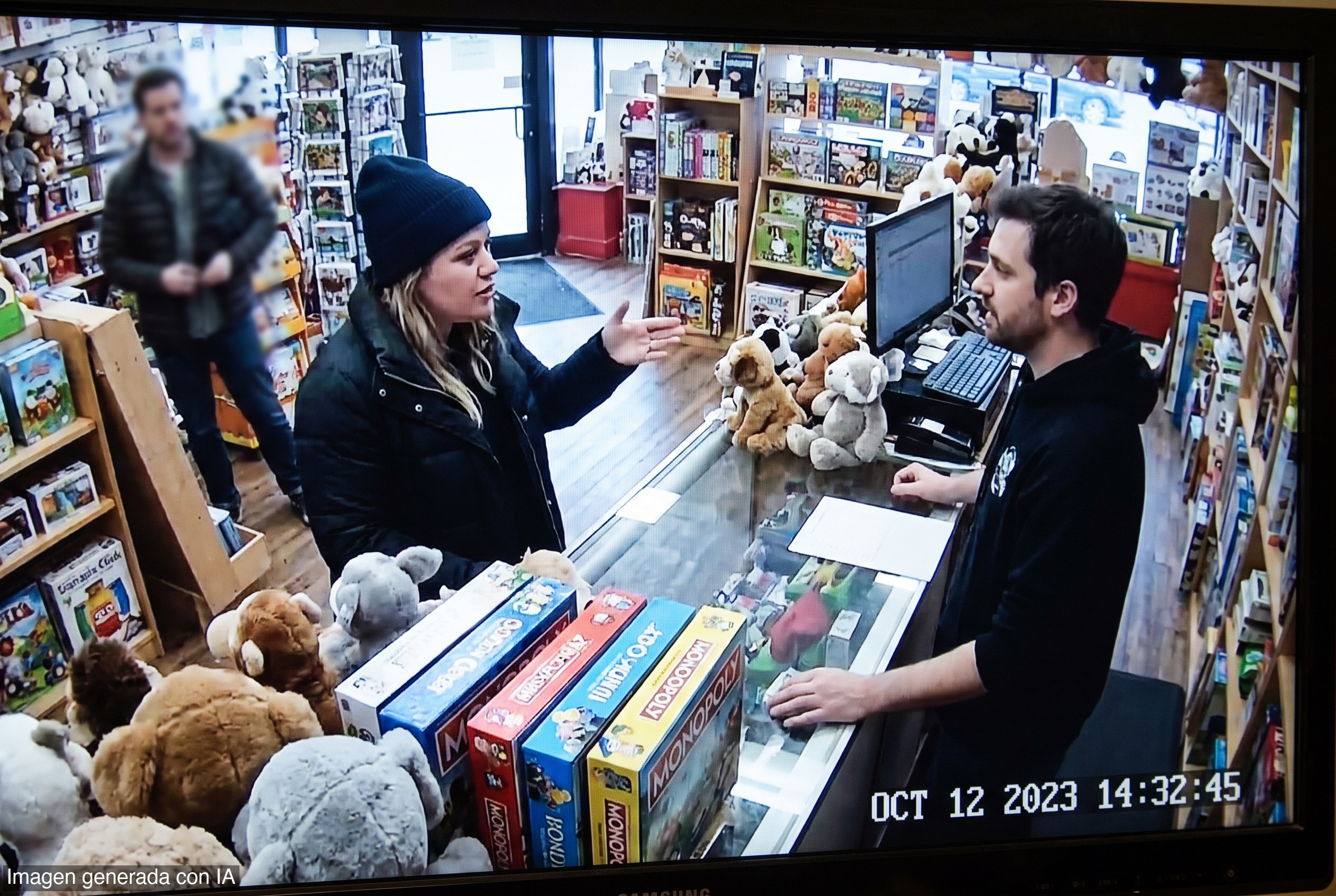
Kelly Clarkson's dispute with Brooklyn toy store Art of Play now has a new piece of evidence: security footage from inside the shop.
The footage, shared by journalist Pablo Torre on YouTube, shows Clarkson browsing, picking up several items, speaking briefly with a store employee, and later pausing near the counter before leaving. Business Insider has not independently verified the video's authenticity, but the outlet says key details match reporting from a separate visit to the store.
The video has no audio, which leaves the central dispute unresolved. Art of Play said Clarkson tried to buy something that was not for sale and left after that was explained to her. Clarkson, in an X post on Sunday, said she felt she was given the 'Pretty Woman' treatment during her visit.
What the footage does establish is that the visit was short. Clarkson was in the store for less than five minutes. She appears to point at something on the wall during one exchange, and the employee gestures toward the same area. Later, the video shows her putting back the items she had been carrying and heading toward the exit without making a purchase.
The most tense moment appears to come near the counter. Clarkson pauses and speaks with another employee, and her hand gestures are more animated than they were earlier in the visit. A few nearby customers seem to look in her direction before she leaves and pulls out her phone.
The timestamps shown in Torre's footage indicate that Clarkson's original post about the experience was published about 15 minutes later.
Art of Play's owner told Curbed, 'Nothing happened in this shop to justify her scolding our shopkeeper on the way out.' That still leaves the same unanswered question: what exactly was said in the store?
For founders, the playbook here is simple. A customer dispute can become a public relations event in minutes, especially when social media gets involved and the facts are incomplete. The store's reputation, and Clarkson's, are now both shaped by a story that no camera can fully explain without sound.
That is the cost of weak context. When a disagreement becomes public before it is resolved, both sides lose control of the narrative. For any business, the lesson is to treat front-line interactions as high-stakes moments: train staff, document policies, and assume every tense exchange can end up online.


