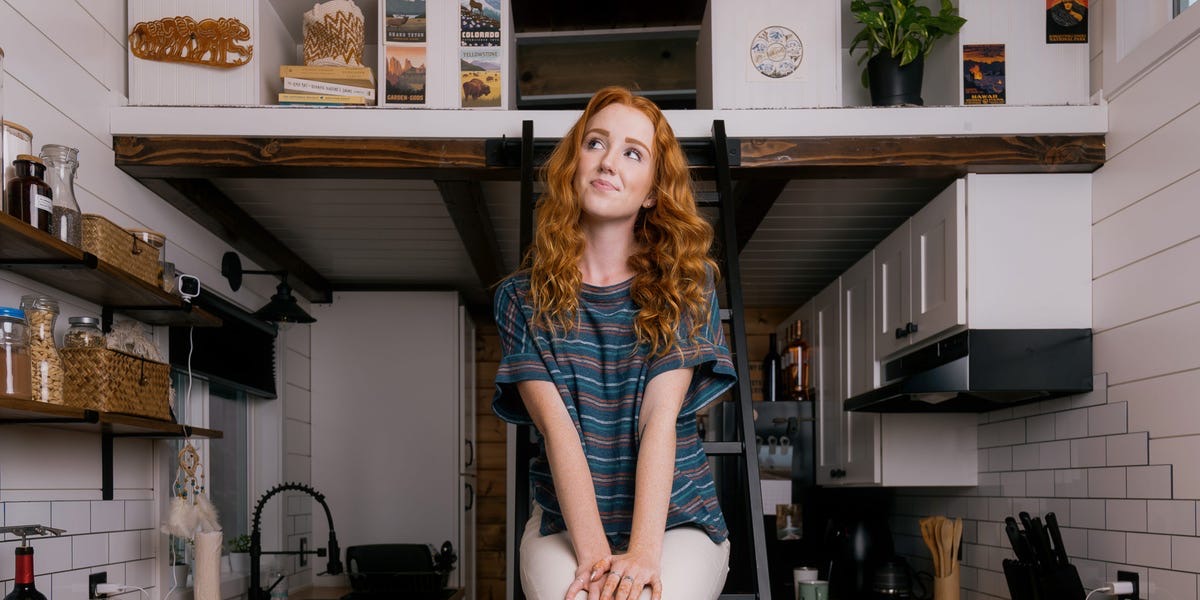
For many people in their 20s, buying a house feels out of reach. One Washington resident decided to skip the traditional route altogether. Rather than take on a mortgage or keep paying rent on a place she would never own, she built her own tiny home from scratch.
Here's the playbook she followed. First, she looked at prices and concluded that building was cheaper than buying a preassembled unit. She started with the biggest purchase, the trailer bed the home would sit on. Her father agreed to provide the physical labor, and family members pitched in on the work. She also took on multiple jobs to fund materials as the project moved along.
The result was a 224-square-foot home with an extra 149 square feet of loft space. The build took nearly two years and roughly $45,000. That number was only the start. The math is simple: the build cost is a one-time outlay, but the ongoing costs never stop.
The biggest recurring expense is land. Without the ability to secure a personal loan, she chose to rent a plot instead of buying one. She found a lot in the Seattle area that includes utilities, WiFi, garbage service and lawn care for $650 a month. Over the nearly five years she has lived there, rent alone has totaled roughly $39,000.
Maintenance is the other line item founders should watch. She has resealed the wood siding, fixed a small roof leak, and replaced the heated water hose twice. Water filters need changing every three months. None of these costs was overwhelming on its own, but they add up, and she is the only one responsible for upkeep. Traditional renters can usually count on a landlord for major repairs. Owners cannot.
Add it up and she has spent roughly $84,000 in nearly five years, before smaller repairs. For comparison, the average one-bedroom apartment in Washington state rents for about $1,800 a month, which would run roughly $108,000 over the same period. That gap is the core of the case for going small.
The savings are not the whole story, though. She has a full-size kitchen, a bathroom with a washer and dryer, a full-size loft bed, a large projector screen and a vegetable garden. Her only major missing item is a dishwasher.
The editorial takeaway for founders is this: when the default path looks expensive, it pays to run your own numbers and be honest about the costs you will carry. A self-built home with cheap land can beat renting on paper, but only if you budget for maintenance from day one. Her low fixed housing cost gives her room to travel, work less and keep spending tight. That kind of financial independence is exactly what a lean operator should aim for, and it begins with control over your largest monthly outlay.


