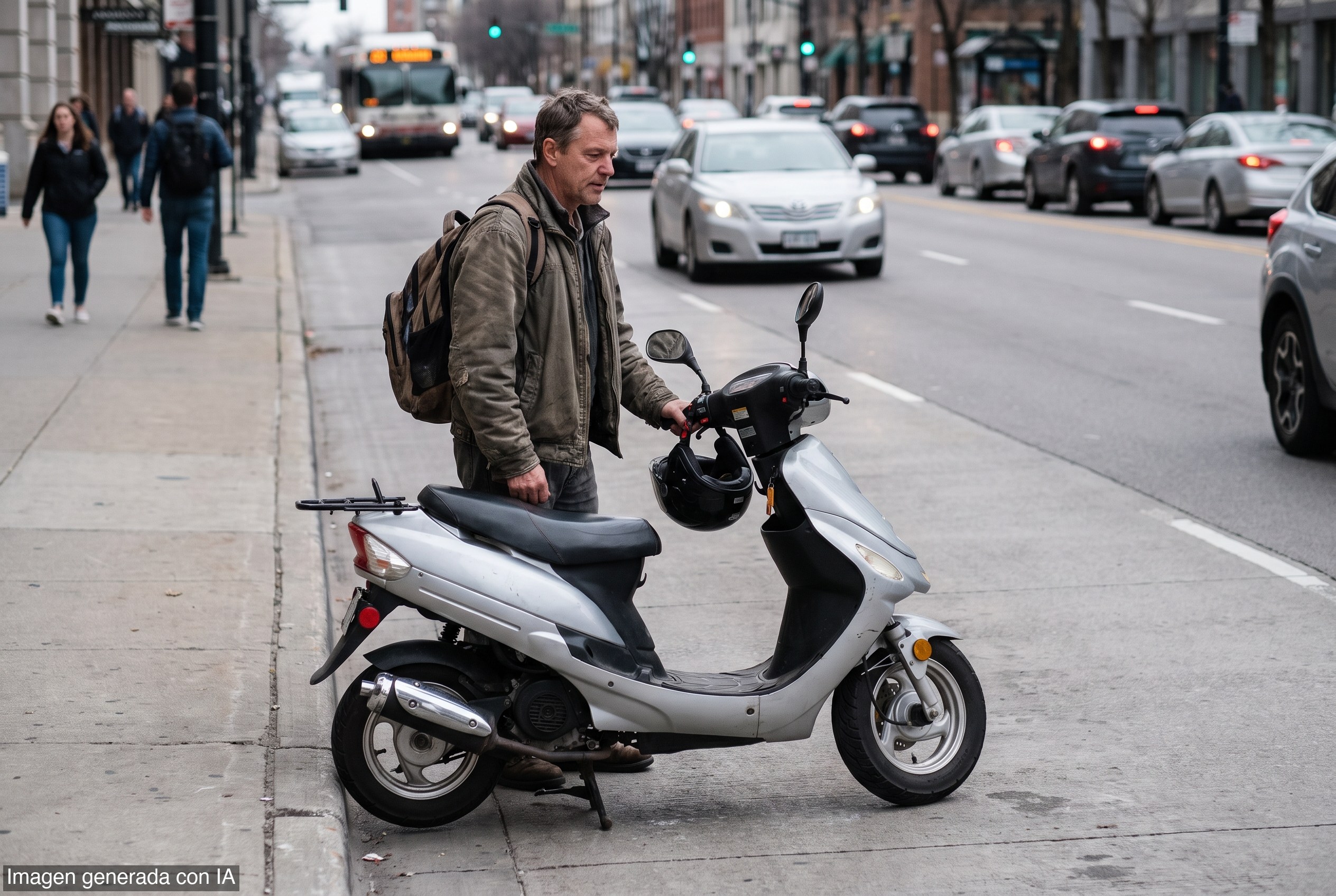
Gary Brown, an architectural visualization artist in Charlotte, North Carolina, says he was spending $700 a month on a car payment, insurance, parking fees at his office, and other car costs to drive about four miles to work.
He and his wife closed on their townhouse in 2020, just as the city shut down due to COVID. For about two years, he worked from home. When he started going back to the office, he realized how little he was driving.
Brown first tried an electric Segway scooter, but after about six months he says it was too hard on his back. He also considered the bus and light rail, but says the routes did not go close enough.
He then bought a gas scooter used for $3,500 cash, plus $1,000 for a helmet and other gear. Brown says it gets 60 miles per gallon, he parks in a downtown garage for free, and his operating costs are much lower than a car: $35 a month for insurance, about $15 a month for gas, and about $300 a year for maintenance.
He says the tradeoffs are weather and comfort. If conditions are really bad, he asks his wife to drive him or takes a rideshare. He also says Uber and other apps helped make the switch possible.
After about a year of using the scooter, Brown says he had barely used his Tesla, so he sold it. He also says he now sometimes has trouble finding parking because more scooters, motorcycles, electric scooters, and bikes are showing up where he works.
Brown sees the scooter as more than a personal hack. He says he does not think everyone will move to robotaxis or Uber rides instead of owning a vehicle, because 'our cities and highways are designed around' the car. But he also says scooters can be a gateway to cheaper alternatives.
The math is simple: when a short commute is burning cash every month, the cheaper vehicle usually wins. For founders and operators watching household budgets, Brown's move is a reminder that convenience is not the same as value.
It is also a small case study in how infrastructure shapes behavior. If parking, fuel, and payment costs keep climbing, more people will keep looking for workarounds. The market responds fast when a four-mile trip starts looking like a bad deal.


