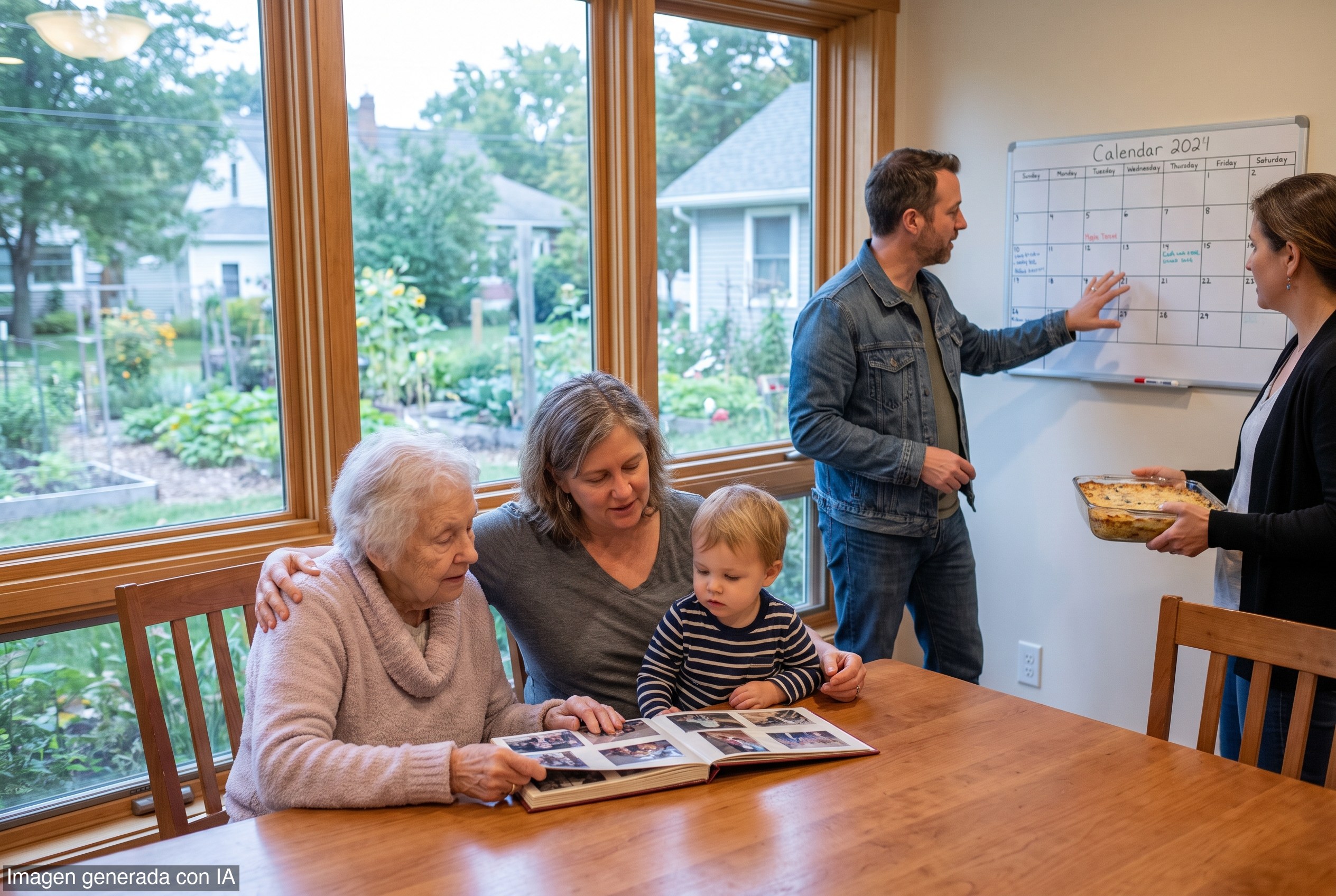
When her mother pulled her out of school in first grade and moved them from Brooklyn to Michigan, the family was responding to a new reality: her grandmother, Lillian, had been diagnosed with Alzheimer's and needed extra support.
The move took them to Great Oak Cohousing, a community built around independent living with shared amenities, including a common house, an expansive garden, and gathering spaces managed by residents. For the family, that structure mattered.
The writer says her grandmother was welcomed everywhere, from the garden to the dinner table to community events. Neighbors knew her, treated her with patience, and stepped in when the family needed help. In one medical emergency, the writer called 911 while her mother got the attention of neighbors. Within minutes, three people rushed into their condo, and another stood in the street to direct the ambulance.
That is the real value of a strong local network. Not slogans, not sentiment, but extra capacity when a household is stretched thin. For a single mother balancing a child and a parent with Alzheimer's, the neighborhood became part of the care plan.
The story also shows something founders and operators often miss: shared infrastructure changes outcomes. A common house, shared spaces, and resident coordination created a setting where help was nearby and social trust was built in, not bolted on after the fact.
The writer remembers one community event where her grandmother began singing along while someone played piano. Instead of being shushed, the whole community joined in. A potentially awkward moment became a shared one. That is what well-run communities do at their best: they lower the cost of being vulnerable.
For families facing elder care, the lesson is not that community replaces responsibility. It is that the right community can make hard responsibility more sustainable. In a culture that often isolates caregiving inside one household, Great Oak offered a different model: neighbors as support, not spectators.
And that matters beyond this one family. When care, housing, and daily life are organized to make mutual aid possible, households get more resilience without waiting for bureaucracy to arrive. That is a practical advantage, and for families under stress, it can be the difference between barely coping and actually carrying on.


