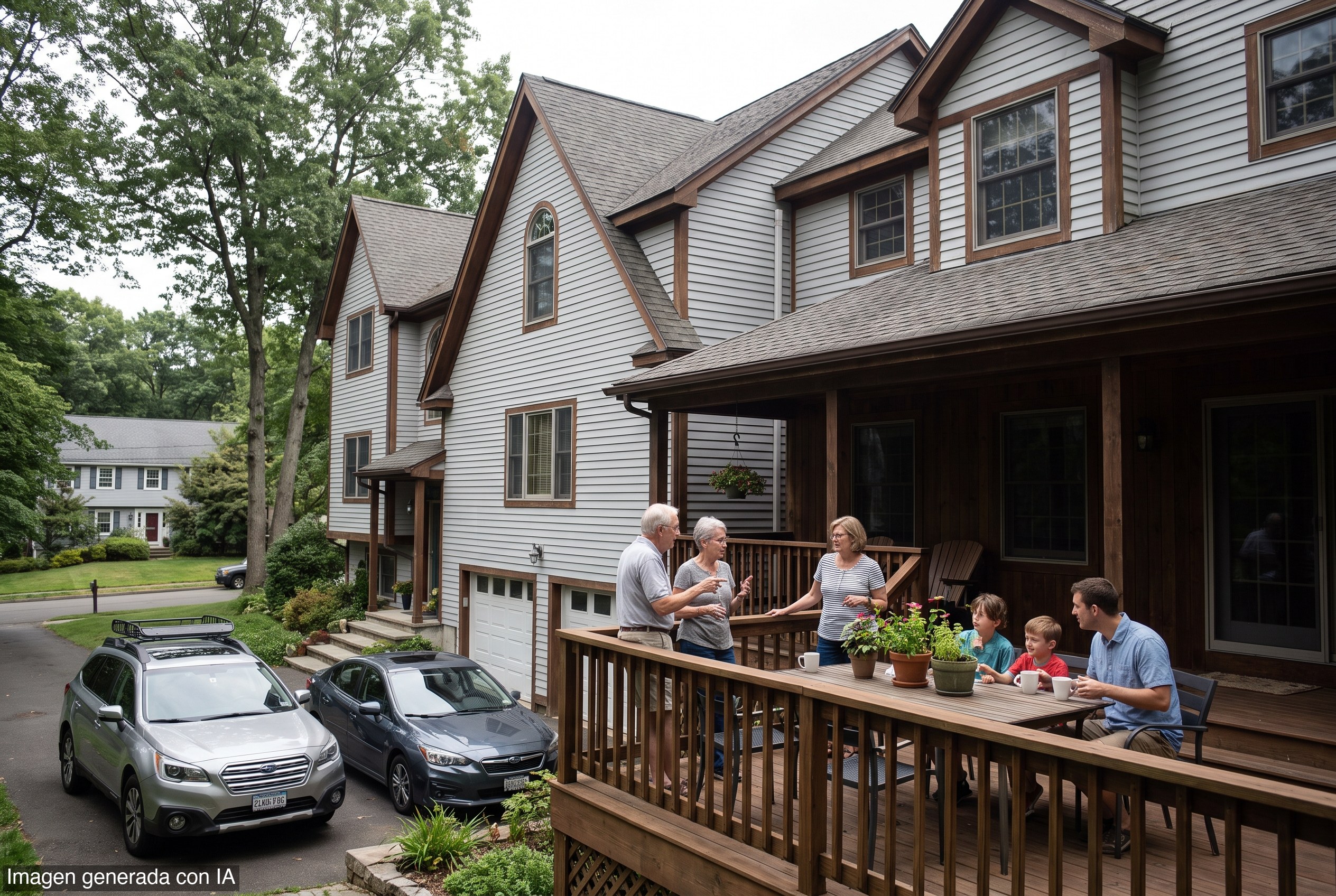
Robyn O'Neill, 60, says she spent at least two years looking on Zillow before finding the right house in early 2021.
The home in Waterbury, Connecticut, is 3,300 square feet, sits mostly on one floor, and has no stairs. O'Neill said that mattered because she had mobility issues after a knee replacement and breaking her hip.
The layout also gave the family room to grow. O'Neill said she wanted a big space where everyone would have their own zone. Their previous home was 1,600 square feet and would have been too tight for more people.
The new house has three bedrooms on the first floor, two-and-a-half baths, a kitchen, great room, music room, sun room, a built-out attic bedroom with a full bathroom, and a basement that stretches the full length of the house. One basement room was finished and soundproofed.
After O'Neill and her husband Peter moved in March 2021, the house started filling up.
Her father, Richard, 79, who has Parkinson's disease, moved in around 2022 after living with her brother and spending time in a convalescent home. O'Neill said his care is split between her and professional carers.
Her son, also called Peter, 28, moved back in around two years ago after living in a rental property. O'Neill said that saved him money and gave him stability while he was starting out.
Earlier this month, her sister-in-law Rita, 77, moved in while recovering from a stroke.
O'Neill said the family plans to age in place. She also said her mother lives a few minutes away and visits often, and that her 37-year-old daughter does too.
The setup is not for everyone. O'Neill said some people want their own space. But for this family, the arrangement has become a practical answer to care, housing costs, and keeping the household close.
For founders and families alike, the math is simple: space, access, and flexibility can reduce stress before it becomes a crisis. A house that supports aging in place and shared care is not just a home; it is a long-run operating system for the family balance sheet.
And that is the part worth watching. In an economy where housing costs bite and care is expensive, multigenerational living can be a private-sector solution that preserves capital, avoids unnecessary moves, and keeps people independent longer.


