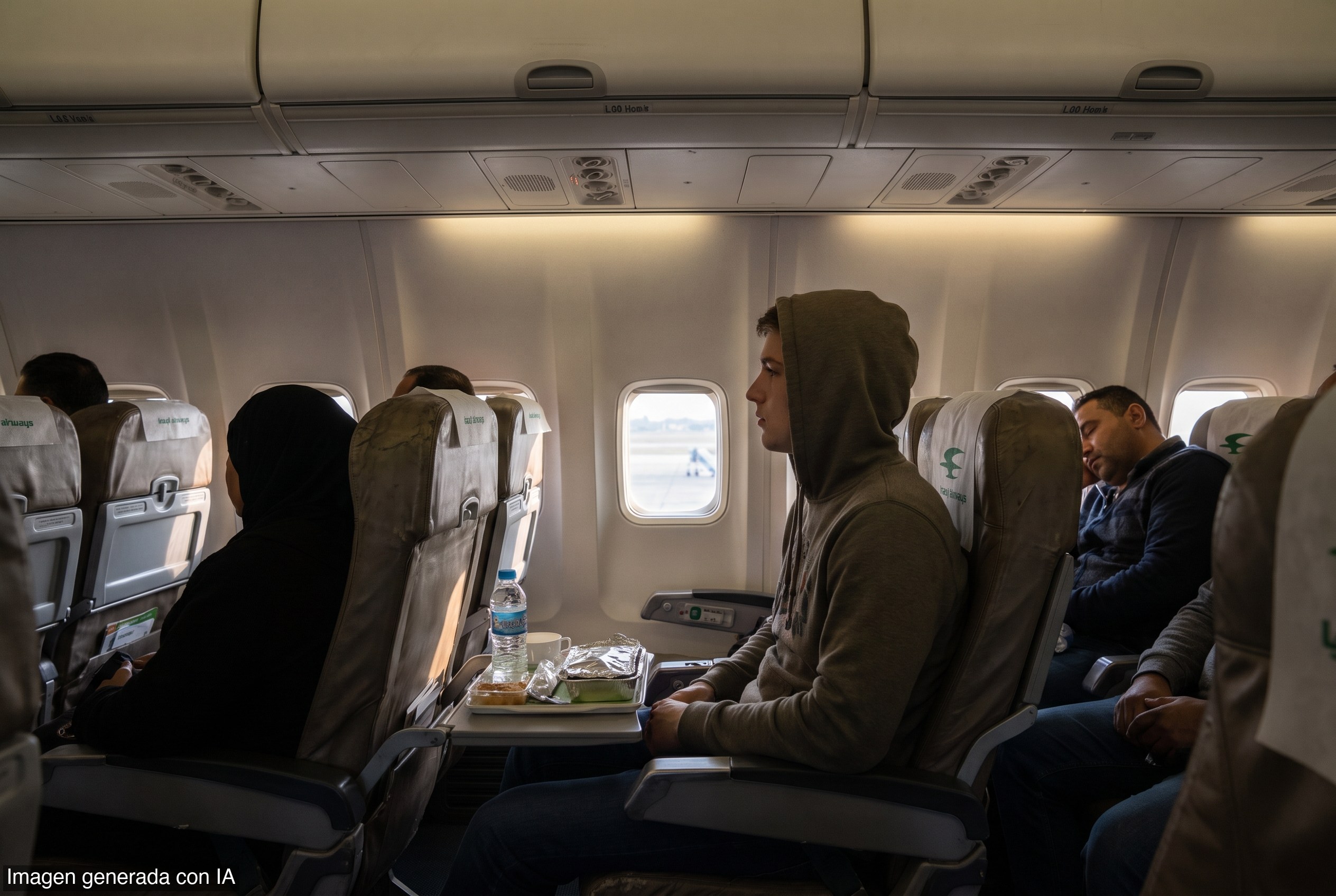
An American college student paid $123 for an economy ticket on Iraqi Airways and flew from Baghdad to Dubai on a new Boeing 787. He found one of the airline's newer aircraft, a hot meal, and airport interactions that felt far warmer than he expected.
He also found a carrier that remains banned from the EU, with regulators citing serious safety deficiencies in its operations and corporate management. The US State Department has issued a Level 4 'Do Not Travel' advisory for Iraq, and Iraqi Airways did not respond to Business Insider's request for comment.
The flight itself showed two very different realities at once. The plane he boarded was one of two practically new 787-8s that arrived in 2023, and more are expected through 2027. The airline has also been replacing much of its fleet, which has an average age of about 11 years, and it was among the first airlines in the Middle East to fly the Airbus A220. Boeing 737 Max 8s have been arriving since 2023.
But the cabin told a different story. The seats were stained, there were crumbs along the cushions, and the seatback pocket was dirty. For a plane that was about 2 years old, the interior did not match the exterior.
The biggest surprise for many travelers may be the service. On a roughly two-hour flight, Iraqi Airways served a full warm meal: a hot tray of chicken and rice, with enough time to eat before descent. That stands in sharp contrast to many US airlines, where economy passengers on short flights often get only a drink and a small snack.
At Baghdad International Airport, the experience was just as unusual. Pigeons were everywhere inside the concourse, and one even pooped on a man's head during boarding. Yet the terminal also produced long conversations with staff and other travelers, including a check-in agent who asked where the traveler was from and a passenger who stepped in to translate.
The math is simple: Iraqi Airways is still carrying baggage from years of war, sanctions, and safety concerns, but it is also investing in newer aircraft and offering service that many American flyers no longer see. For travelers, that means the airline is not just a headline about bans and oversight failures. It is also a reminder that state-owned carriers can operate under very different incentives than the lean, cut-to-the-bone model common in the US.
For founders and operators, the lesson is familiar. Fleet age, cabin upkeep, and customer experience all shape trust. If the basics slip, the brand pays for it. If the service is strong, even a risky or unfamiliar airline can still leave an impression.


